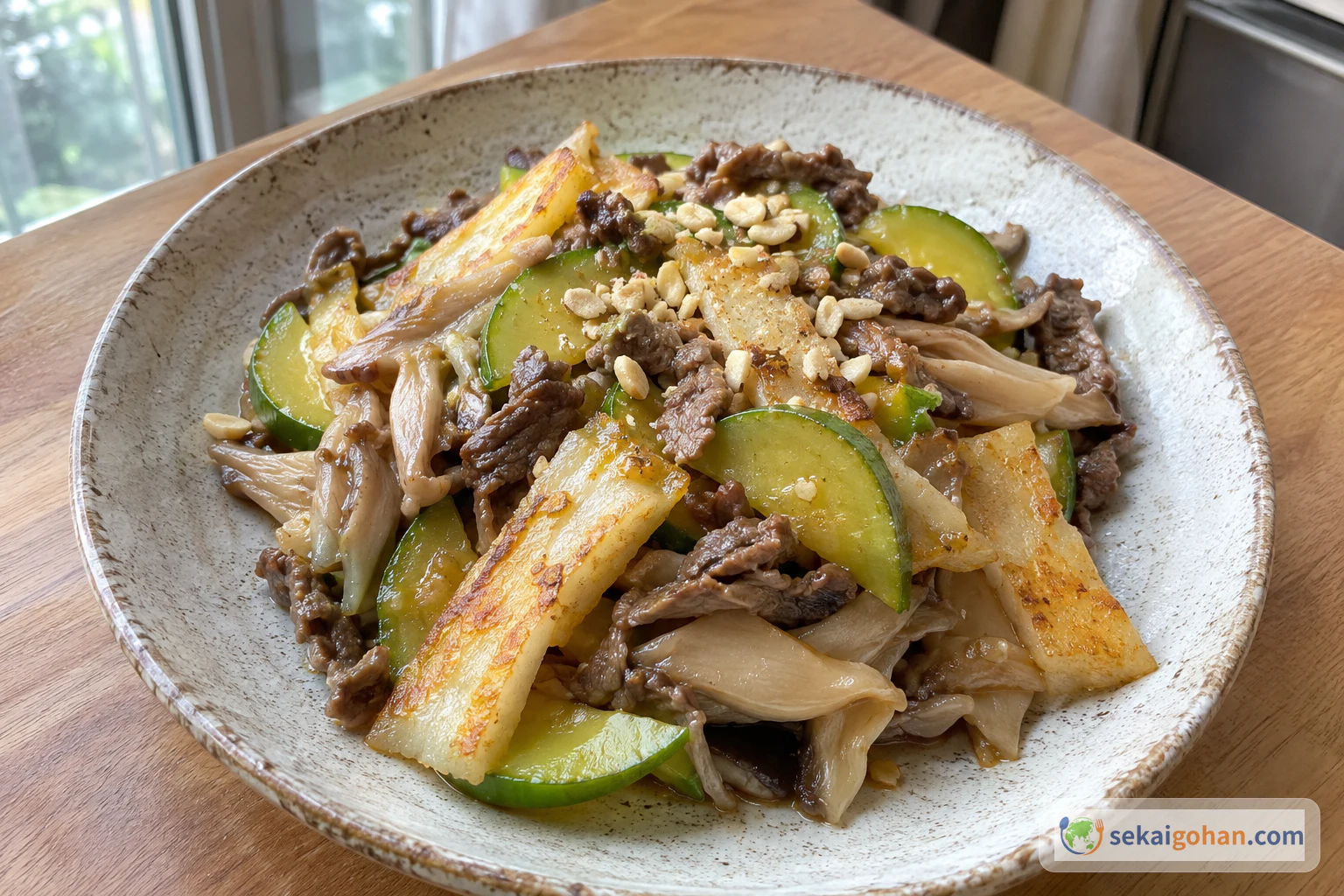
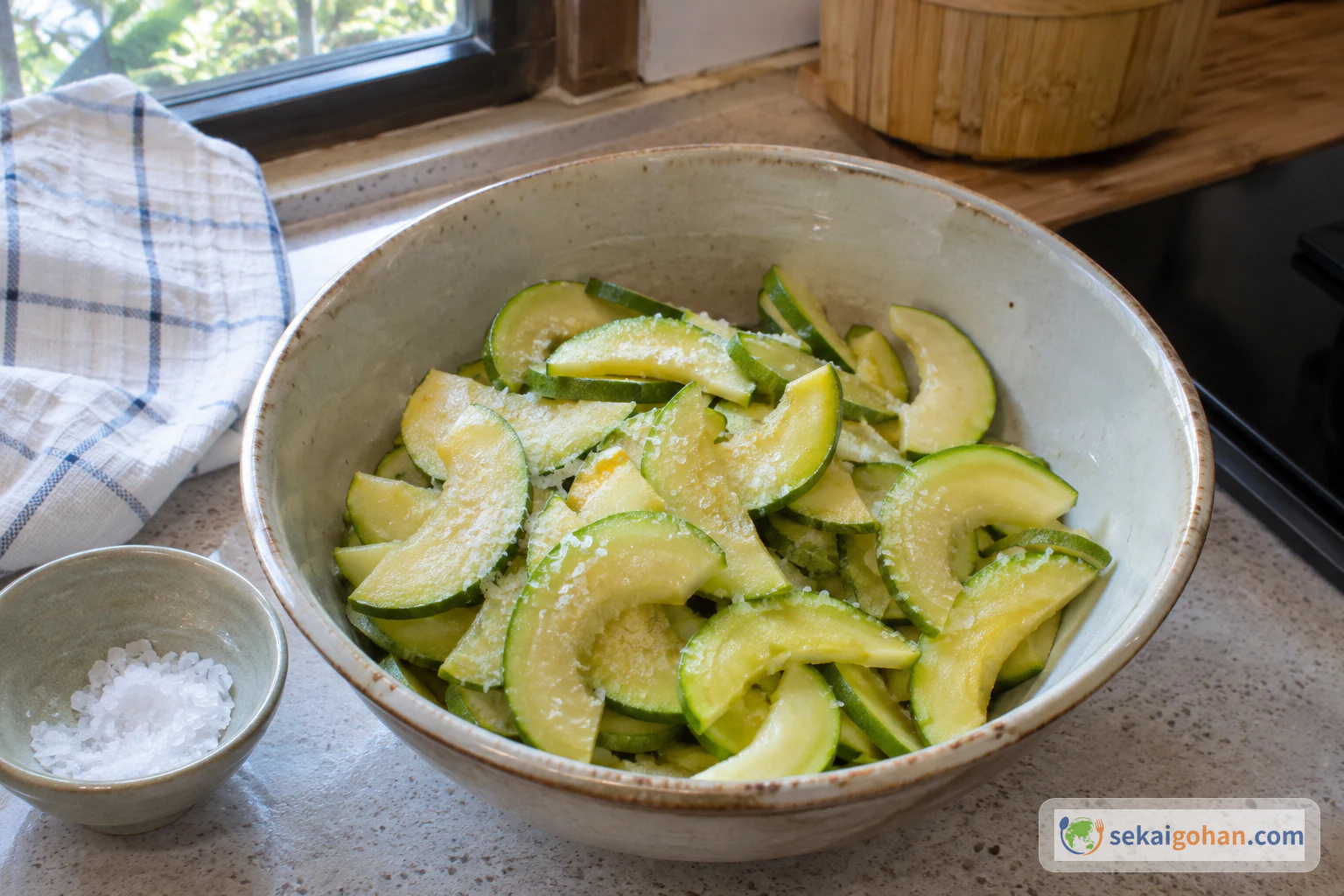
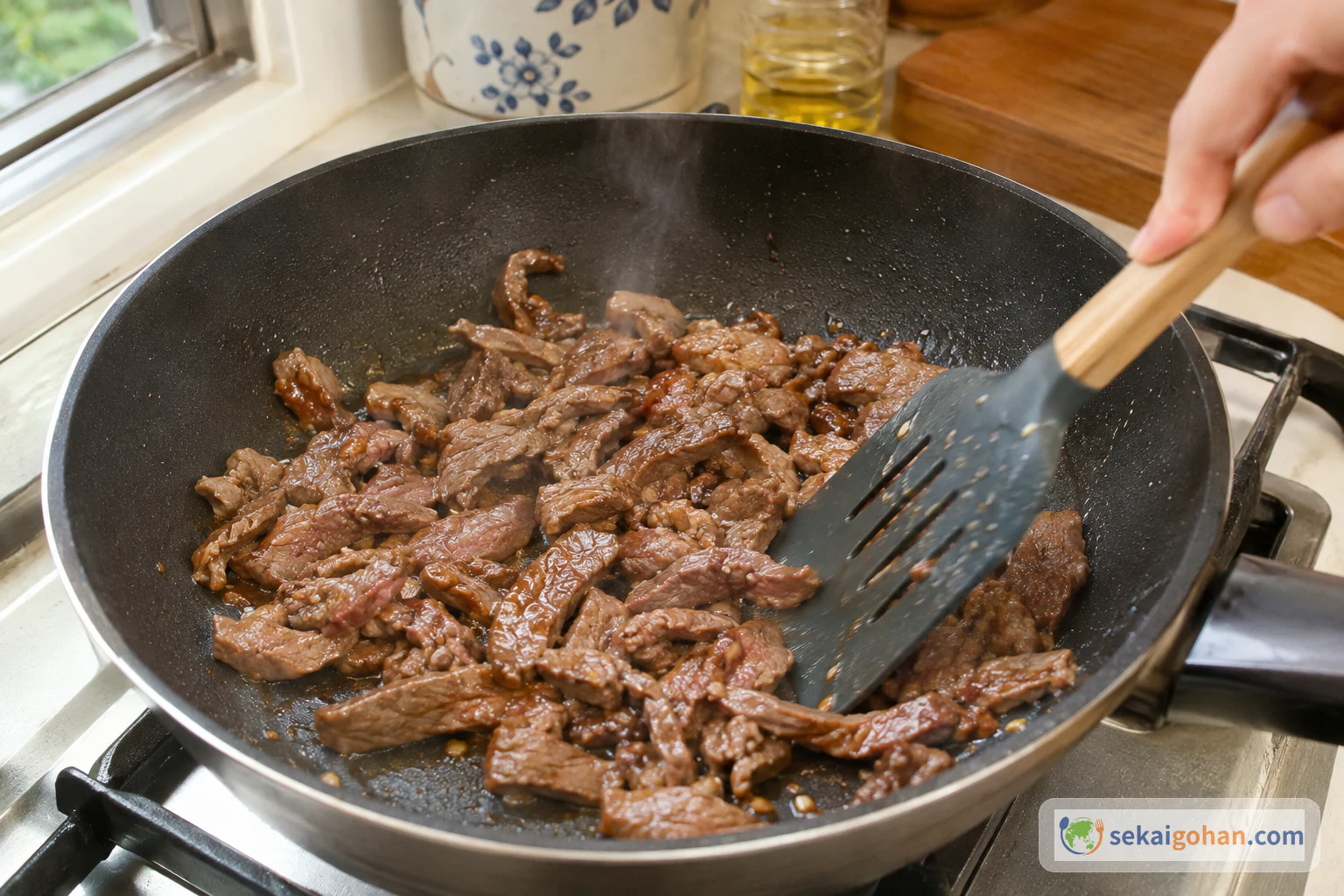
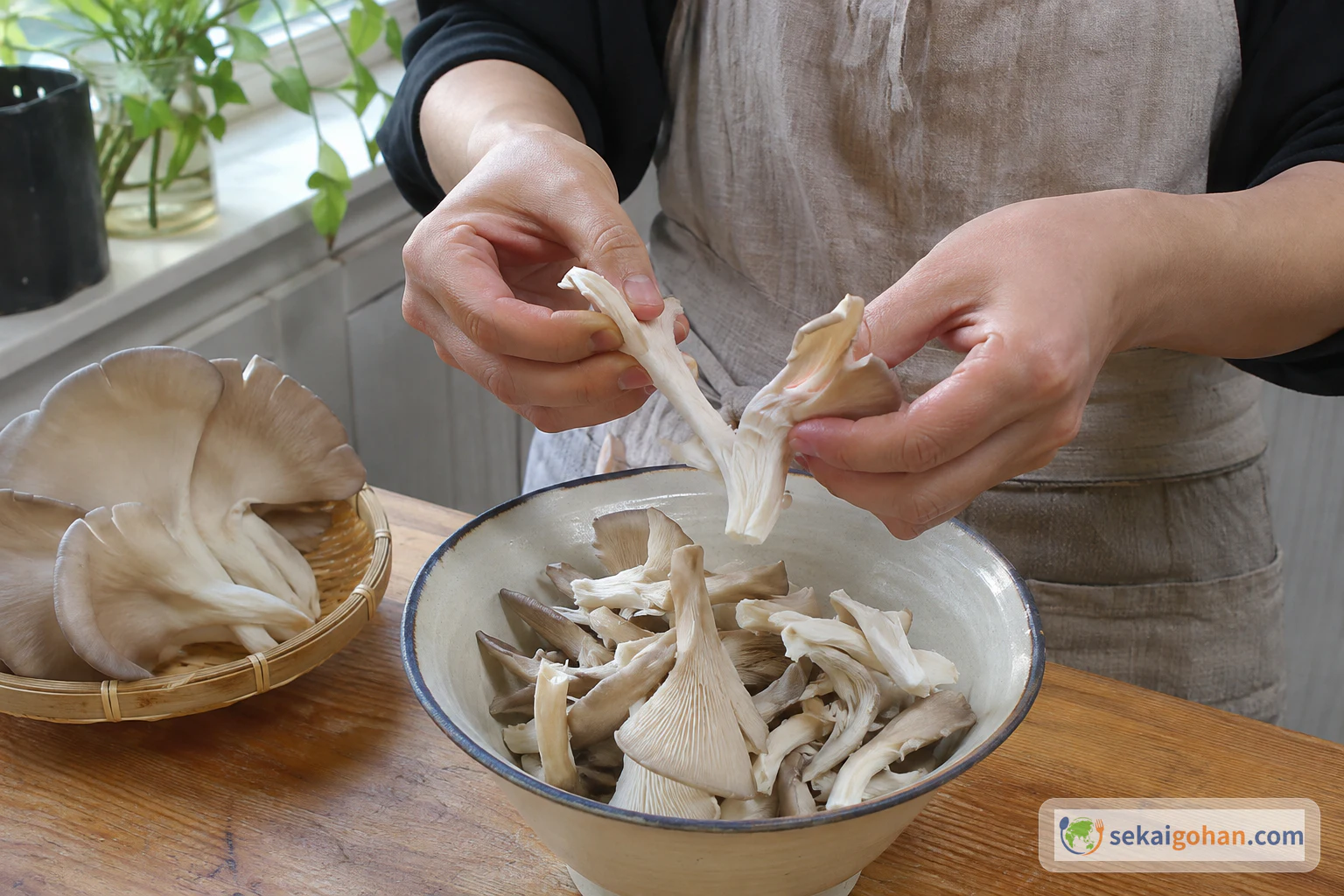
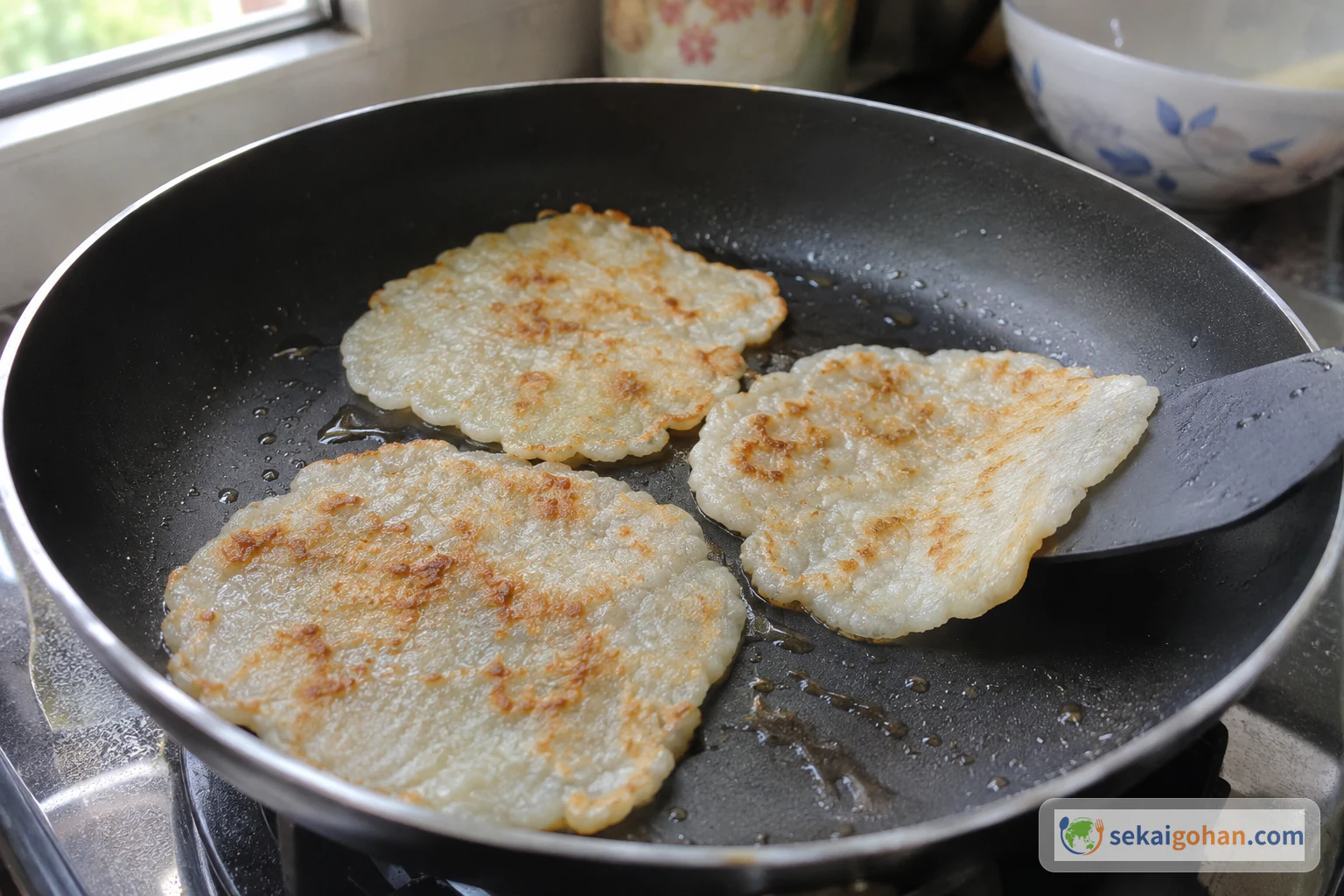
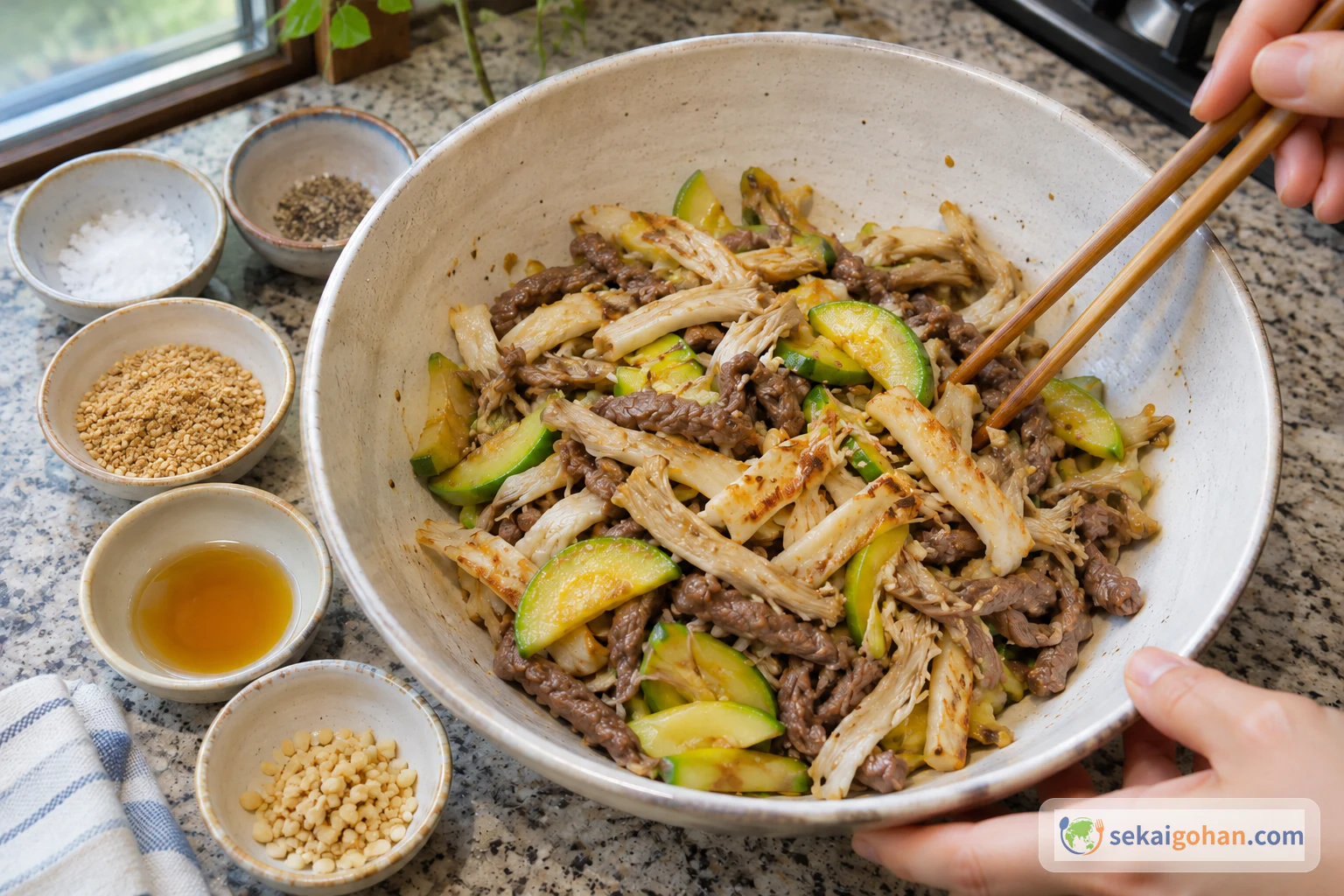
The rice pancake slides out of the pan pale and soft, with a few golden patches. It has to sit on the board until it is completely cool before the knife goes in, and that wait is the whole difference between clean, chewy strips and a sticky tangle. Then the strips go into a bowl with thin green crescents of squash, browned beef and torn oyster mushrooms, each cooked on its own. A little salt, sesame oil and a scatter of pine nut powder finish it. Wolgwa-chae (월과채) is a Korean court dish from the Joseon era, a summer cousin of japchae, and it tastes savory and nutty, with soft squash against the chew of glutinous rice.
A Summer Dish from the Joseon Court
From melon to squash
The name begins with an ingredient you will not find today. Wolgwa (越瓜) was a variety of chamoe, the Korean oriental melon, and the court kitchen cooked it into a japchae-style dish. Wolgwa became hard to get, and modern cooks use aehobak, the pale green Korean summer squash, in its place. Cucumber and eggplant also turn up in some kitchens, but aehobak is the one most cooks reach for.
The dish lived beyond the palace too. Late-Joseon household cookbooks write it down as hobak-namul, squash namul, with the name wolgwa-chae beside it, and it appears again in later Korean cookbooks. That trail points to yangban households, the scholar-official families, making it at home as well. It was a dish for receiving guests, and it sits just as comfortably next to a glass of something as drinking food.
The name is also written 月瓜菜, "moon squash dish." One account traces that spelling to the sliced squash, which curves like a crescent moon. The same thin curve gives the dish its other name, nunsseop-namul, "eyebrow namul."
How it differs from japchae
Japchae is built on dangmyeon, the slippery sweet potato noodle. Wolgwa-chae drops the noodles and uses chapssal-bukkumi, a thin pan-fried glutinous rice pancake cut into strips, and the vegetables are cut larger. The result is less glossy and more about bite. It was eaten in summer in place of japchae, and today it also comes out for holiday tables such as Chuseok. Cooks feeding many people have found their own shortcuts, and school cafeterias make a version with pork instead of beef and tteokbokki rice cakes instead of bukkumi. If you want to see where it fits among the rest of the country's cooking, the Korea page gathers the other dishes.
Ingredients (serves 2)
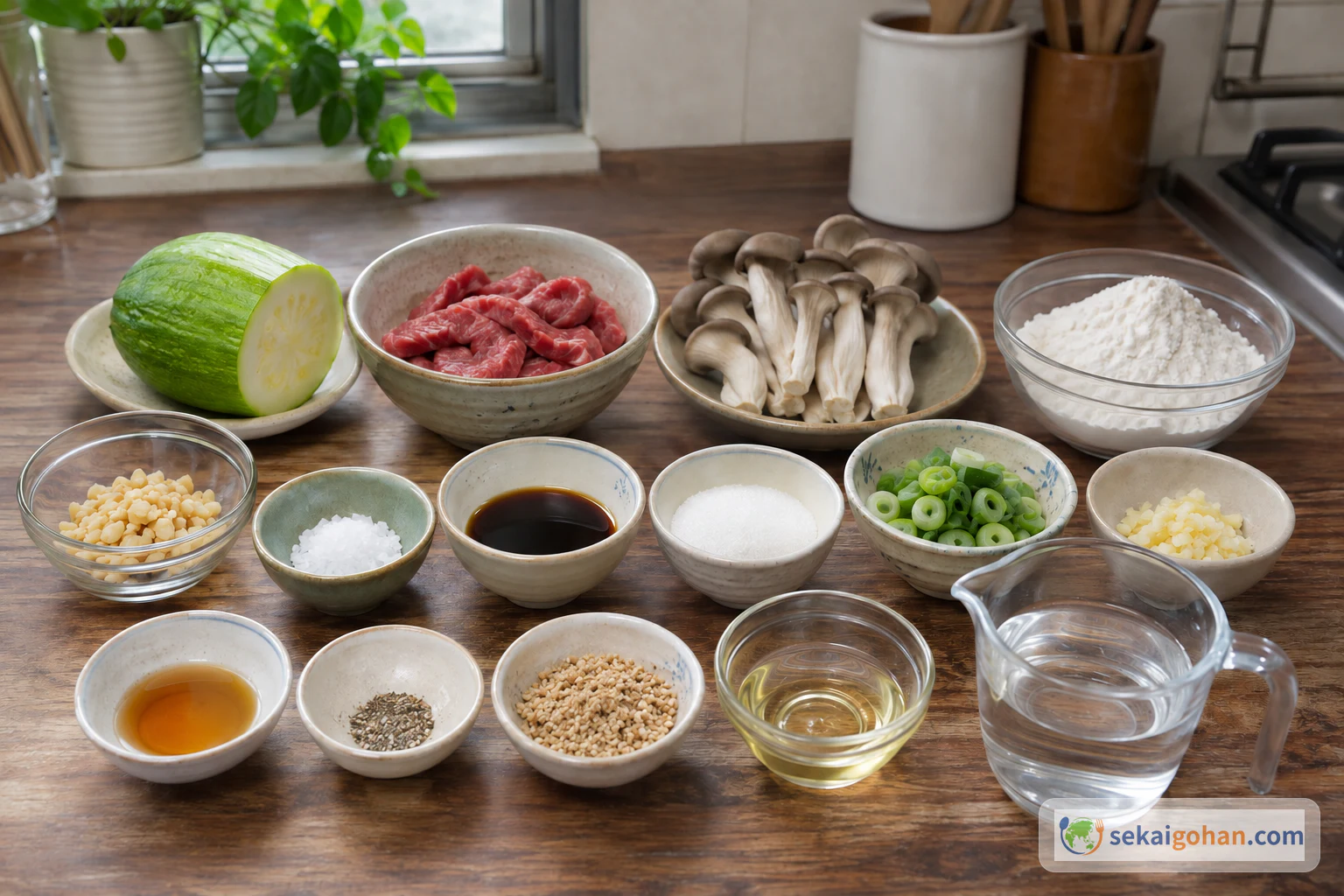
This dish contains sesame (oil and crushed seeds), pine nuts, soy sauce and beef. Check the labels on soy sauce and other packaged ingredients for allergens before you cook for guests.
Equipment
- Sharp chef's knife and cutting board
- Bowl for salting the squash
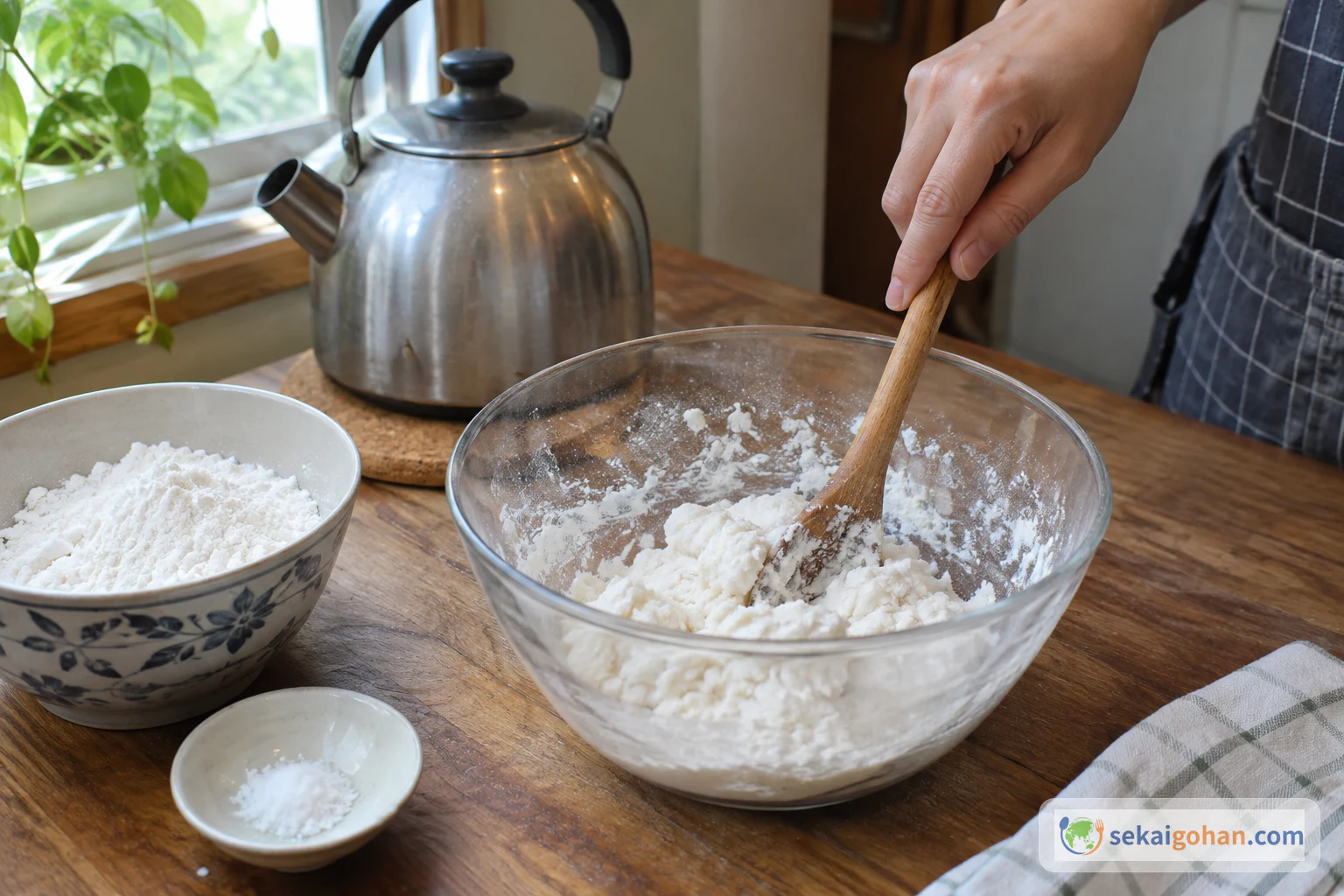
- Heatproof bowl and wooden spoon for the dough
- Kettle for boiling water
- Non-stick frying pan
- Large mixing bowl
- Wooden chopsticks for tossing
Choosing and Substituting
Aehobak is the one ingredient that defines the dish today. It has thin, tender skin and a mild sweetness, and it is sold in Korean and Asian markets. Choose a firm squash with glossy skin, since it gets cut in half and only one half goes into this batch.
Glutinous rice flour, sometimes labeled sweet rice flour, gives the pancake its stretch and chew. Ordinary rice flour does not take its place, because the chew of the strips is what sets wolgwa-chae apart from noodle dishes. Pine nut powder is also sold in Korean markets. Pine nuts chopped very fine on a dry board do the same job.
Oyster mushrooms are the mushroom here, torn by hand into long strips. Shiitake also appears in some versions of the dish, and it adds a darker, deeper mushroom flavor. What you keep no matter where you cook is the shape of the dish: large cuts, every part cooked separately, and rice pancake in place of noodles. Let those go and the plate drifts toward japchae.
Method
The whole dish takes about 40 minutes. Salt the squash first, because it needs 10 minutes to give up its water, and use that time to marinate the beef and tear the mushrooms. The pancake needs to cool completely before cutting, so fry it while the other parts wait, or make it early and let it rest. Everything comes together in one bowl at the end.
When It Goes Wrong
| What you see | Why | What to do |
|---|---|---|
| A puddle of liquid in the bowl and limp, grey squash | The squash was not squeezed hard enough after salting | Squeeze the salted slices firmly until no more water drips, then stir-fry them quickly |
| Pancake strips tear or clump together | The pancake was cut while still warm | Let it cool completely, cut it, then coat the strips with a little sesame oil |
| The beef steams and turns pale instead of browning | Too much marinade went into the pan | Pat off loose liquid before frying and cook the beef alone in a clean pan |
| The flavors blur and the colors look dull | Everything was stir-fried together | Fry squash, mushrooms and beef separately and combine them only at the end |
| The dough cracks and crumbles | Not enough boiling water | Work in a little more boiling water with the spoon until the dough comes together smoothly |
| The finished dish tastes too salty | Each part was salted, then salted again at the end | Season the final toss lightly and taste before adding more |
Serving and Variations
On the table
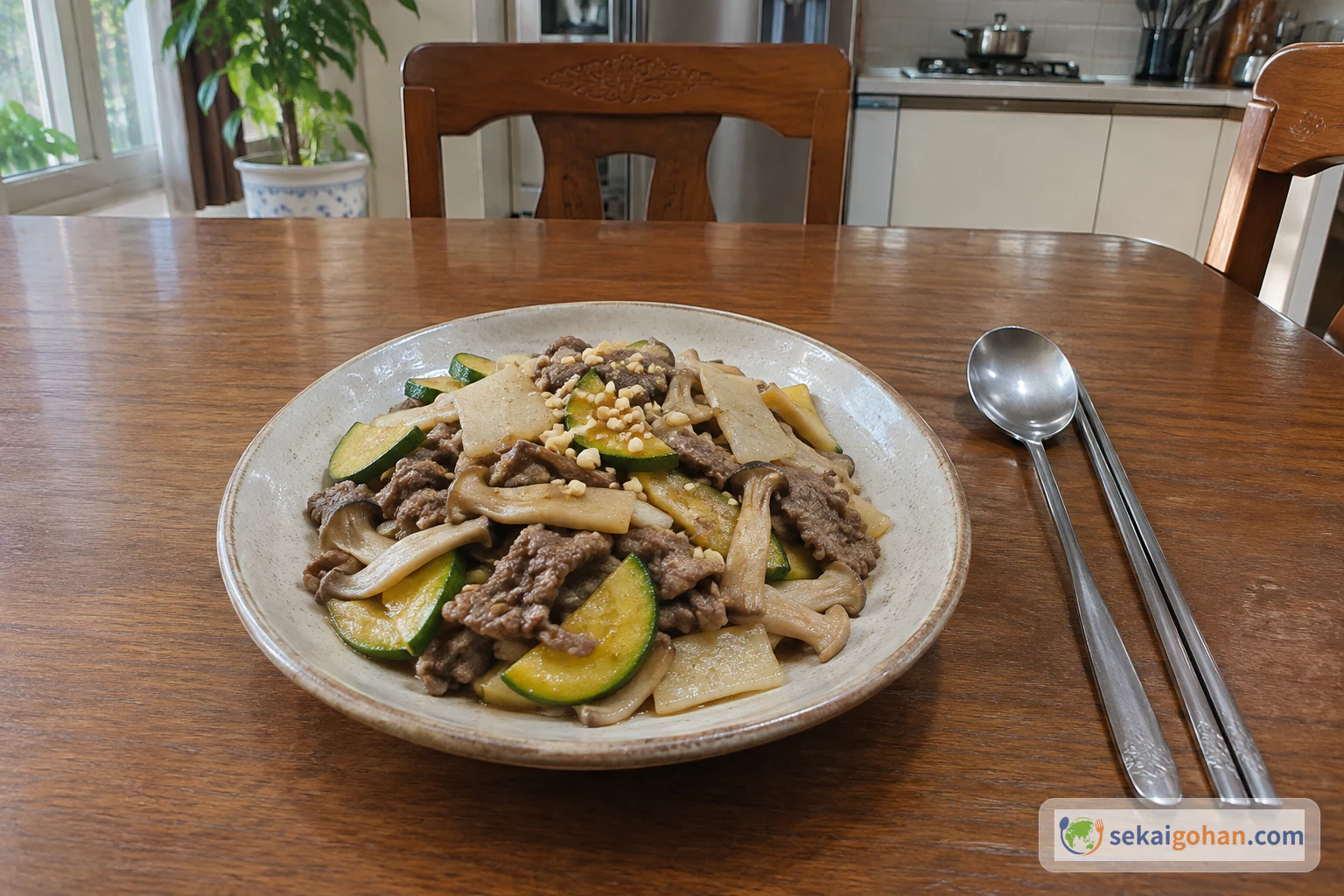
Wolgwa-chae is a side dish for a shared table. It suits a summer meal in place of japchae, a plate set out for guests, a Chuseok spread, or a small dish to go with drinks. It is not spicy, so it sits well beside stronger dishes. Cool any leftovers, then refrigerate them promptly in a covered container.
Variations
- Rice cake strips instead of pancake. Tteokbokki rice cakes replace the bukkumi in cafeteria versions. They are thicker and denser, and they save you making the dough.
- Shiitake with the oyster mushrooms. Shiitake, stir-fried on its own like the other mushrooms, brings a darker color and a deeper, earthier flavor to the bowl.
Frequently asked questions
Is wolgwa-chae spicy?
No. It is seasoned with salt, soy sauce, sesame oil and pepper, and the flavor is savory and nutty. There is no chili in it, which is why it works for guests and next to spicier dishes.
Can I use glass noodles instead of the rice pancake?
Some modern versions use flat dangmyeon noodles. The dish then moves closer to japchae, with a slippery texture in place of chew. Keep the glutinous rice pancake if you want the dish that sets wolgwa-chae apart.
Does it have to be beef?
Pork works and is common in cafeteria versions. Marinate and stir-fry it on its own, just like the beef, and cook it until no pink remains. The flavor turns a little milder and sweeter.