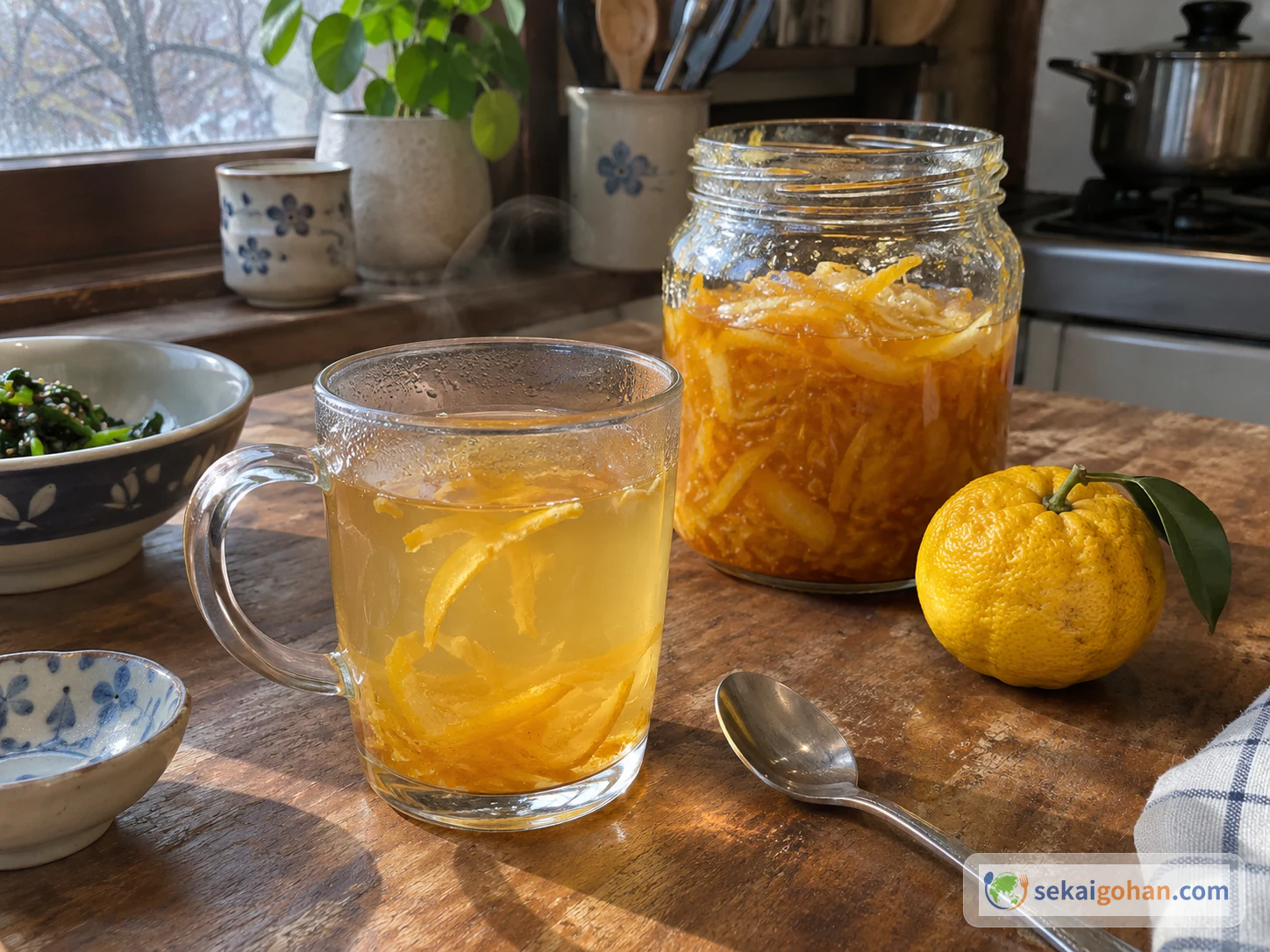
A glass of amber yuja-cha beside a jar of preserve with shredded yuzu peel sunk inside
CuisineKorean

Yuja-cha: Korean Yuzu Tea from Sugar-Steeped Peel

Yuja-cha is Korea's caffeine-free yuzu tea. Learn the equal-weight yuzu and sugar jar, why the seeds come out, and how to mix hot, iced and sparkling cups.

Level: Beginner

Cooking flow

Cooking steps

STEP 11 / 11

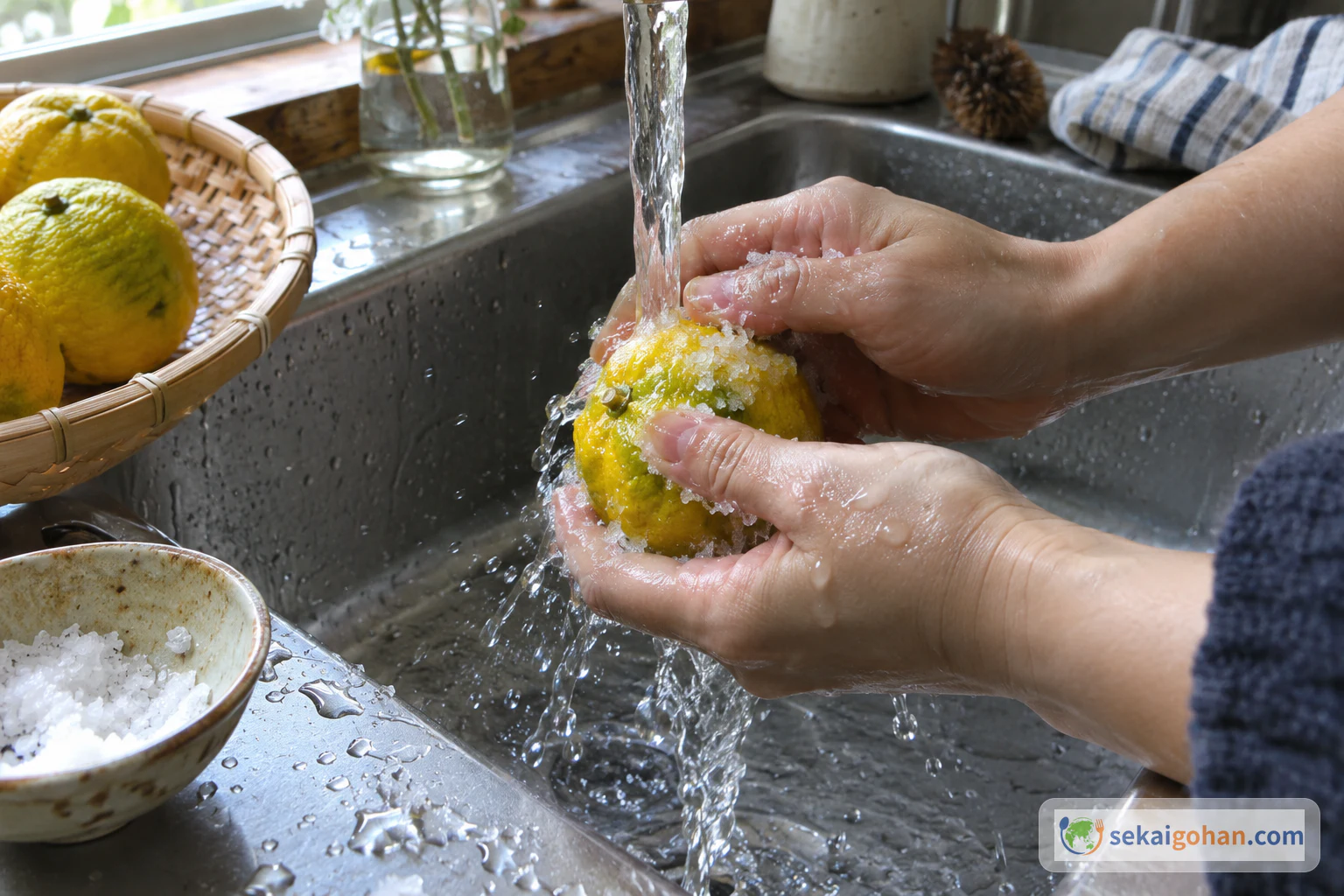
Scrub the yuzu

Scrubbing yuzu with coarse salt under running water
Work the salt into the pitted skin while the water runs, then rinse it all away

Rinse the yuzu under running water. Rub the rind gently with baking soda or coarse salt, working into the dimples where dust collects. Rinse again thoroughly in clean water until no grains remain. The rind is ready when it feels clean and smooth under your fingers with no grit left.

STEP 22 / 11

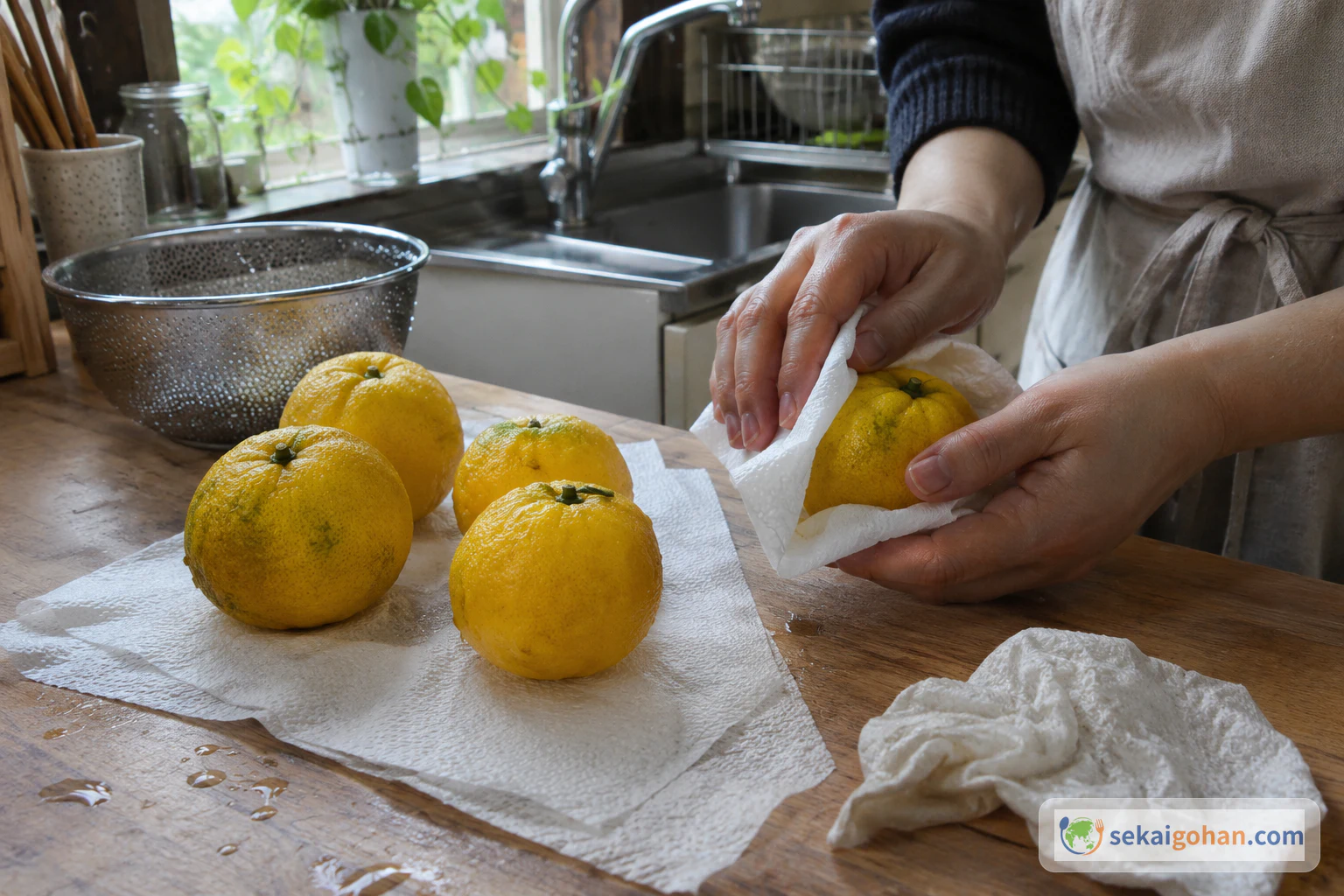
Dry the fruit completely

Drying washed yuzu completely with paper towels
Swap in a fresh towel once the first one turns damp

Lay the washed yuzu on paper towels and pat each one dry. Turn them over and dry the other side, paying attention to the dimples in the rind. Water left on the fruit raises the risk of the jar spoiling while it rests, so take your time here. Move on only when every fruit is dry to the touch all over.

STEP 33 / 11

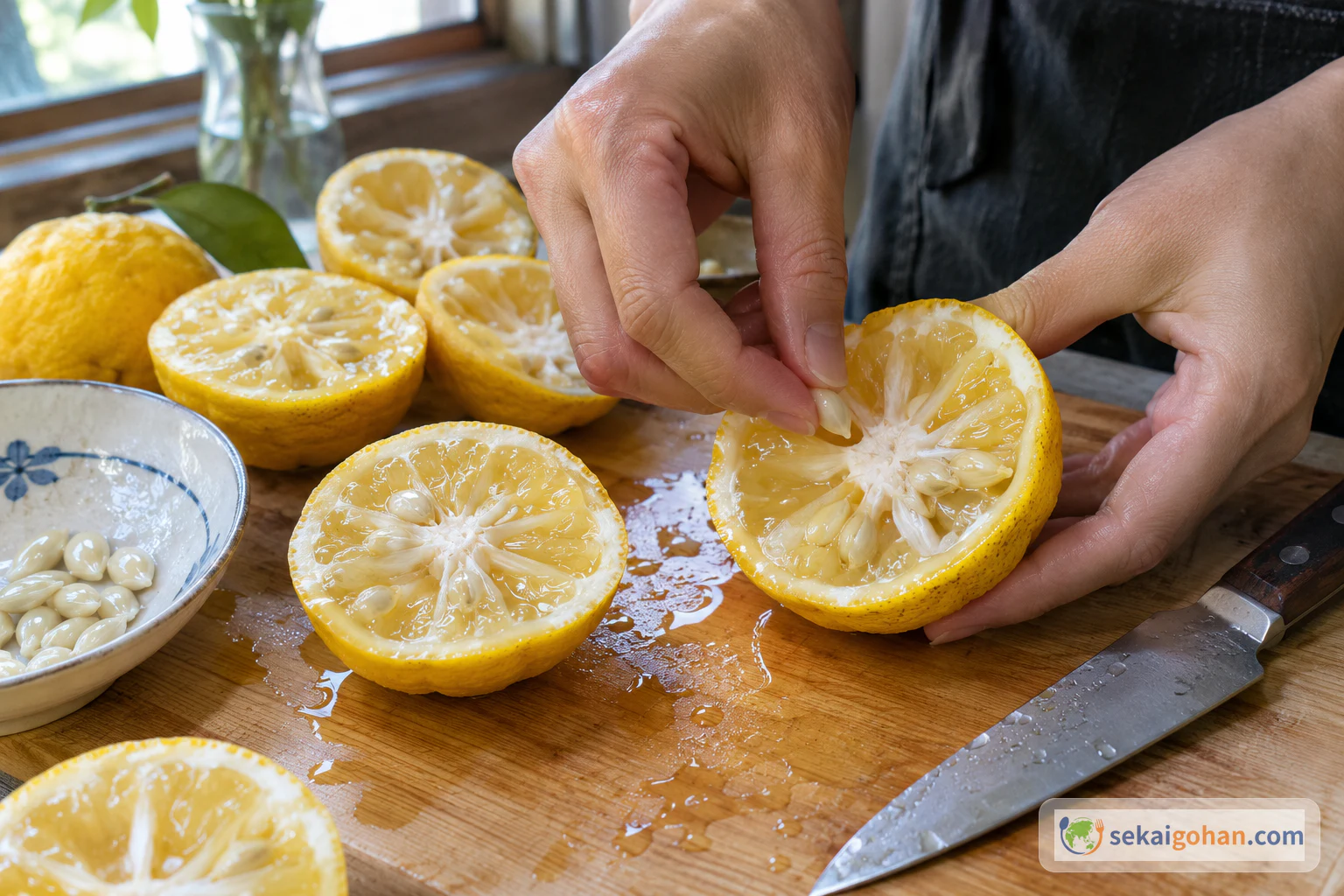
Halve and seed

Removing seeds from halved yuzu
Set the seeds aside in a separate dish so none slip back into the flesh

Cut each yuzu in half across the middle. Yuzu are full of seeds, so pick them out one by one with your fingers or the tip of the knife. Seeds left in the jar pass bitterness into the syrup, and there is no taking it out later. Keep going until the flesh shows no hard, glossy seeds when you press it open.

STEP 44 / 11

Separate the peel from the flesh

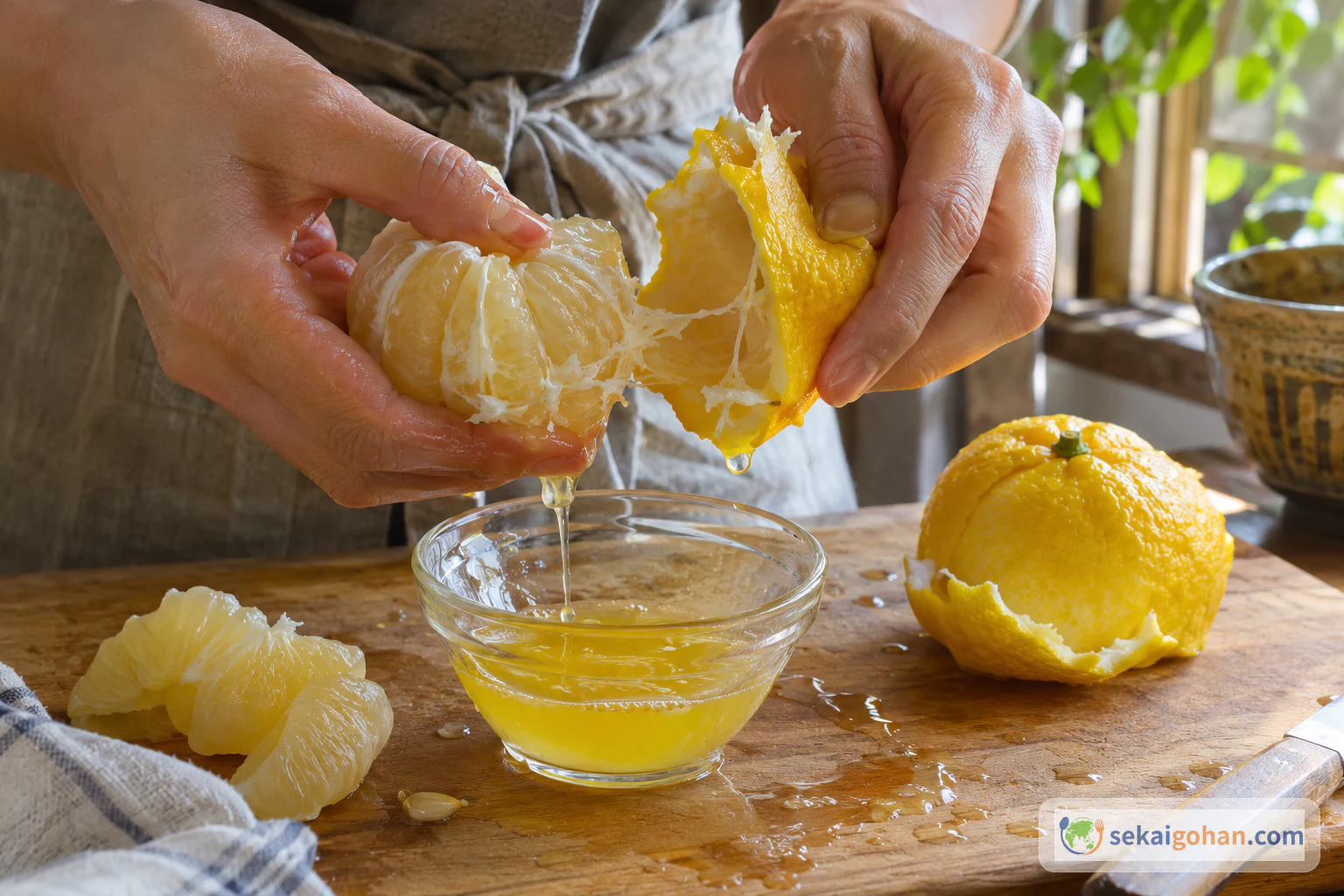
Separating yuzu peel from flesh and saving the juice in a small bowl
Hold the fruit low over the bowl so the juice lands in it rather than on the board

Work each half over a small bowl. Ease the pale flesh away from the rind and set the flesh aside. Let the juice run into the bowl and keep every drop; it goes into the jar. You are done when you have three piles: empty rinds, soft flesh, and a bowl of golden juice.

STEP 55 / 11

Shred the peel thin

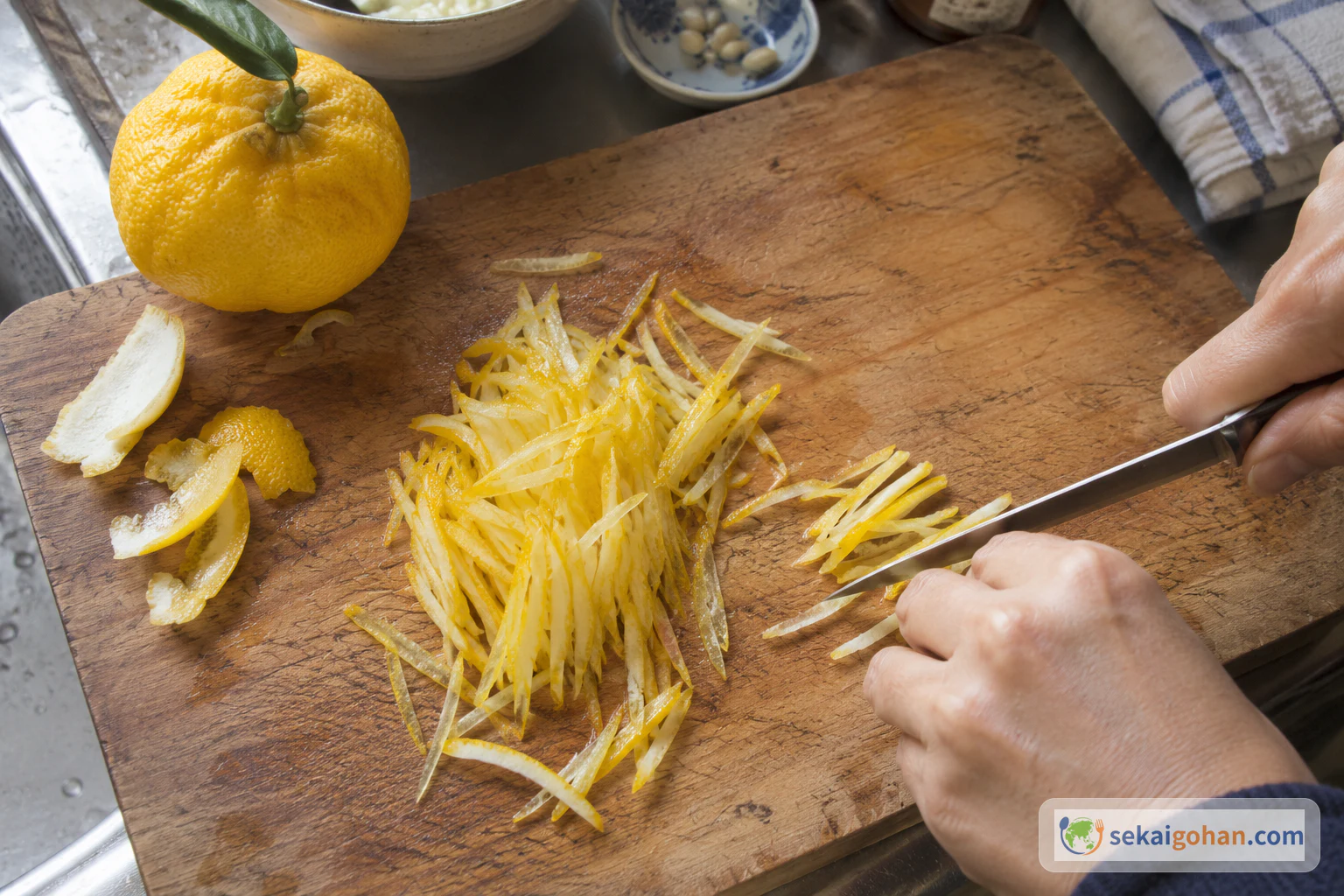
Cutting yuzu peel into the thinnest possible strips
Put thick offcuts aside and slice them again before they go in the bowl

Flatten the rinds on the board and cut them into strips as thin as you can. Thin strips mix more evenly with the sugar, release their fragrance fully, and sit lightly in the cup later. Thick pieces stay chewy and keep their scent locked in. Aim for fine, slightly translucent threads.

STEP 66 / 11

Weigh and match the sugar

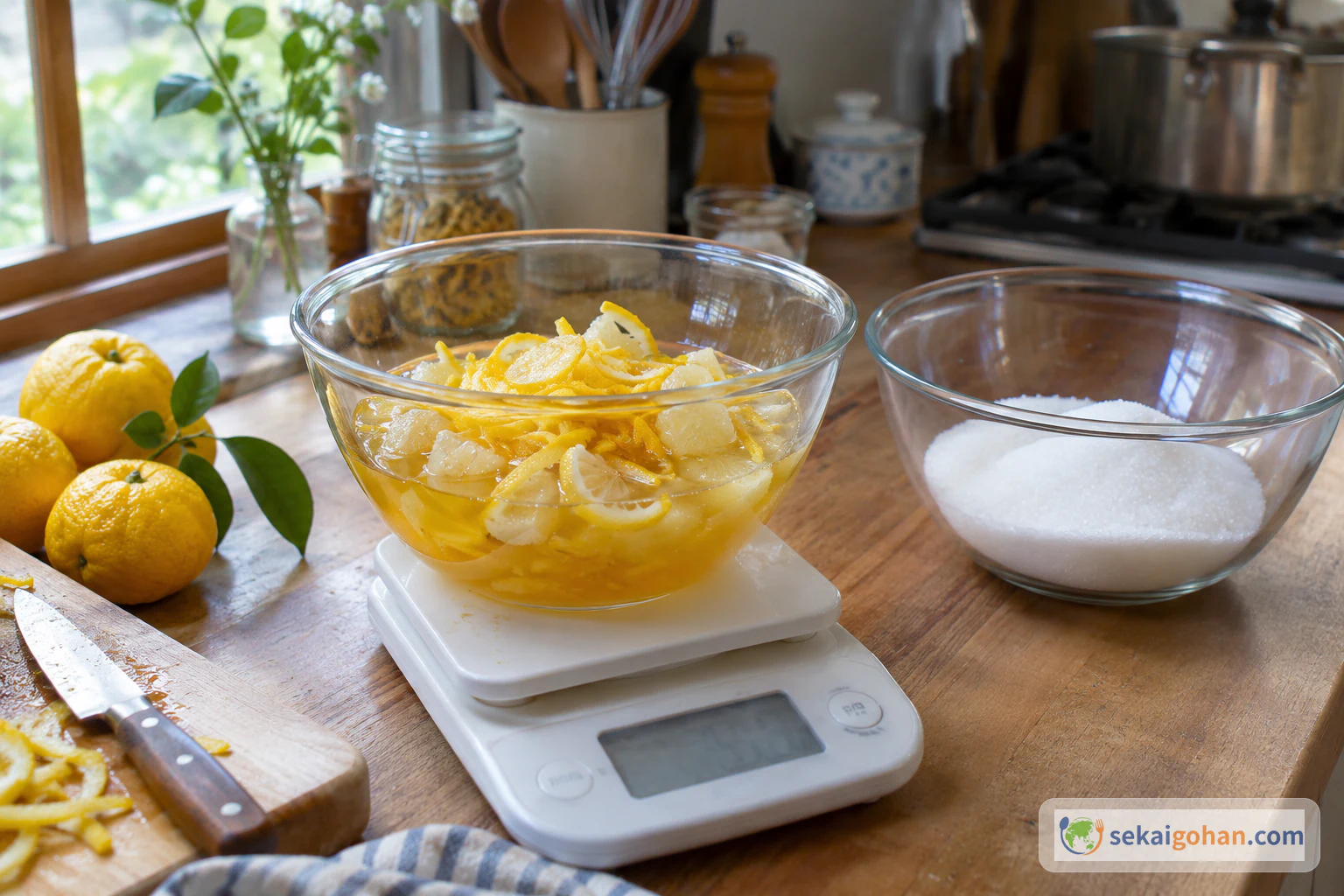
Weighing the peel, flesh and juice on a digital scale with an equal weight of white sugar ready
Zero the scale with the empty bowl first so only the fruit is counted

Put the shredded peel, flesh and juice together in a bowl on the scale. Note the total weight. Weigh out the same weight of sugar in a second bowl, with a little extra kept separately for the top of the jar. The two bowls should read the same on the scale before you go on.

STEP 77 / 11

Fold in the sugar

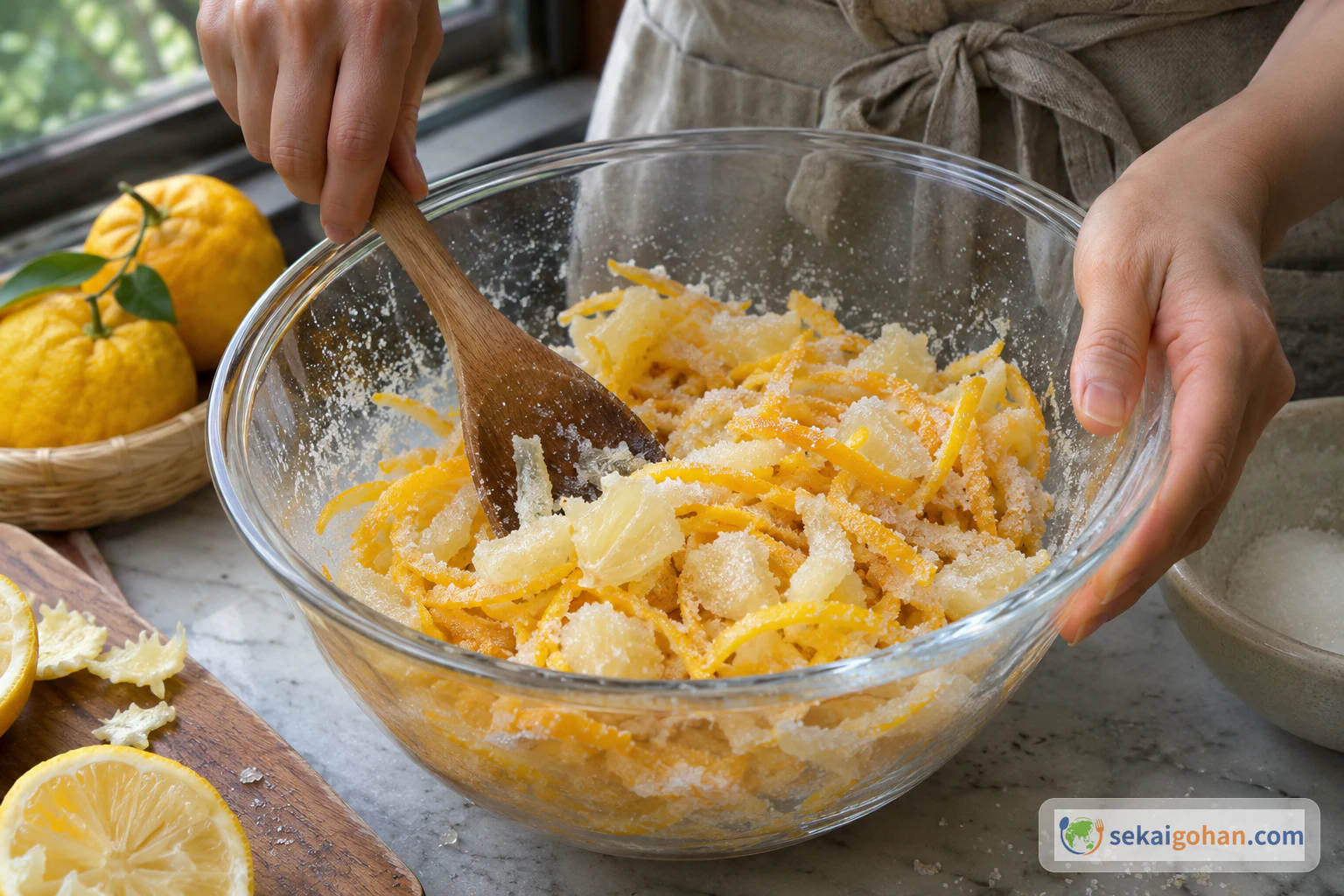
Gently mixing sugar into yuzu peel and flesh in a bowl
Sugar crystals cling to each strand of peel when the mixing is even

Tip the sugar over the yuzu. Fold it through with a spoon, lifting from the bottom of the bowl and turning gently. Do not crush the flesh or mash the peel; you want every strand coated, every piece intact. Stop when no dry patches of fruit remain and the sugar has started to look damp.

Keep it cold-made

Nothing in this jar is cooked. Skipping the heat is what keeps the fresh citrus smell that a boiled jam loses. Resist the urge to warm the mixture to speed things up.

STEP 88 / 11

Pack the jar

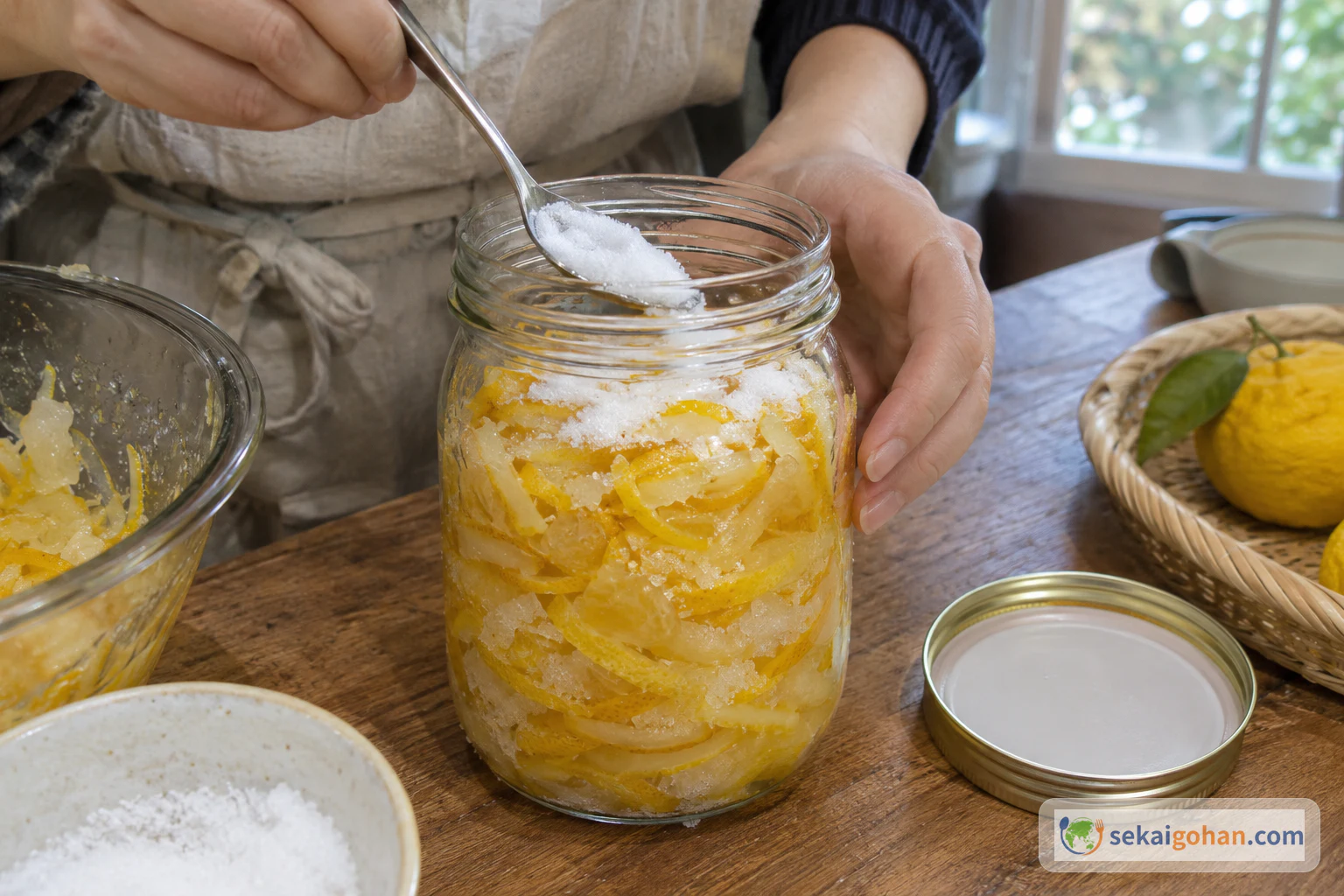
Packing yuzu and sugar into a sterilized glass jar and spreading sugar over the top
A thin, even layer of sugar covers the top of the fruit

Spoon the mixture into the sterilized, completely dry glass jar, scraping in all the syrup from the bowl. Spread the extra sugar in a thin, even layer over the top to help protect the surface. The jar is packed when the fruit is fully covered by a white blanket of sugar.

STEP 99 / 11

Wait for the sugar to dissolve

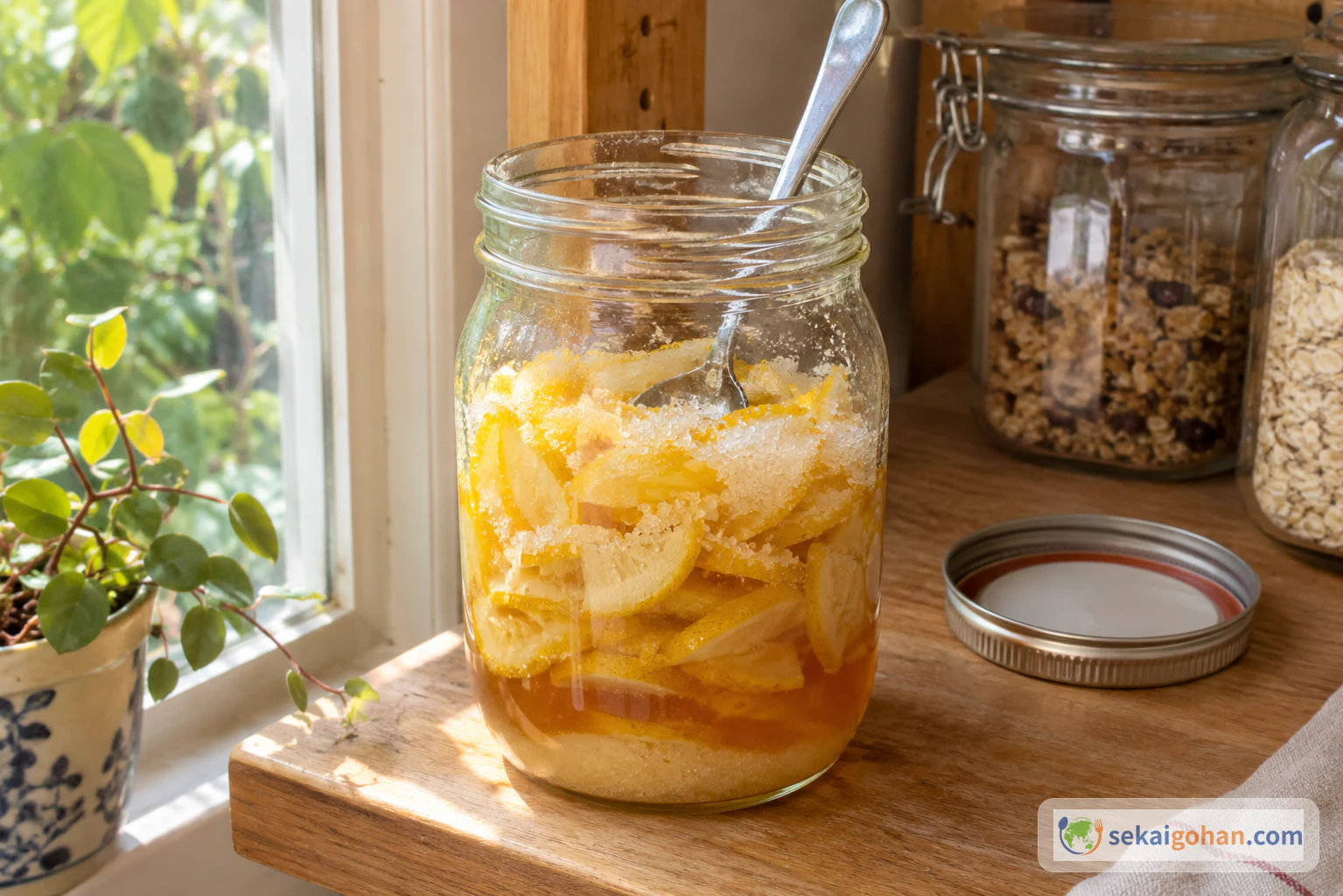
A jar waiting on a room-temperature shelf as the sugar dissolves, stirred gently with a dry spoon
Undissolved sugar shows as a pale layer at the base; stir only then, and only with a dry spoon

Close the lid and set the jar at room temperature. Over the following days the yuzu gives up its juice and an amber syrup pools at the bottom. If sugar settles in a layer underneath, open the jar and stir gently with a clean, dry spoon, then close it again. The jar is ready when no sugar grains remain and the syrup runs clear.

Read the jar, not the calendar

The time depends on the fruit and the warmth of your kitchen. The signal to stop waiting is the syrup itself: fully dissolved, clear, no crunch of sugar at the bottom. Move the jar to the refrigerator the moment you see that.

STEP 1010 / 11

Refrigerate and make a hot cup

STEP 10

Once the sugar has fully dissolved, keep the jar in the refrigerator from then on. For a hot cup, spoon 2–3 tbsp of the preserve, peel and all, into a mug. Pour in a generous ¾ cup (200 ml) of hot water and stir. It is ready when the syrup has spread through the water and the peel threads float loose.

STEP 1111 / 11

Make it iced or sparkling

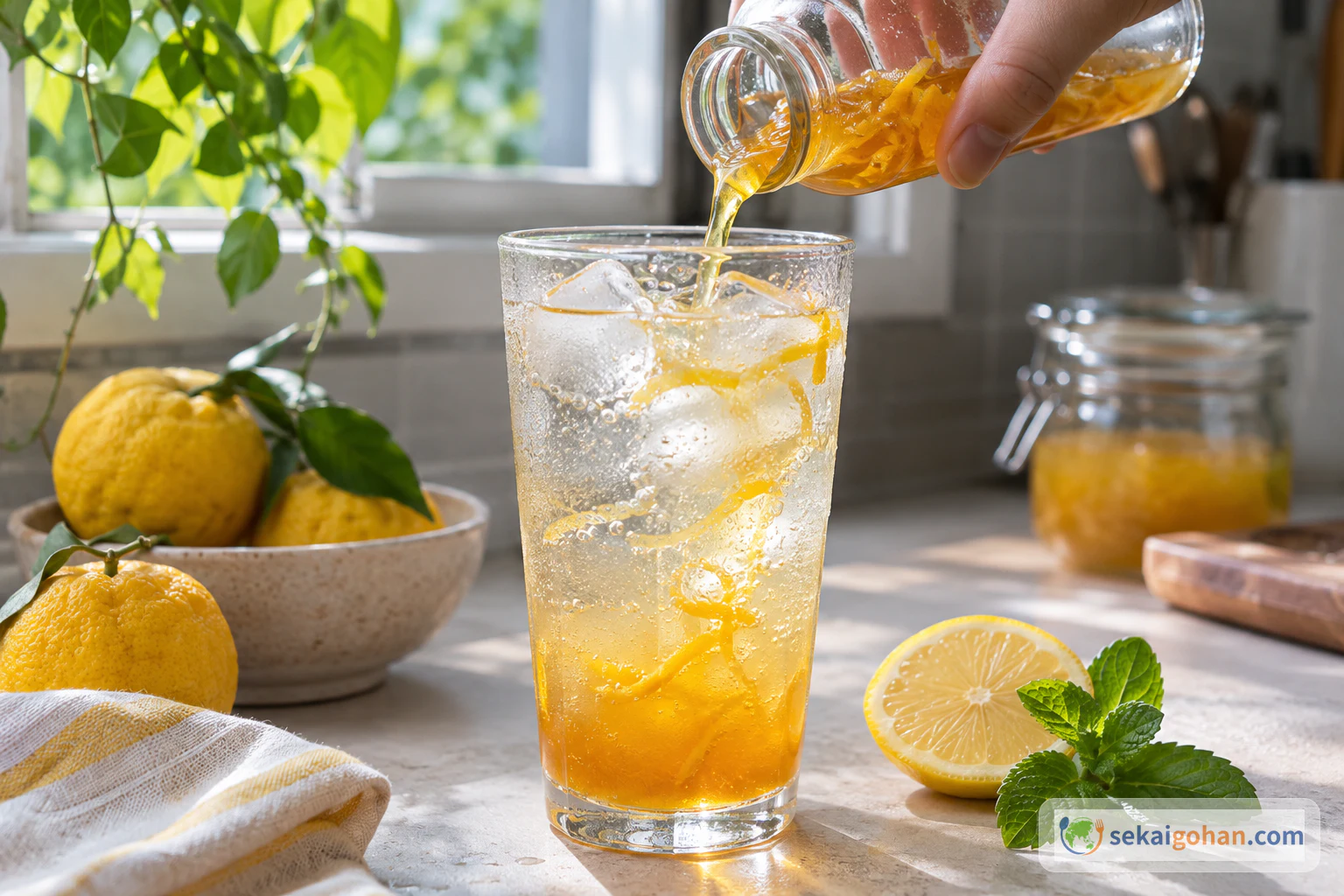
Yuja ade poured into a glass of ice, shredded yuzu peel swirling
Stir before drinking; the heavier syrup sinks below the bubbles

For iced tea, dissolve 3 tbsp of preserve in 2 tbsp (30 ml) hot water first so it blends, then add about ⅔ cup (150 ml) cold water and 3½–5 oz (100–150 g) ice. For a yuja ade, stir 3–4 tbsp of preserve into a glass with 4–5 oz (120–150 g) ice and top with a generous ¾ cup (200 ml) sparkling water or Sprite. A sprig of apple mint or a lemon slice is a nice extra. The drink is right when the syrup swirls evenly through the glass and the peel hangs suspended.

0 / 0
Ingredients

Ingredients

1 / 1

Ingredients

Ingredient Amount Role
Yuzu (유자, Citrus junos): peel, flesh and juice after prep 1.1 lb (500 g) Fragrance from the peel, sourness and body from the flesh and juice
White granulated sugar (설탕) Same weight as the prepared yuzu, 1.1 lb (500 g), plus a little for the top of the jar Draws out the juice, softens the acid, preserves the jar
Baking soda or coarse salt As needed For scrubbing the rind; rinsed off
To serve: hot water, cold water and ice, or sparkling water or Sprite with ice Per glass, see steps 10 and 11 Dilutes the preserve into tea or ade
0 / 0

A spoon goes into the jar and comes up heavy with amber syrup and thin gold threads of peel. Stir it into a mug of hot water and the kitchen fills with a sharp, flowery citrus smell, sweeter and rounder than lemon. Yuja-cha (유자차) is Korea's yuzu tea: no leaves, no brewing, just a spoonful of yuzu preserved in sugar, loosened with water. It tastes like a warm lemonade with yuzu's own perfume, sour at the edges and soft in the middle, with slivers of peel to chew at the bottom of the cup.

A Jar of Autumn on the Kitchen Counter

Yuzu is a strange fruit to eat raw. It holds little juice and a lot of acid, and most of its fragrance lives in the bumpy rind. Korean cooks answer that by using the whole fruit: the peel is shredded thin, the flesh and juice go in with it, and sugar draws everything together into a thick preserve called yuja-cheong (유자청). The tea is simply that preserve diluted, and in everyday speech the jar itself is often called yuja-cha too.

The fruit grows mainly along Korea's southern coast and is picked in October, so the jars are made in autumn and opened as the weather turns cold. Goheung, on that coast, holds a geographical indication for its yuja. In Korean homes the tea is a daily drink kept on hand through the year, and large glass jars of it fill supermarket shelves. People reach for it after a meal, when they feel a chill, or when the throat is sore. It is drunk hot in winter and iced in summer, and both ways count as traditional.

Yuja-cha has been drunk in Korea for centuries, though where and when it began is not settled. Households have also made it by steeping sliced fruit directly in hot water or by simmering the peel, but stirring a spoonful of cheong into water is by far the most common way. It belongs to a whole family of cheong, fruit preserved in sugar until it gives up a syrup, alongside maesil-cheong made from green plums. Each is a pantry jar first and a drink second. You can explore more of the country's table on our Korea page.

Yuja, yuzu, citron and pomelo

Yuja (유자) is the same species Japanese cooks call yuzu, Citrus junos. The common English label "citron tea" is a loose name; true citron is a different fruit, Citrus medica. In Chinese-speaking markets the jars read 柚子茶, a direct rendering of the Korean word. The fruit inside is yuzu, not the pomelo that 柚 usually means in Chinese.


Ingredients
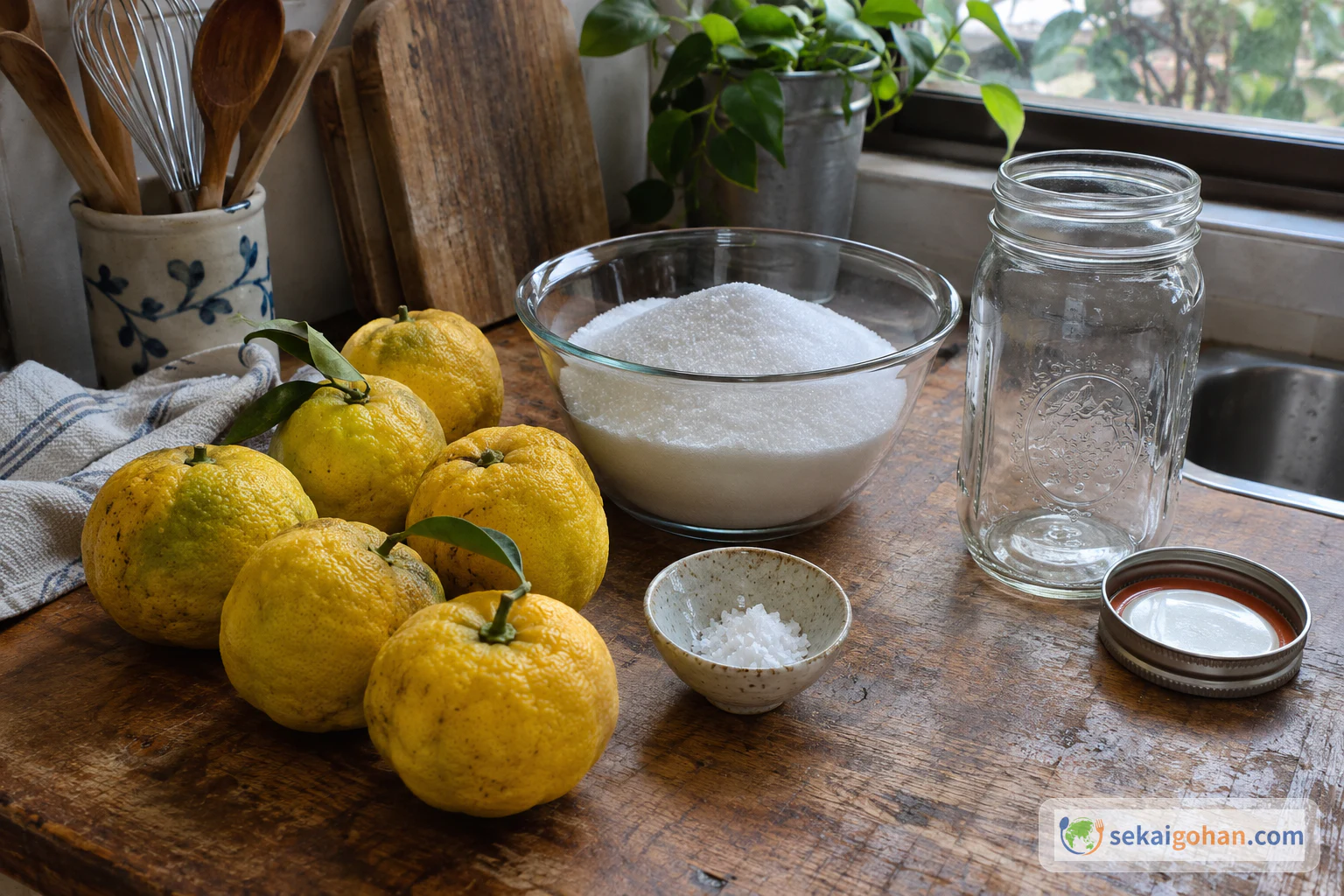
Yuzu, white sugar, coarse salt and a sterilized glass jar laid out for yuja-cha
The salt is only for scrubbing the rind; it rinses away before any cutting begins

The whole recipe turns on one rule: weigh the yuzu after it is prepared, then match that weight with sugar. Peel, flesh and juice all count; seeds do not. Buy more whole fruit than the weight below so you have enough once the seeds are out.

Sugar does a job here

At equal weight, the sugar is what keeps the jar sound and tames the yuzu's sharp acid. Cutting it back for a less sweet jar breaks that balance. Adjust sweetness in the cup instead, with a little more or less preserve.

Allergen information

This recipe contains citrus fruit. Anyone with a citrus allergy should take care with it.

Equipment

  • Digital kitchen scale
  • Glass jar with a tight lid, large enough for the yuzu and sugar together
  • Deep pot for sterilizing the jar in boiling water
  • Thin, sharp knife and a cutting board
  • Large mixing bowl and a small bowl for the juice
  • Paper towels
  • Clean, dry spoon kept for the jar

Choosing Yuzu, Sugar and Shortcuts

Korean yuja and Japanese yuzu are the same species, so any fresh yuzu makes the real thing. Look for it in autumn and winter at Japanese or Korean grocers, farmers' markets or specialty citrus growers online; the season is short and supply is patchy outside East Asia, so buy when you see it. Choose firm, fragrant fruit, since the rind carries the flavour of the whole jar.

White granulated sugar keeps the syrup clean and lets the yuzu lead. Lemon or other citrus can be made the same way, but the result is a different drink: the sourness lands in a similar place while the fragrance goes somewhere else entirely, and that fragrance is what yuja-cha is about. If fresh yuzu is out of reach, a ready-made jar of yuja-cheong from a Korean grocer is the honest shortcut. Pick one where you can see plenty of peel strands suspended through the syrup, and check its storage instructions on the label.

What to keep wherever you cook it: no heat, seeds out, and peel cut as thin as you can manage. Those three decide whether the jar tastes fresh, clean and fragrant.


Method

All the knife work happens on day one, in about the time it takes to prepare a large salad: wash and dry the fruit, take out the seeds, shred the peel, weigh, mix and pack. Sterilize the jar first so it has time to dry completely. After that the jar sits at room temperature until the sugar dissolves, which is the long, hands-off stretch: expect about two to three weeks, though some jars are ready in one.

Hot water and knives

Handle the jar and pot carefully when sterilizing in boiling water, and let the jar cool and dry before filling it. Yuzu rind is bumpy and slippery when wet; cut on a steady board with dry hands and a sharp knife. Use only a clean jar and a clean, dry spoon, and if the jar ever smells off, shows mould or changes colour oddly, throw it away.

When It Goes Wrong

What you see Why What to do
The syrup tastes bitter Seeds were left in the fruit Seed every half carefully next time; the bitterness stays in this batch
A layer of sugar sits at the bottom The sugar has not fully dissolved yet Stir gently with a clean, dry spoon and keep waiting at room temperature
The jar spoils during resting Water on the fruit, or a jar or spoon that was not clean and dry Dry the fruit completely, sterilize and dry the jar, and use only a dry spoon
Peel is chewy and the aroma is faint Strips cut too thick Slice the peel thinner; fine threads release more fragrance
The syrup is cloudy with mushy fruit Fruit crushed while mixing Fold the sugar in gently without pressing the flesh
Too sweet or too tart in the cup The ratio of preserve to water Change the spoonfuls in the cup; leave the jar's equal-weight balance alone

Serving, Variations and Storage

At the table

Hot yuja-cha belongs to cold evenings, after dinner, or when someone at home is coughing. It sits well after a warming bowl of samgyetang or a plate of mandu, and it makes a good partner for sweet, griddled hotteok on a winter afternoon. In summer, the iced version and the sparkling ade carry the same jar into hot weather. Spoon some of the peel into every cup; chewing it is part of the drink.

Variations

  • Honey jar. Honey can stand in for sugar as its own preserve. It brings its own strong aroma, which competes with the yuzu, so the jar tastes more of honey and less of citrus.
  • Lemon or other citrus. The same method works with other fruit. The sourness stays familiar, but the fragrance is a different drink.
  • Cafe-style ade. Sparkling water or Sprite over ice with mint or lemon turns the preserve into a bright, fizzy summer glass.
  • Ready-made jar. A good store-bought yuja-cheong mixes up with the same spoonfuls for each cup.

Storage

Once the sugar has fully dissolved, keep the jar in the refrigerator with the lid closed. Always use a clean, dry spoon to take preserve out. If it smells off or shows mould, throw it away.

Frequently asked questions

Can I use a ready-made jar from a Korean grocer?

Yes. The jar in the shop is the same preserve you make at home. Mix it hot, iced or sparkling with the same spoonfuls in steps 10 and 11, and store it as the label tells you.

Why isn't the preserve cooked like marmalade?

Heat dulls citrus fragrance. Leaving the fruit raw and letting sugar draw out the juice keeps the bright, fresh yuzu smell that makes the tea worth making. The sugar does the preserving work that boiling would do in a jam.

Should I eat the peel in the cup?

Yes. Yuja-cha is drunk peel and all, and the thin shreds soften in the syrup. They give each sip a little chew and a burst of fragrance.

Does yuja-cha contain caffeine?

No. It is made only from yuzu and sugar, with no tea leaves, so it suits evenings and anyone avoiding caffeine.
Sources

  • Korea Tourism Organization, "Citrus Tea (유자차 / Yujacha)." Yuja-cha as a traditional Korean tea of yuzu preserved in sugar or honey and diluted with water; yuzu grown mainly on the southern coast and harvested in October; jar preserving; drunk after meals or when catching a cold; taste similar to lemonade. https://english.visitkorea.or.kr/svc/contents/contentsView.do?vcontsId=181906
  • Taste Korean Food, "Yuja-cheong: Korean Yuzu Marmalade." Equal-weight yuzu and sugar, the ten preparation steps, drying to prevent spoilage, seed bitterness, the no-cook method, sterilized jar with a sugar top layer, and refrigeration once the sugar dissolves; yuzu as Citrus junos rather than citron. https://www.tastekoreanfood.com/recipes/yuja-cheong-korean-yuzu-marmalade
  • Taste Korean Food, "Korean Citron Tea (Yuja-cha): How to Make Yuzu Tea." Hot, iced and ade proportions; hot and iced as equally traditional; the range of resting times; other preparation methods; Goheung yuja geographical indication. https://www.tastekoreanfood.com/recipes/korean-citron-tea-yuja-cha
  • Kimchimari, "14 Everyday Korean Teas." Yuja-cha as an everyday caffeine-free Korean tea made from cheong, drunk hot or cold; yuzu's scant flesh, strong acidity and fragrant peel. https://kimchimari.com/everyday-korean-teas/
  • Wikipedia, "Yuja tea." Supplementary confirmation of names: yuja versus citron, the Chinese rendering 柚子茶 versus pomelo, and the jar preserve also being called yuja-cha. https://en.wikipedia.org/wiki/Yuja_tea