Meat smoke riding on the steam of rice
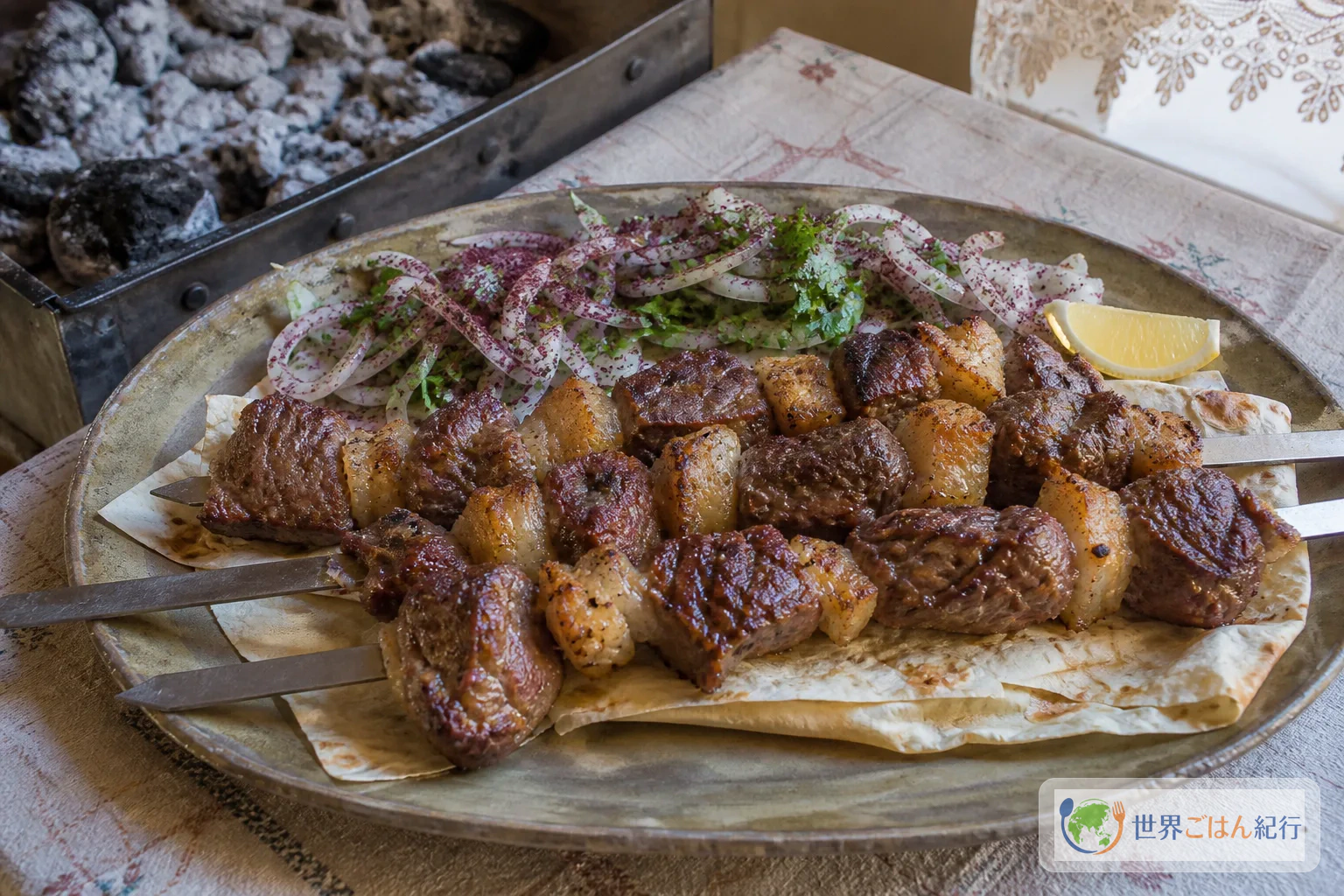
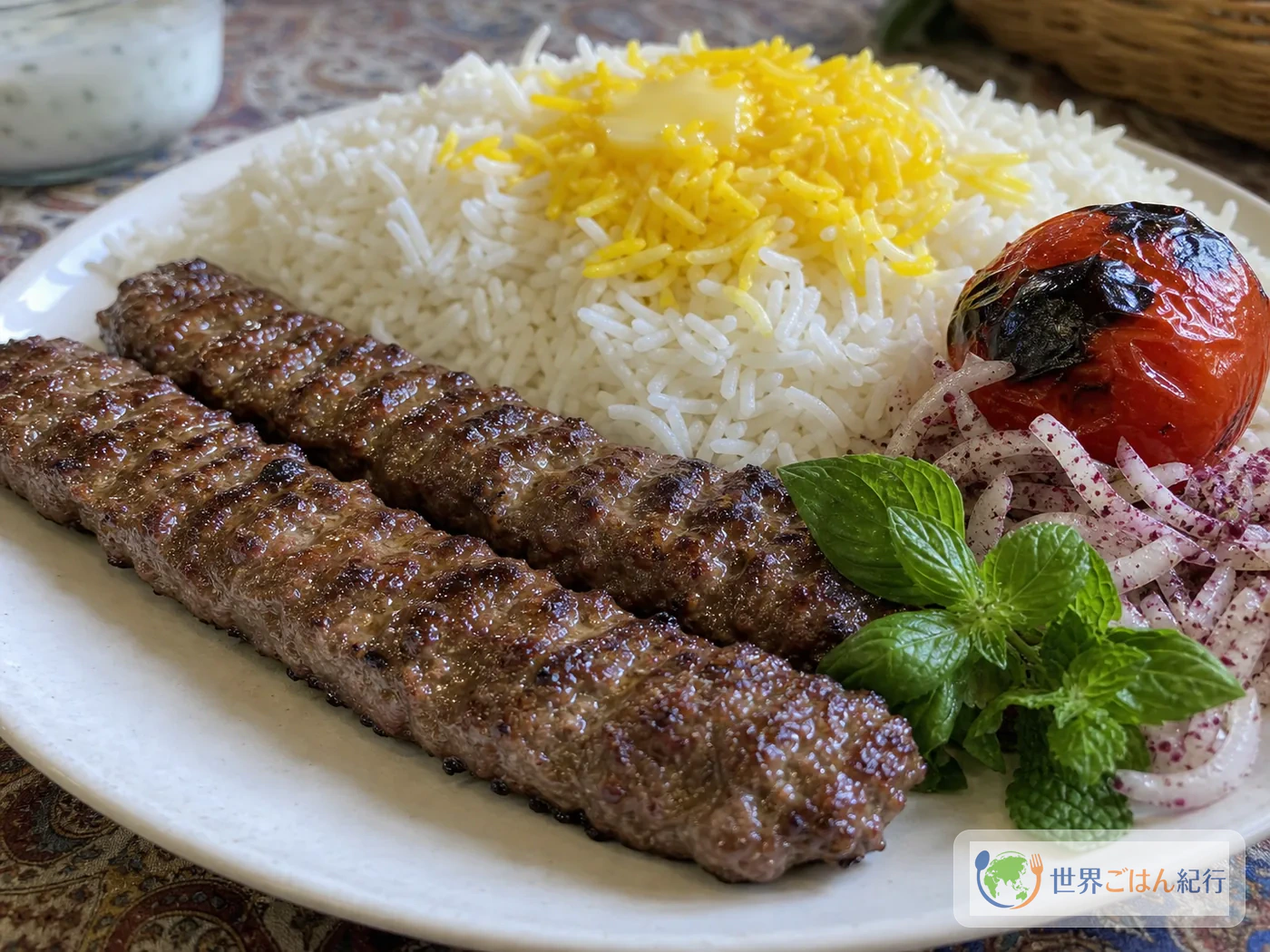
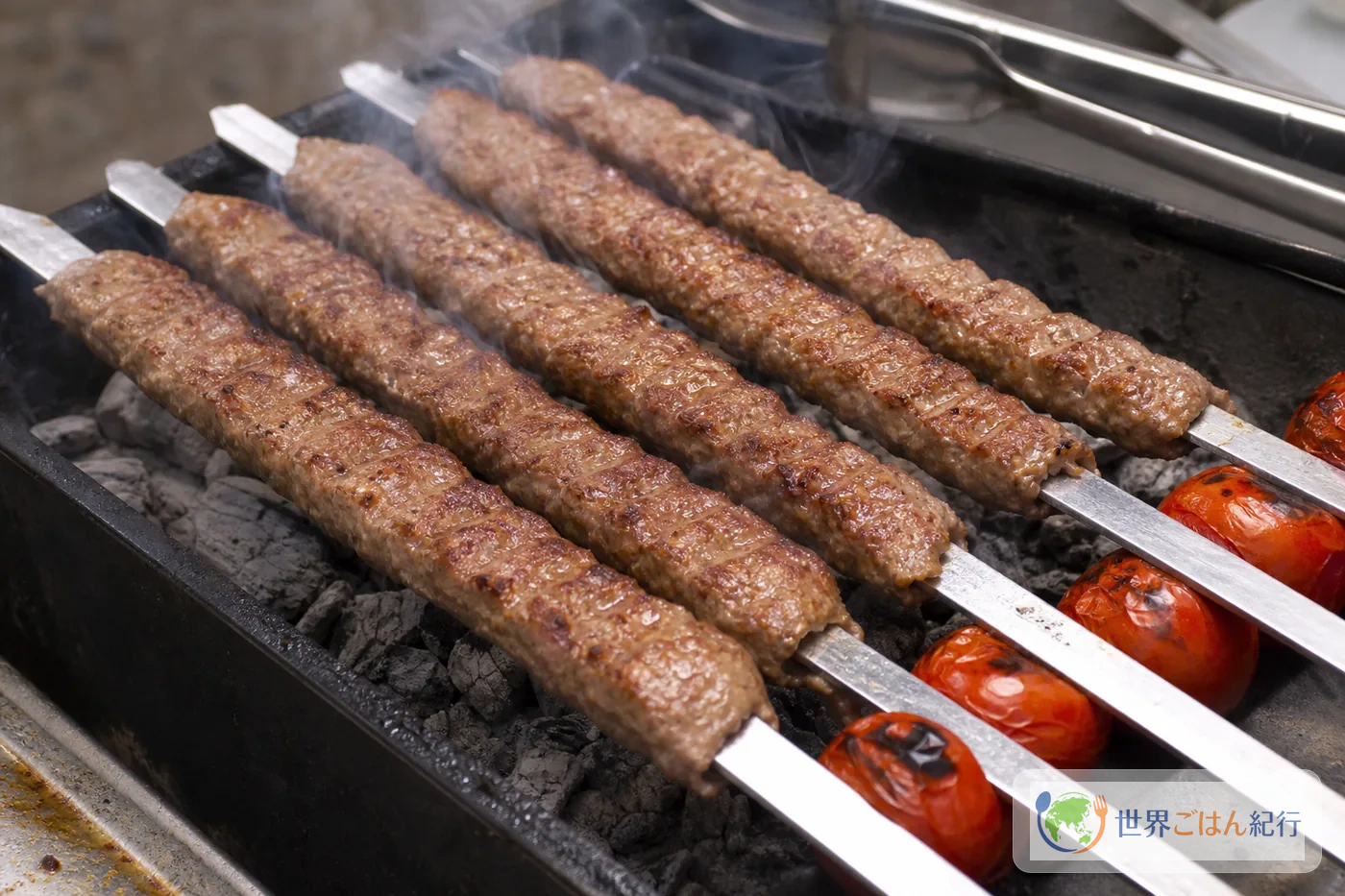
A mound of white rice is set on the table, and freshly grilled long skewers of meat are brought to it. Press the meat with flatbread, slide out the metal skewer, and hot fat drips onto the rice. Butter melts, the yellow of saffron spreads just a little, and beside it are charred tomatoes and onions dusted with sumac. Chelow kabab (Chelow kabab / چلوکباب) is an Iranian dish in which rice and grilled skewers are each made with care, then brought together on the plate at the end.
When you hear "kebab," many people may think of the street food of thin-sliced meat rolled in bread. Chelow kabab is different: the star is the pairing of rice and grilled skewers. Chelow is white steamed long-grain rice, and kabab is meat grilled over charcoal. This article centers on koobideh (ground meat pressed onto a flat skewer), which is easy to make at home. The high point is keeping the meat on the skewer, keeping the rice from getting sticky, and bringing in the aroma of saffron and sumac without strain.
Among Iranian dishes, tahchin, which sets rice with yogurt and saffron, is an oven dish, and fesenjan, with walnuts and pomegranate, is a stew. Chelow kabab is more direct, bringing rice, meat, sourness, and herbs together on one plate. If you have made Middle Eastern skewers such as Turkish cag kebabi or Azerbaijani lula kebab, you will see clearly the difference in "how the meat is held on the skewer."
In Persian it is written چلوکباب, and the transliteration varies: chelow kabab, chelo kabab, čelow-kabāb. چلو (chelow) is white steamed rice and کباب (kabab) means grilled meat. This article writes "chelow kabab" for readability and leans to koobideh (kabab-e koobideh), which is easy to handle at home.
Chelow kabab is the combined play of rice and skewers
Encyclopaedia Iranica describes chelow kabab as a dish that combines cooked rice with grilled lamb or veal, served with butter, egg yolk, sumac, onion, grilled tomato, and basil. In a separate entry on Qajar cuisine, it is summarized that rice chelow and meat kabab had existed before, but the combined plate appeared as a new form in the later nineteenth century.
What is interesting about this dish is that no heavy sauce goes on the meat. The grilled koobideh is eaten for the meat's fat, salt, the sweetness of onion, and the aroma of charcoal or grill. The rice gets butter and saffron, the sourness comes from sumac onion, and moisture is supplied by grilled tomato or doogh. In other words, the flavor is built within the plate. Rather than covering with sauce, the rice catches the fat and onion and herbs lighten the mouth.
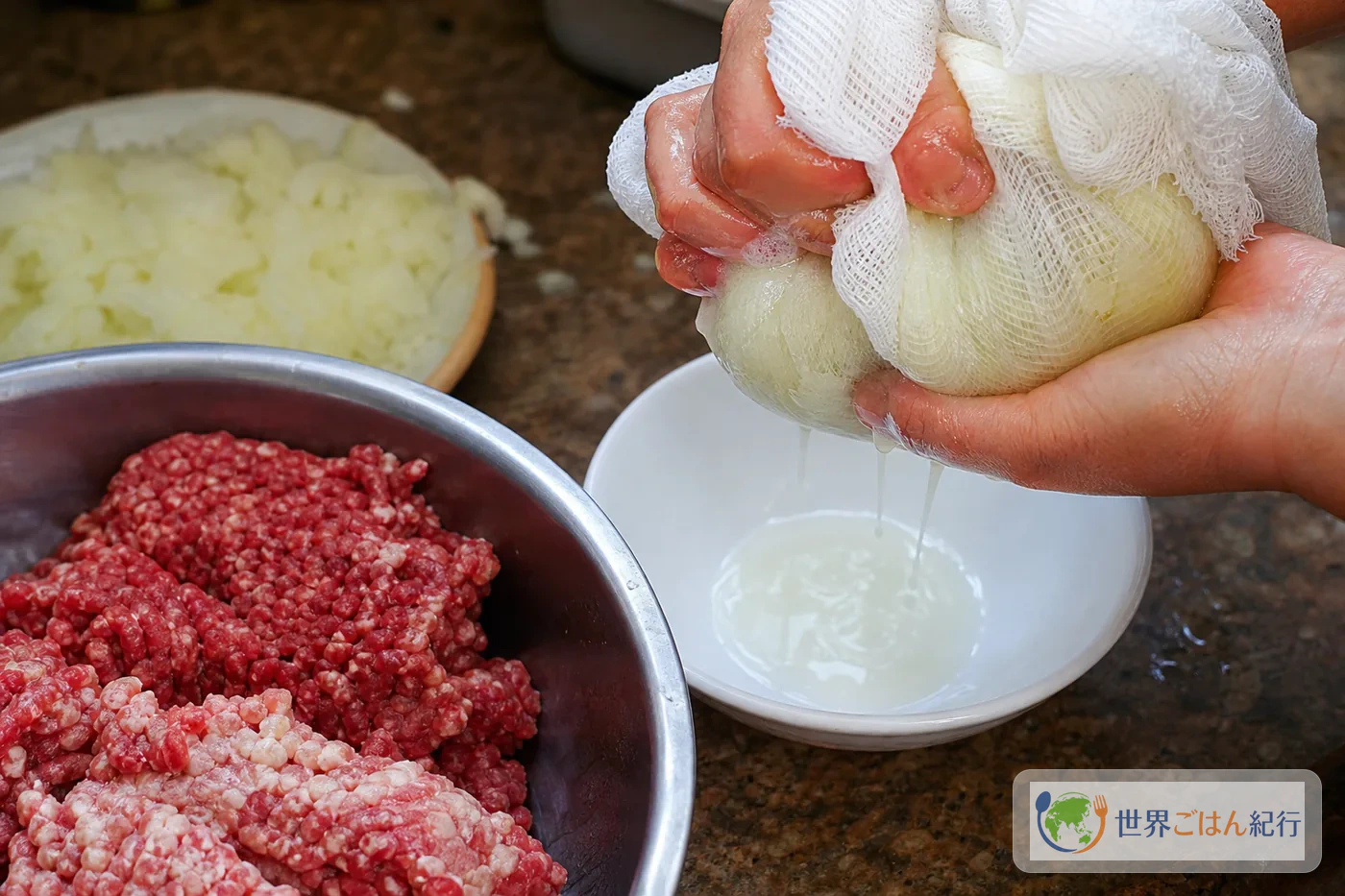
When making it at home, three judgments matter more than full charcoal equipment. Bind the ground meat with onion that has had its moisture removed. Use basmati rather than short-grain rice if you can, parboiled and then steamed. Finish with saffron, sumac, and grilled tomato, and do not make it a meat-only grill. With these three, even the same skillet cooking moves a step from "ground meat skewer and rice" toward the Iranian table.
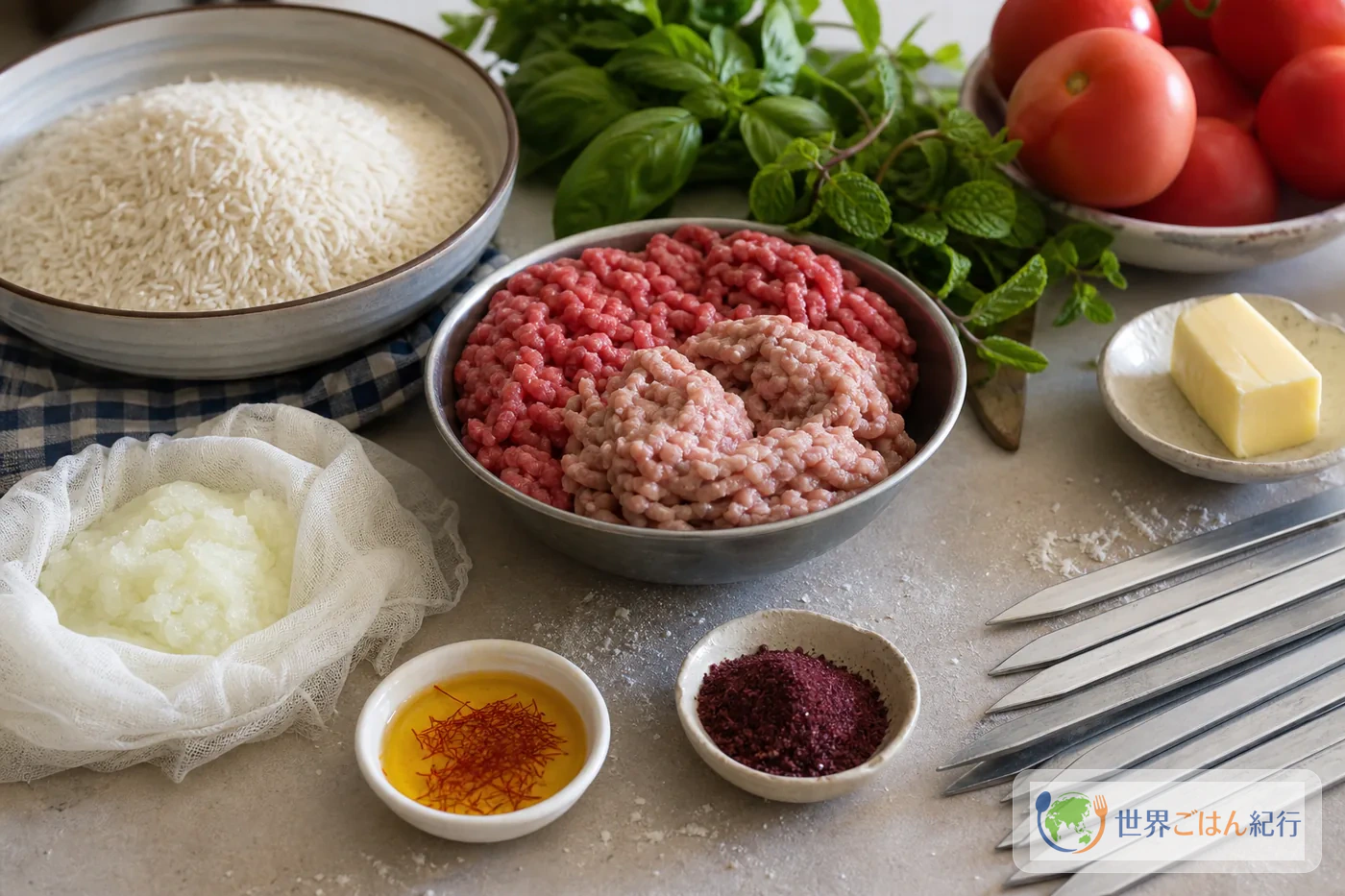
Ingredients (serves 4): koobideh skewers and chelow rice
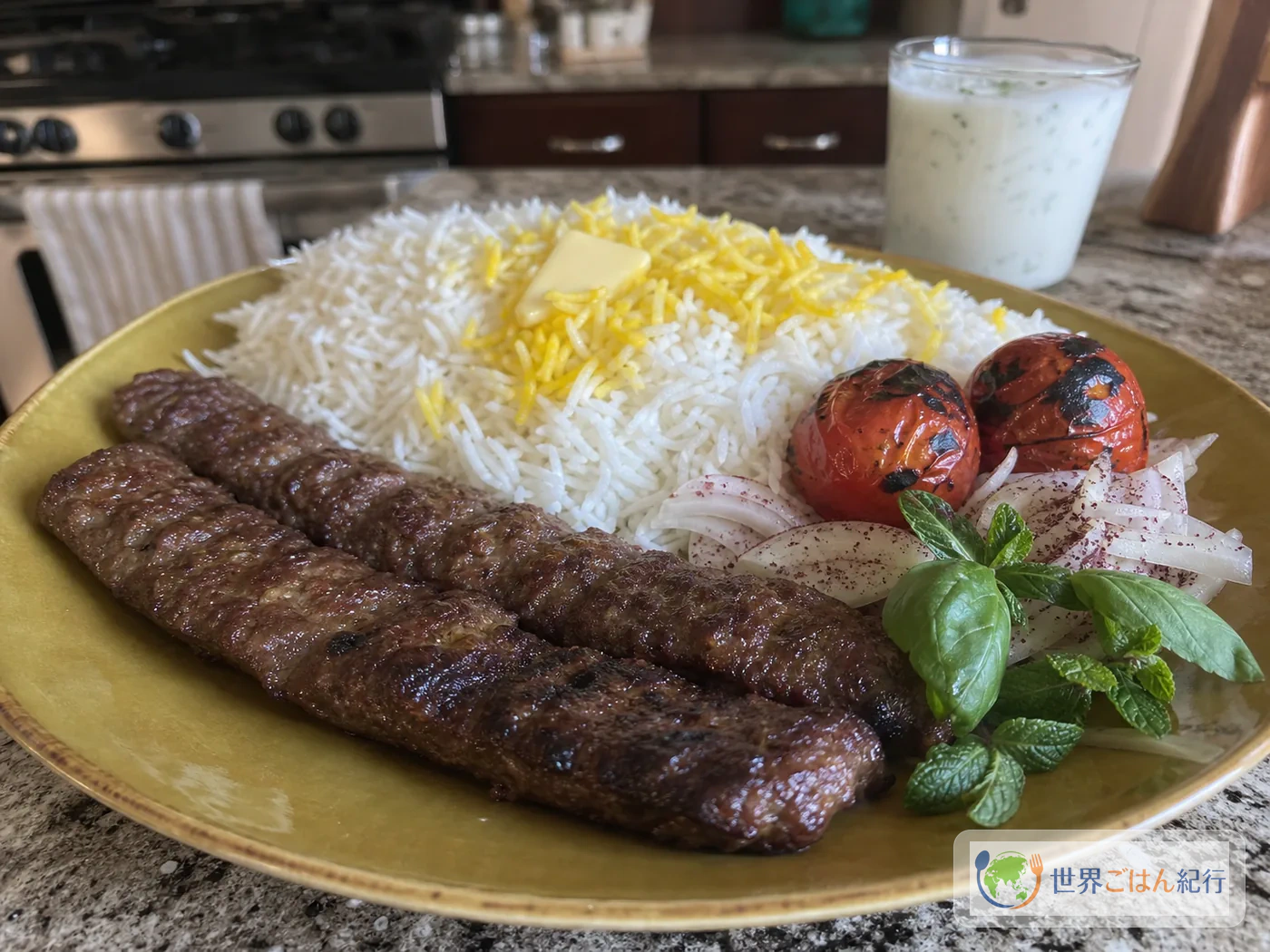
Koobideh takes on aroma when ground beef and ground lamb are mixed. If you dislike lamb, beef alone works, but lean red meat alone falls off the skewer easily and bakes dry. Starting from about 7 parts beef and 3 parts lamb makes it easy to eat.
This recipe uses beef, lamb, and dairy. Cook ground meat through to the center; at home, grilling until the thickest part reaches 75°C or higher gives peace of mind. When serving to someone not used to saffron or sumac, start with a small amount. If serving doogh or yogurt alongside, also check for milk allergy.
What to gather
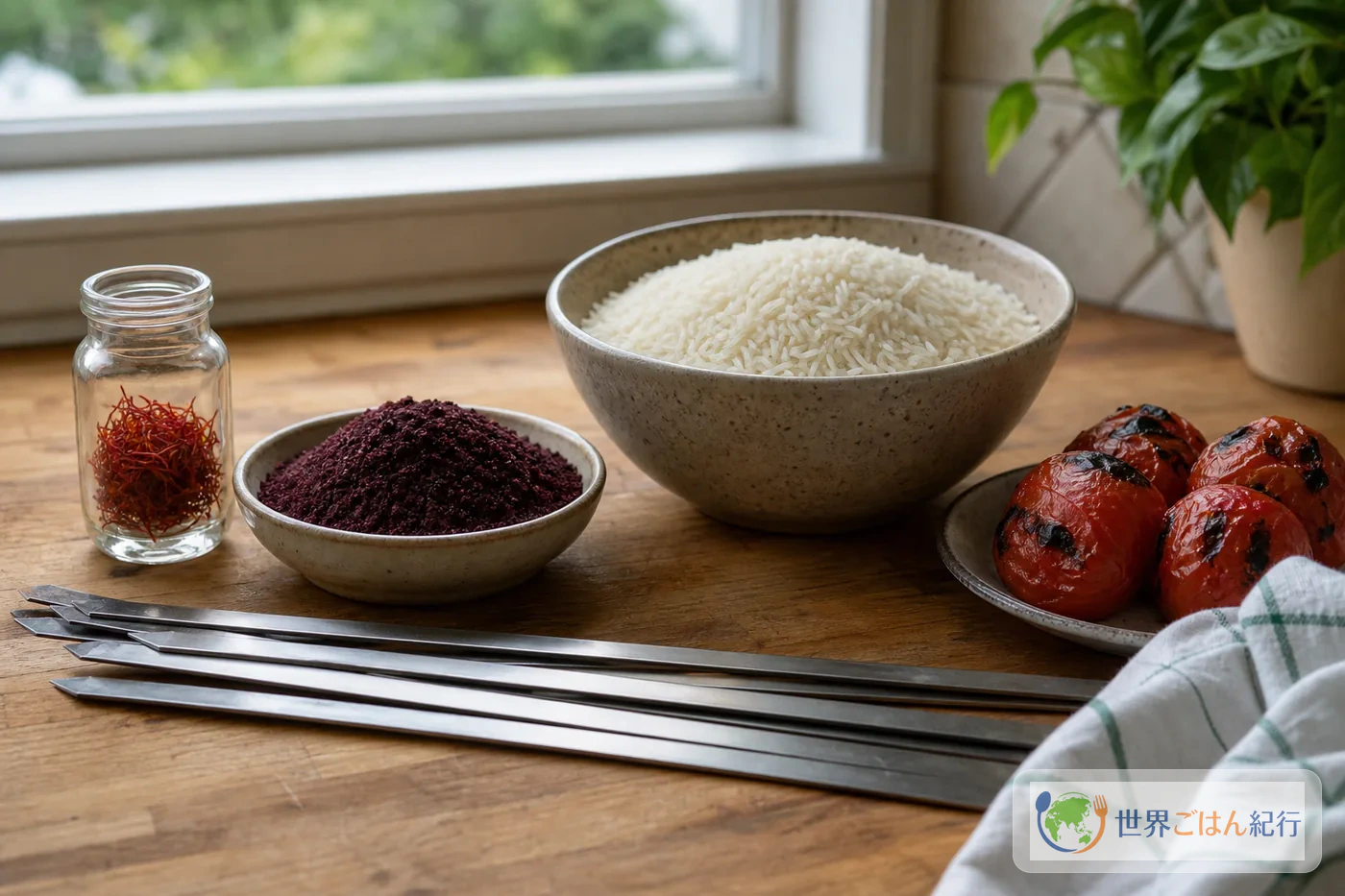
At an ordinary grocery store you can buy ground meat, onion, tomatoes, butter, lemon, and herbs. What is worth seeking out elsewhere is basmati rice, saffron, sumac, and flat metal skewers. For the meat itself, picking ground meat that still has fat and mixing and grilling it on the day you buy it matters more to flavor than which shop you buy from.
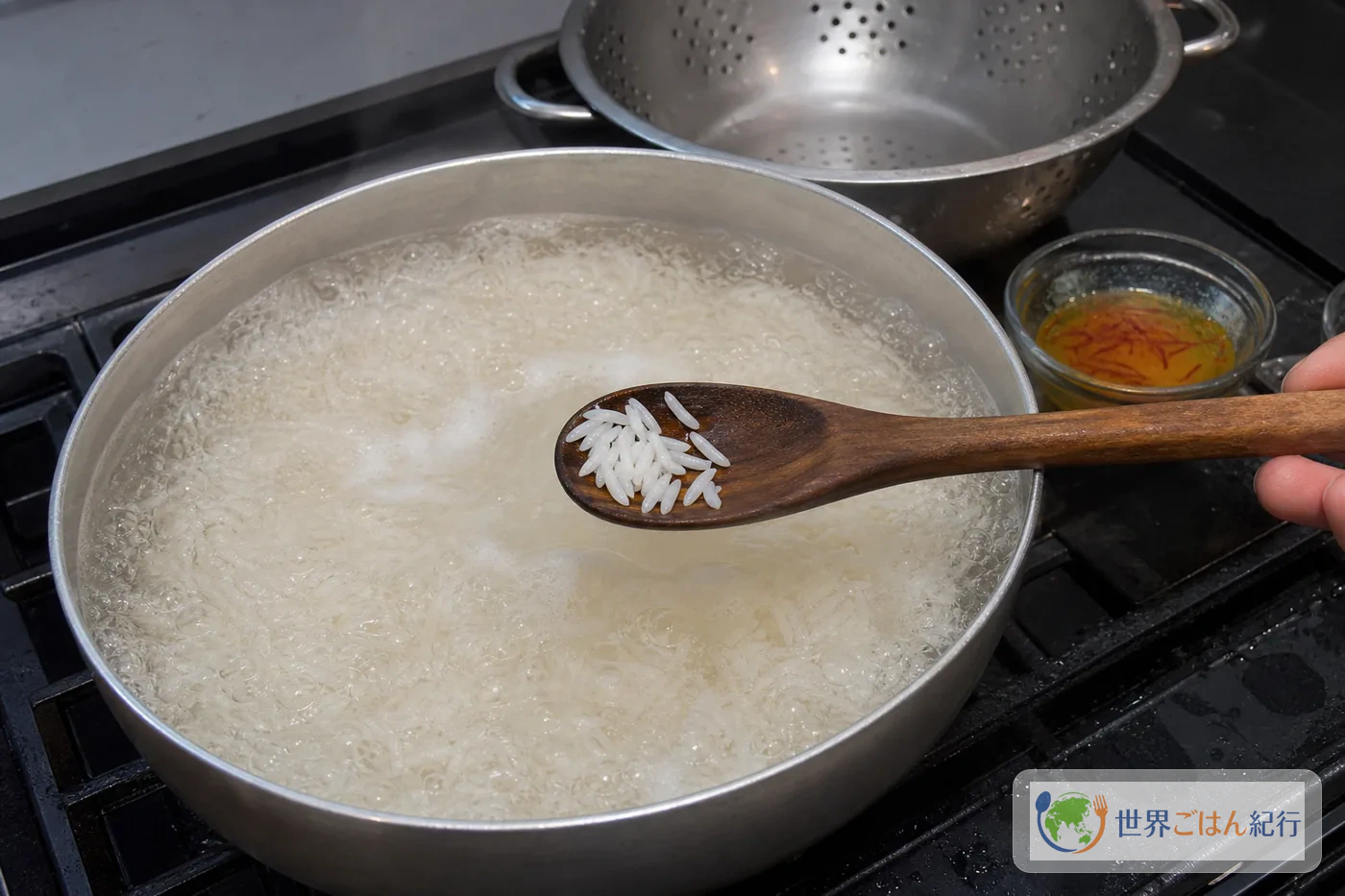
Basmati rice is the core of what makes it chelow. You can eat it with short-grain rice, but the grains stick together and feel heavy when they catch the meat's fat. If long-grain rice is parboiled and then steamed, the grains stand up and the saffron butter circulates lightly over the surface.
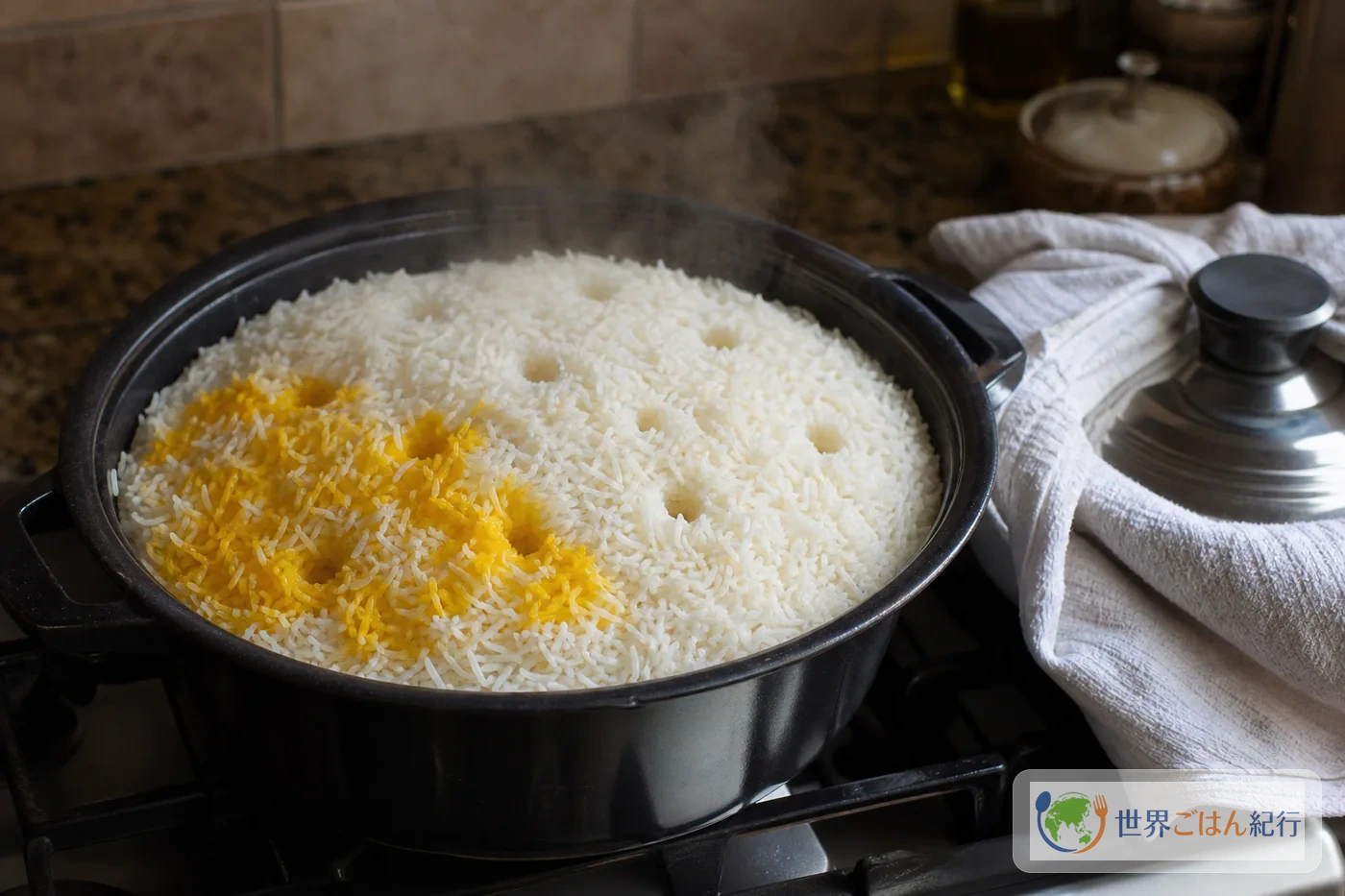
Saffron can be a small amount. You don't need to dye all the rice yellow; a little deeply scented yellow rice over the white rice is enough. Sumac adds a dry sourness unlike lemon to the onion. It also goes to dishes like Palestinian musakhan (in Japanese) and Turkish arnavut ciğeri (in Japanese), so if you like meat dishes it is a spice easy to use up.
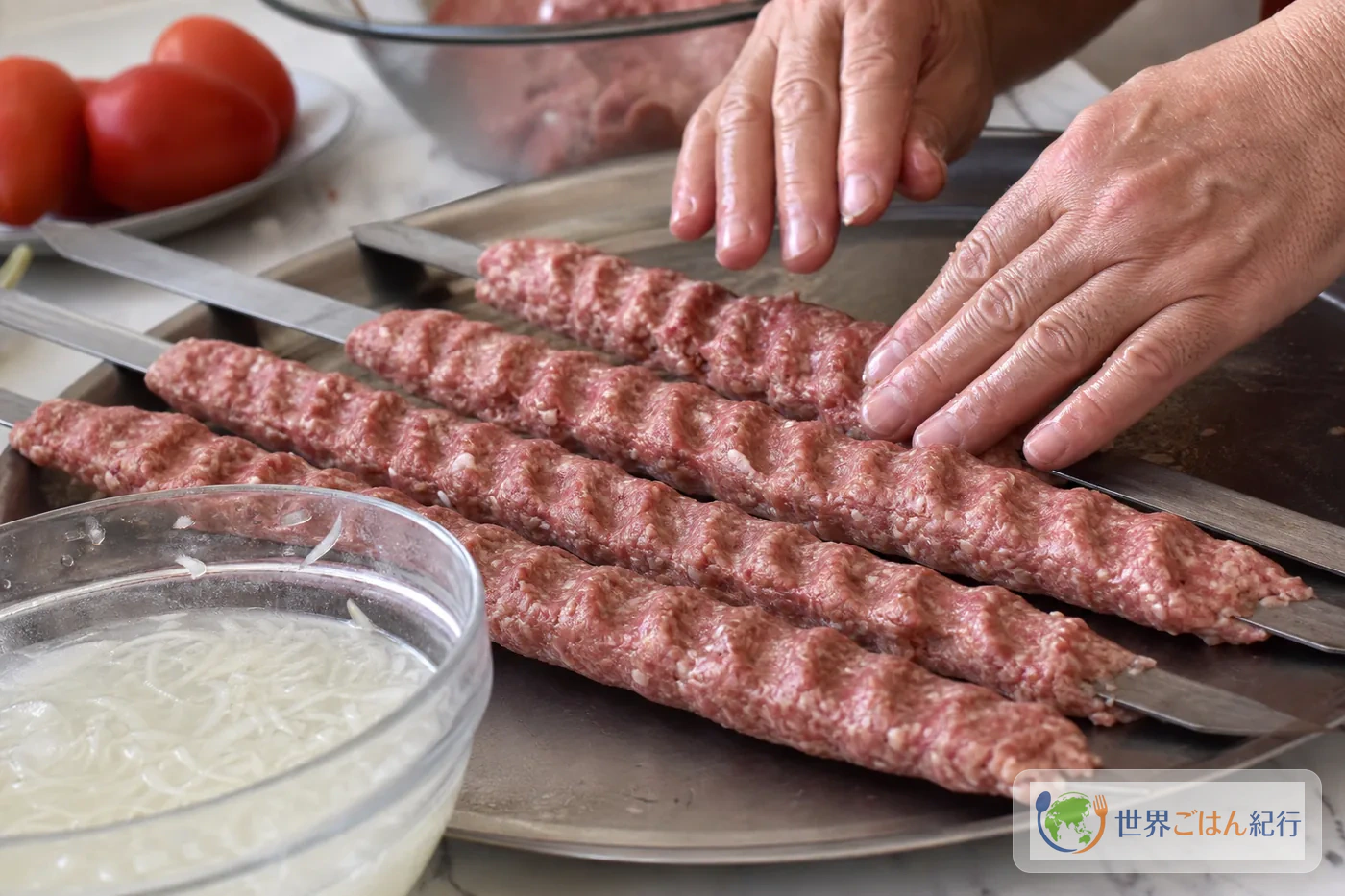
Flat skewers are a shortcut to making koobideh succeed. With round skewers the meat turns and falls off, and bamboo skewers are not wide enough. Without flat skewers, switch to shaping long thin ovals by hand and cooking them in a grill pan. In that case, accept it as "koobideh-style shaped grilling," not "skewer grilling," and it comes out cleaner than forcing the meat onto bamboo skewers.
How to make it: keep the meat on, steam the rice lightly
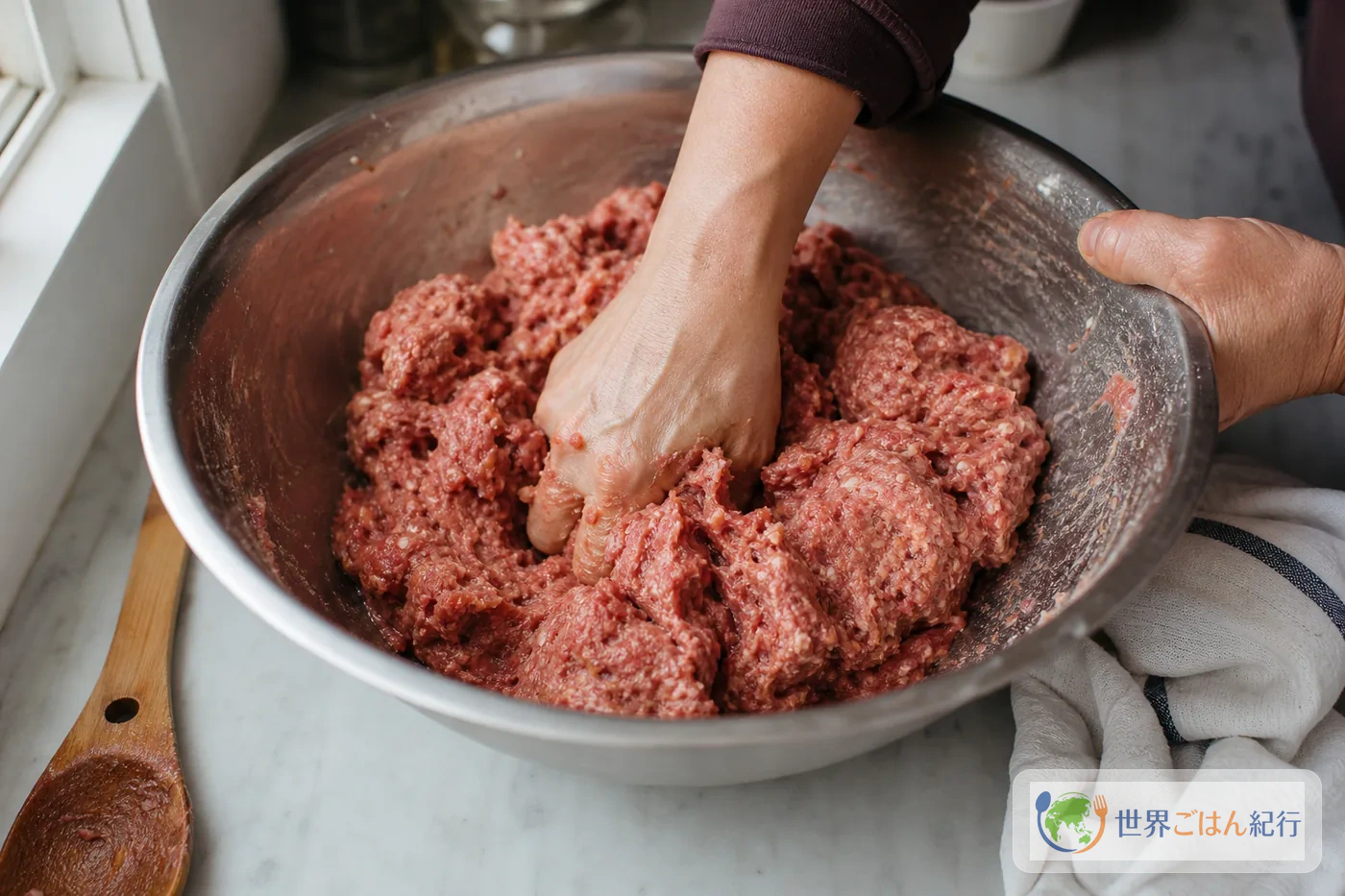
Chelow kabab looks simultaneous, but at home it is steadier divided up. First knead and chill the meat, and while it chills soak the rice. Right before you start grilling, parboil the rice, and grill the meat while the rice steams. Finally combine them on the plate.
Where it goes wrong: meat falls off, rice is heavy
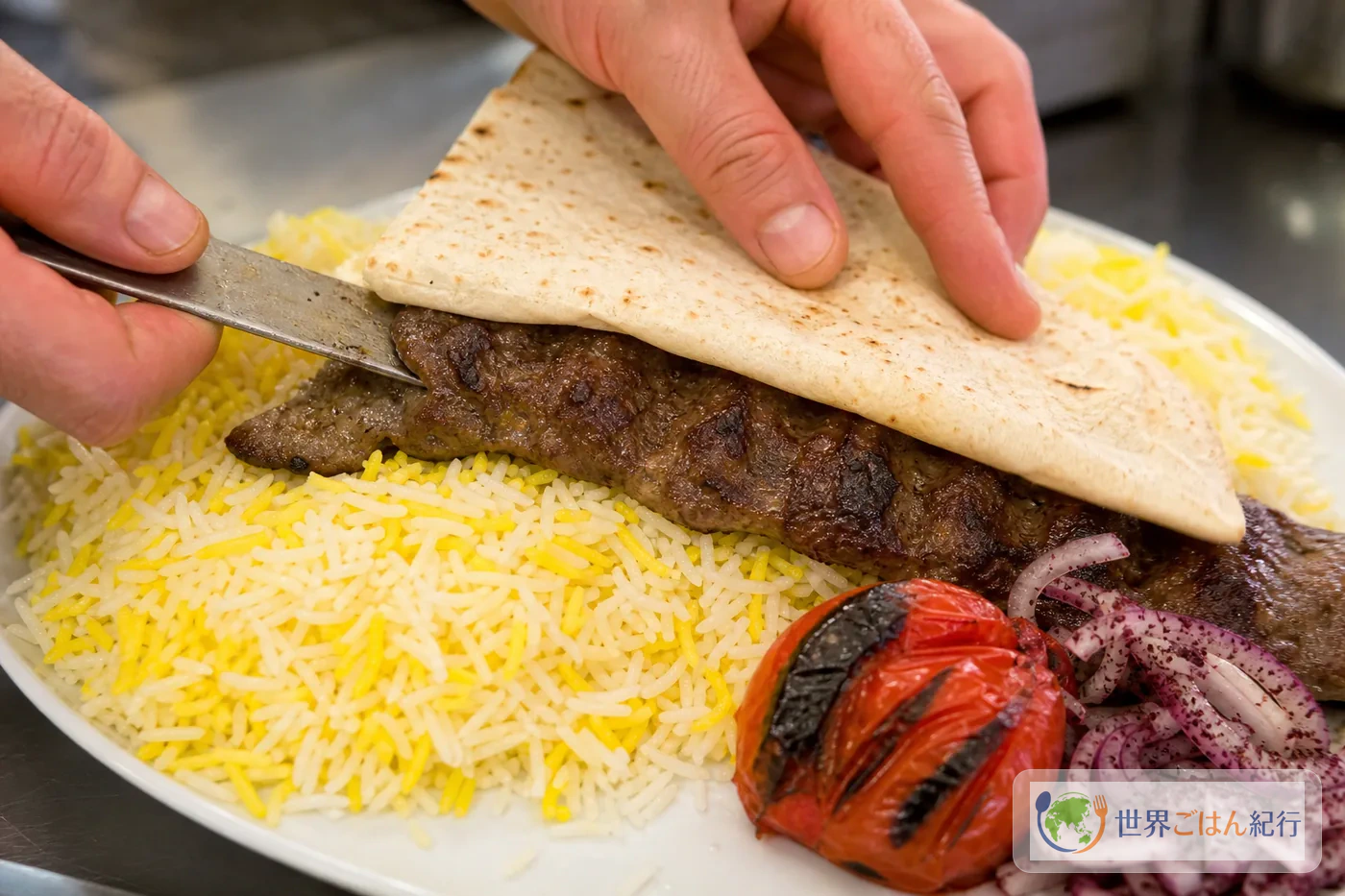
The failures of chelow kabab are easier to recover from if you separate meat and rice. Meat falling off does not mean the rice failed too. Even if the rice is heavy, a table holds together if the meat smells good. Fix one place at a time next round.
| Condition | Cause | How to fix |
|---|---|---|
| Meat falls off the skewer | Too much onion moisture, too little kneading, warm mixture | Shape the fallen meat into ovals and grill again. Next time squeeze the onion hard and chill 10 minutes after shaping |
| Meat is tough | Too lean, overcooked, or warmed by overkneading | Mix in 30% lamb, or with beef only add 2 tsp rice bran oil |
| Only the surface burns | Grill pan too hot, meat too thick | Lower to medium heat and shape no thicker than 1.5 cm |
| Rice is sticky | Parboiled too long, short-grain rice used, too much steaming water | Spread the drained rice and cool for 3 minutes; next time stop at 5 minutes of boiling |
| Weak saffron aroma | Put straight into boiling water, amount too small | Steep in warm water for 10 minutes and put it strongly in one part, not through all the rice |
The biggest cause of falling meat is onion. Onion gives sweetness and aroma but also a lot of water. If you squeeze until almost no juice comes out, the meat mixture suddenly becomes easier to handle. Adding breadcrumbs or egg as a binder also works, but too much moves toward hamburger. For a first time, keep the escape route of grilling fallen meat as ovals, and return to flat skewers next time, so you don't drag the failure along.
For the rice, it is important not to confuse "boiling" with "steaming." Parboiling is not the step that finishes the rice; it is the step that leaves a little core. The heat goes in during steaming, and the surface of the grains dries. Cooking long-grain rice straight in a rice cooker is easier, but the lightness typical of chelow does not come easily. A little more trouble, boiling in plenty of water and then steaming, keeps the whole plate from getting heavy even after catching the meat's fat.
How to eat it and storage: lighten with sourness and herbs, not sauce
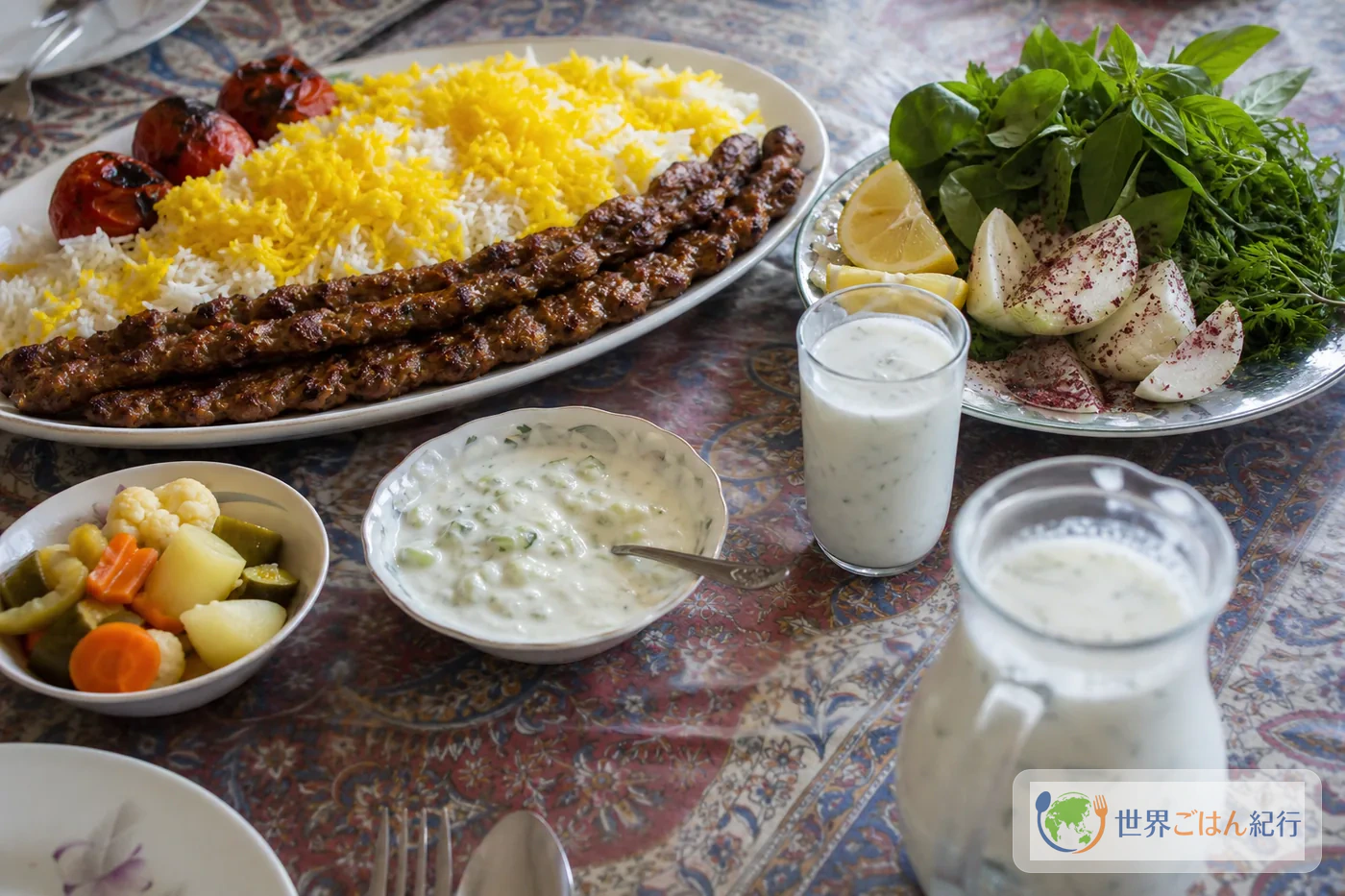
When eating, first break the rice a little and let the butter melt in its heat. Next cut a bite of koobideh and put a little sumac onion, grilled tomato, and herbs on it. It is not a dish with a sauce, so the sense is of combining rice, fat, sourness, and aroma in the mouth. Crushing the grilled tomato into the rice lightens the fat of the meat.
For a drink, salty yogurt drink doogh goes well. At home, mix 100 g of unsweetened yogurt, 120 ml of water, 1/5 tsp of salt, and 1/4 tsp of dried mint well and add ice for a similar mood. If avoiding dairy, squeeze lemon into cold sparkling water and increase the herbs on a separate plate.
To widen the menu, add a sour starter such as hummus or baba ghanoush (in Japanese), and in an Iranian flow a small portion of ghormeh sabzi (in Japanese), and it does not lean only toward meat. On a day you want to enjoy rice-dish differences, comparing with tahchin, which sets layers of saffron, makes the difference between "baking" and "steaming" clear even for the same rice.
For storage, keep meat, rice, onion, and herbs separate. Once the koobideh has cooled, put it in a clean container and refrigerate until the next day. Refrigerate the rice in a separate container too, and to reheat, sprinkle 2 tsp of water, microwave at 600 W for 1 minute 30 seconds, stir, and warm 30 seconds more. Reheat the meat in a skillet over medium-low with a lid, 2 minutes per side. Microwaving alone tends to bring out juices, so on a day with time the skillet brings back more aroma.
If freezing, freeze only the grilled koobideh. Wrap each skewer in plastic wrap and put them in a freezer bag, for about 2 weeks. Thaw half a day in the refrigerator, and warm in a skillet over low heat with a lid for 4 to 5 minutes. Rice can be frozen too, but the standing grains of chelow suffer. If it is for lunch the next day, refrigeration is easier to handle.
Frequently asked questions
Q. Can I make it with short-grain rice?
You can, but the lightness typical of chelow kabab weakens. If using short-grain rice, cook it with 10% less water than usual and, after cooking, mix in a small amount of butter and saffron rice. The parboil-then-steam method breaks short-grain rice easily, so it is safer not to treat it the same as basmati from the start.
Q. What do I do without flat skewers?
Give up the skewers and shape ovals. Shape the mixture to 12 cm long and 1.5 cm thick and grill in a grill pan, 3 minutes per side. The look changes, but the direction of taste holds. Forcing it onto bamboo skewers makes the meat split when turned and fall apart anyway.
Q. Can I make it without lamb?
Yes. If making it with 700 g of ground beef, choose ground meat with fat and mix 2 tsp of rice bran oil into the mixture. Lean meat alone tends to turn tough, so take care not to knead until it warms or overcook it. The aroma is milder, but with sumac onion and grilled tomato alongside the table still holds together.
Q. Can I replace saffron with turmeric?
For color alone, yes, but the aroma is another thing. On a day without saffron, serve the rice white and put in only 1/3 tsp of turmeric in the meat mixture, which is more natural. Putting in a lot of turmeric to dye the rice yellow moves it toward curry-flavored rice rather than chelow.
Q. Do I need to grill over charcoal to get the authentic feel?
The aroma of charcoal is big, but at home a grill pan is enough to enjoy it. What matters is setting the surface of the meat quickly on a preheated surface, not touching it too much at first, and serving grilled tomato and sumac onion. On a day you want more aroma, preheating the grill pan thoroughly is safer and easier to repeat than flaming it lightly over a direct fire at the end.
Q. Is doogh required?
Not required. But since it is a plate of rice and meat, a sour and cold drink makes it less tiring to eat. A close version is easy to make with unsweetened yogurt, water, salt, and dried mint. If someone avoids dairy, lighten the mouth with sparkling water, lemon, and a small plate of herbs.
Sources
- Encyclopaedia Iranica, ČELOW-KABĀB (accessed 29 May 2026)
- Encyclopaedia Iranica, Qajar Cuisine (accessed 29 May 2026)
- Wikipedia contributors, Chelow kabab (accessed 29 May 2026)
- Bong Eats, Chelo Kabab (accessed 29 May 2026)