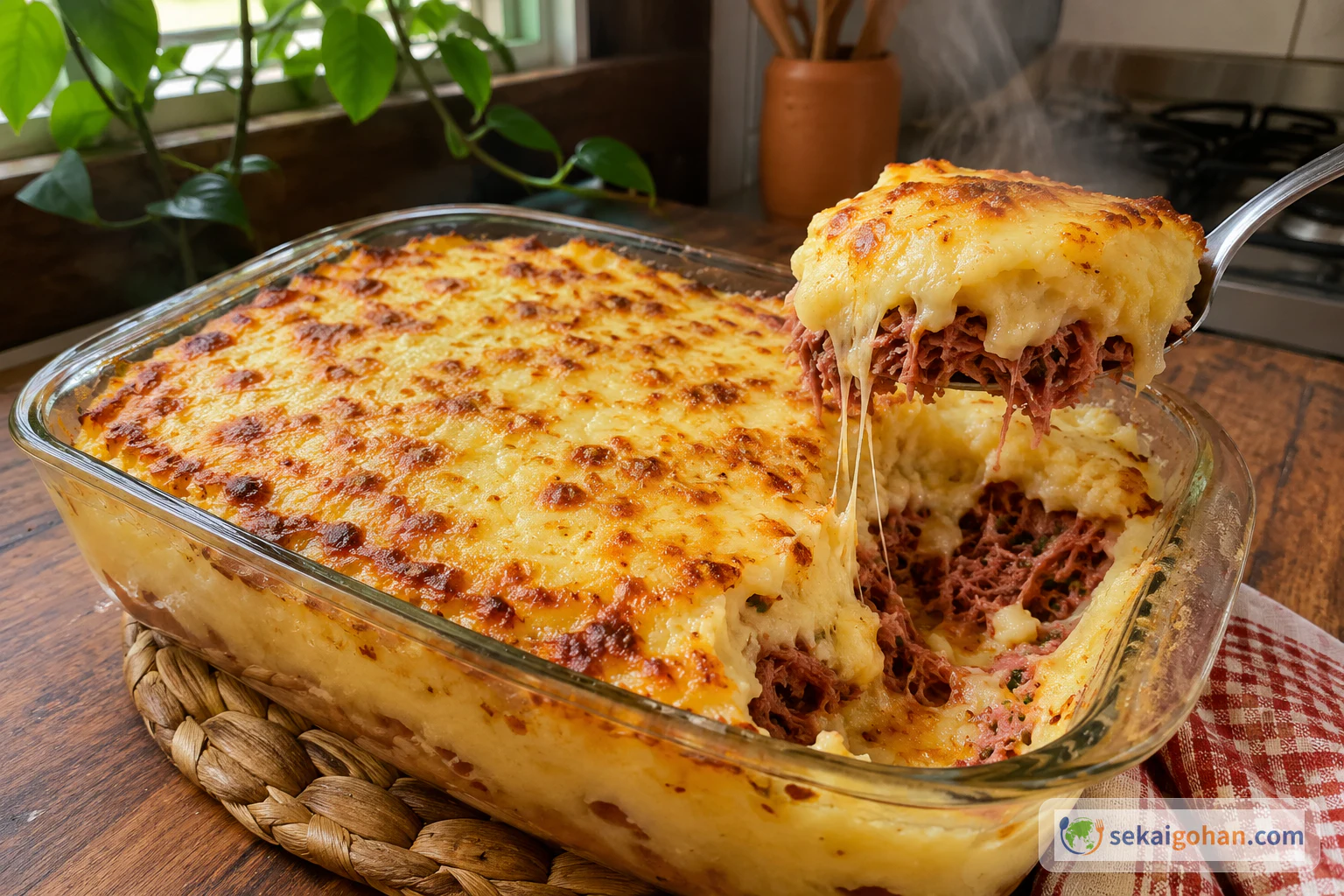
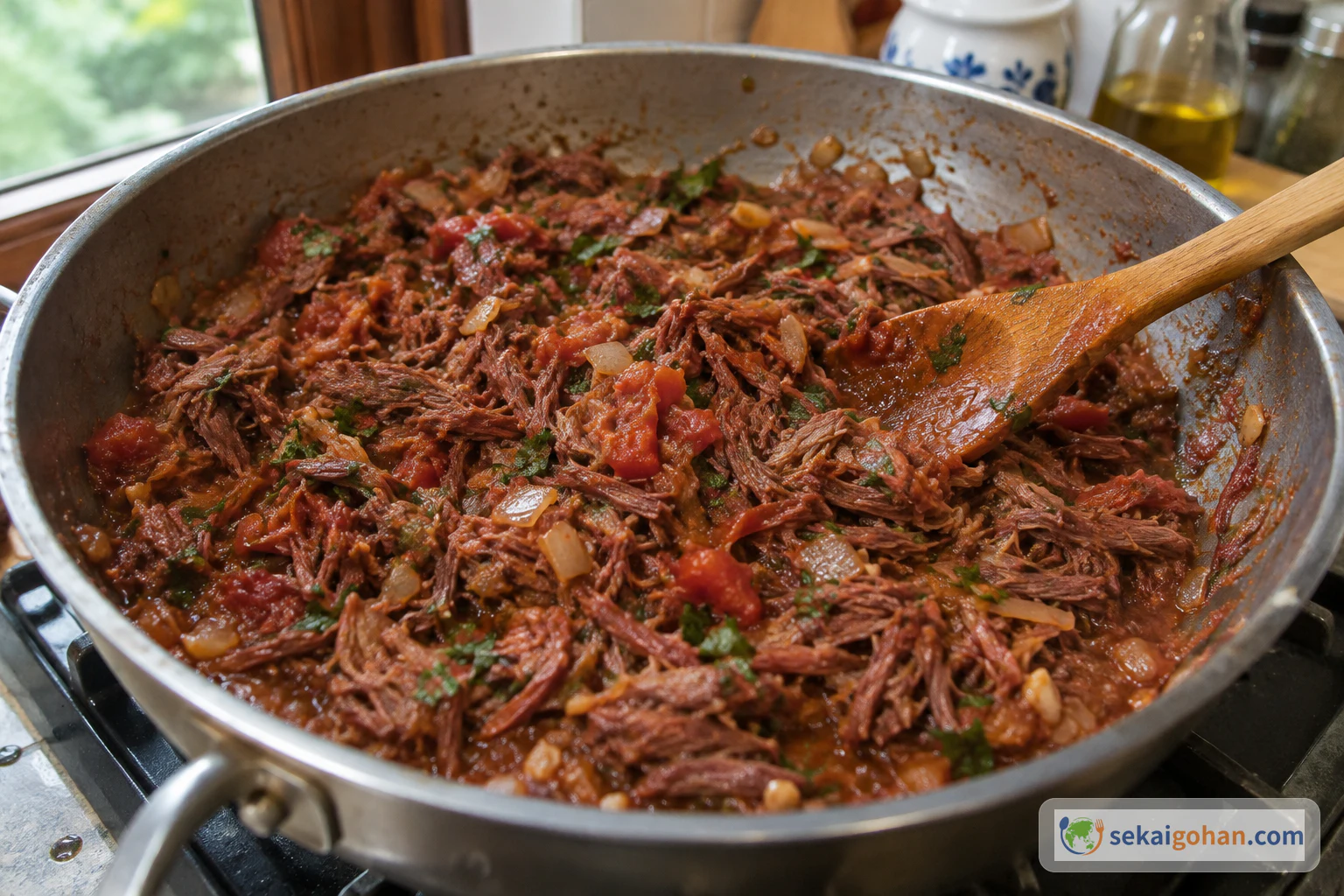
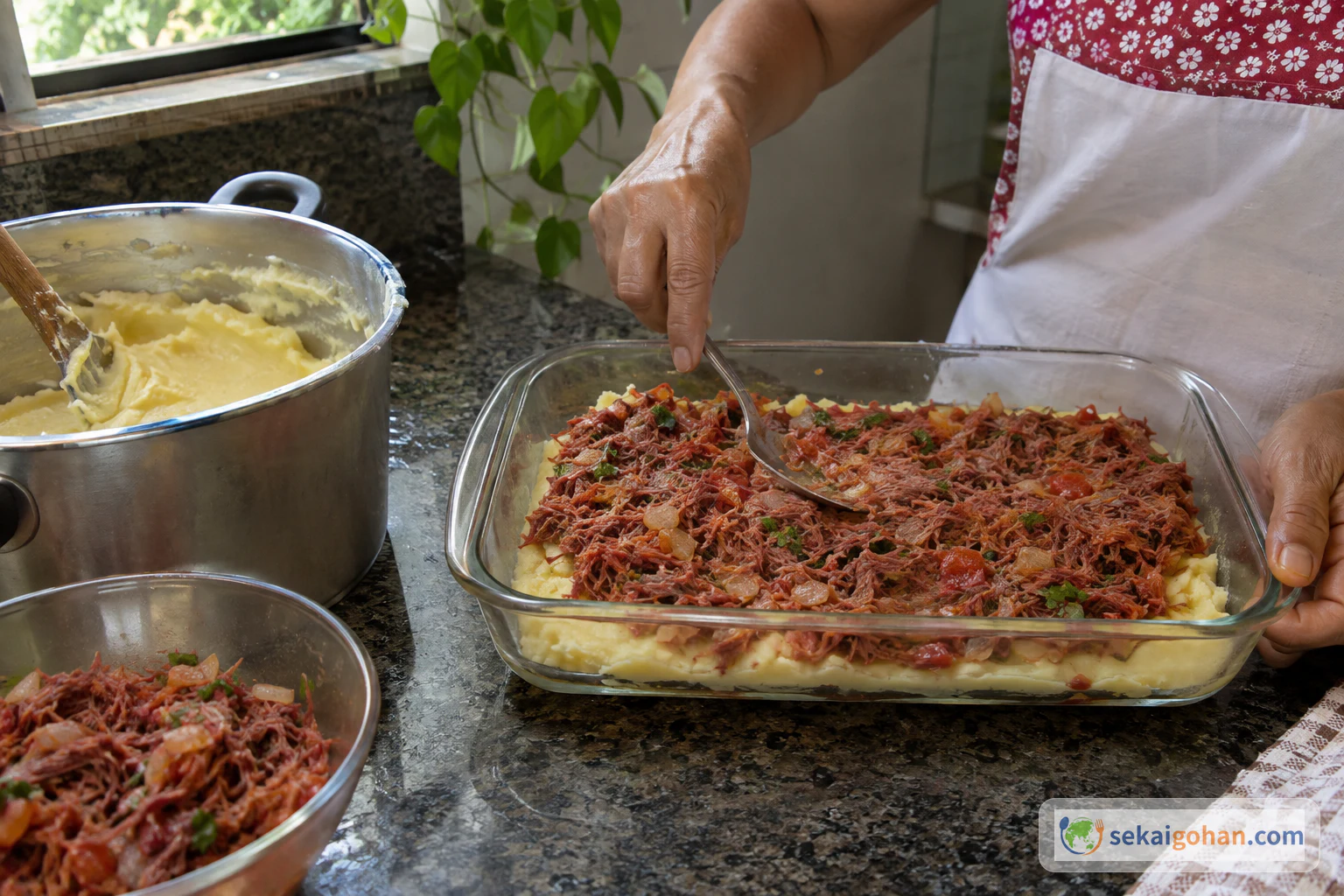
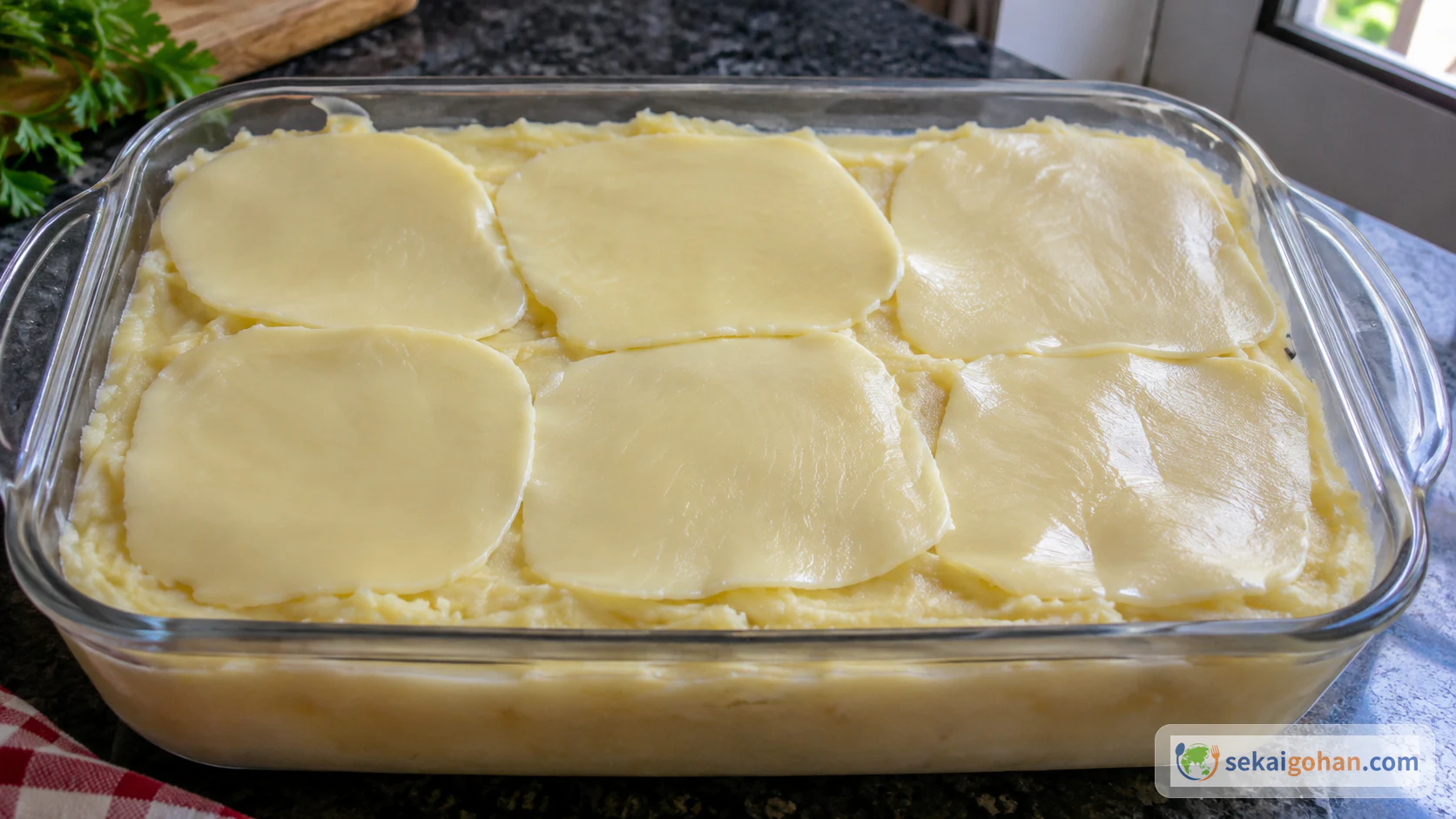
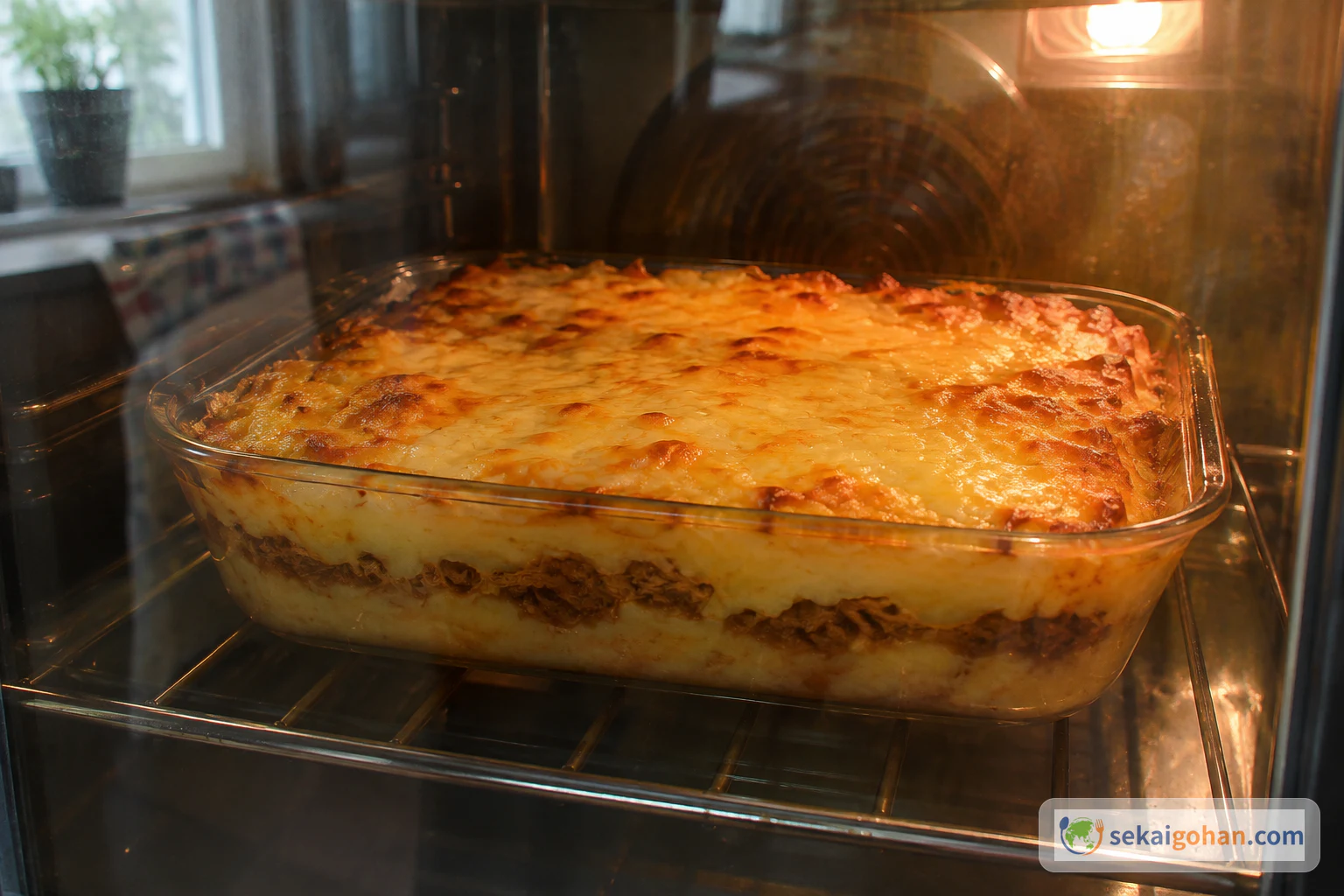
Your spoon breaks through browned mozzarella, then sinks into soft cassava purée. Only below that do you reach the hidden part: shredded dried beef cooked down with onion, garlic and tomato, with steam rising from the hole. Escondidinho is a Brazilian oven dish built in layers, with purée underneath and on top, beef in the middle and cheese over everything. People eat it all over the country. The beef brings salt and a dense, meaty chew. The cassava is mild, buttery and smooth, and the cheese turns crisp and golden at the edges. A spoonful of white rice usually sits next to it on the plate.
Hidden Beef, Northeastern Roots
The name comes from the Portuguese word for hiding. The filling stays hidden until the first spoon goes in, and the dish is built around that moment of finding it.
Nobody is sure where escondidinho was first made. It is usually traced to Brazil's Northeast, and the regional version there shows its outline clearly. A purée of macaxeira (sweet cassava) covers carne-de-sol, jabá or chicken. The top is browned with manteiga de garrafa, the clarified "bottled butter" of the region, and queijo coalho, a firm grilling cheese. Away from the Northeast, the filling, the fat and the cheese change with each household, but the purée-and-filling structure stays the same.
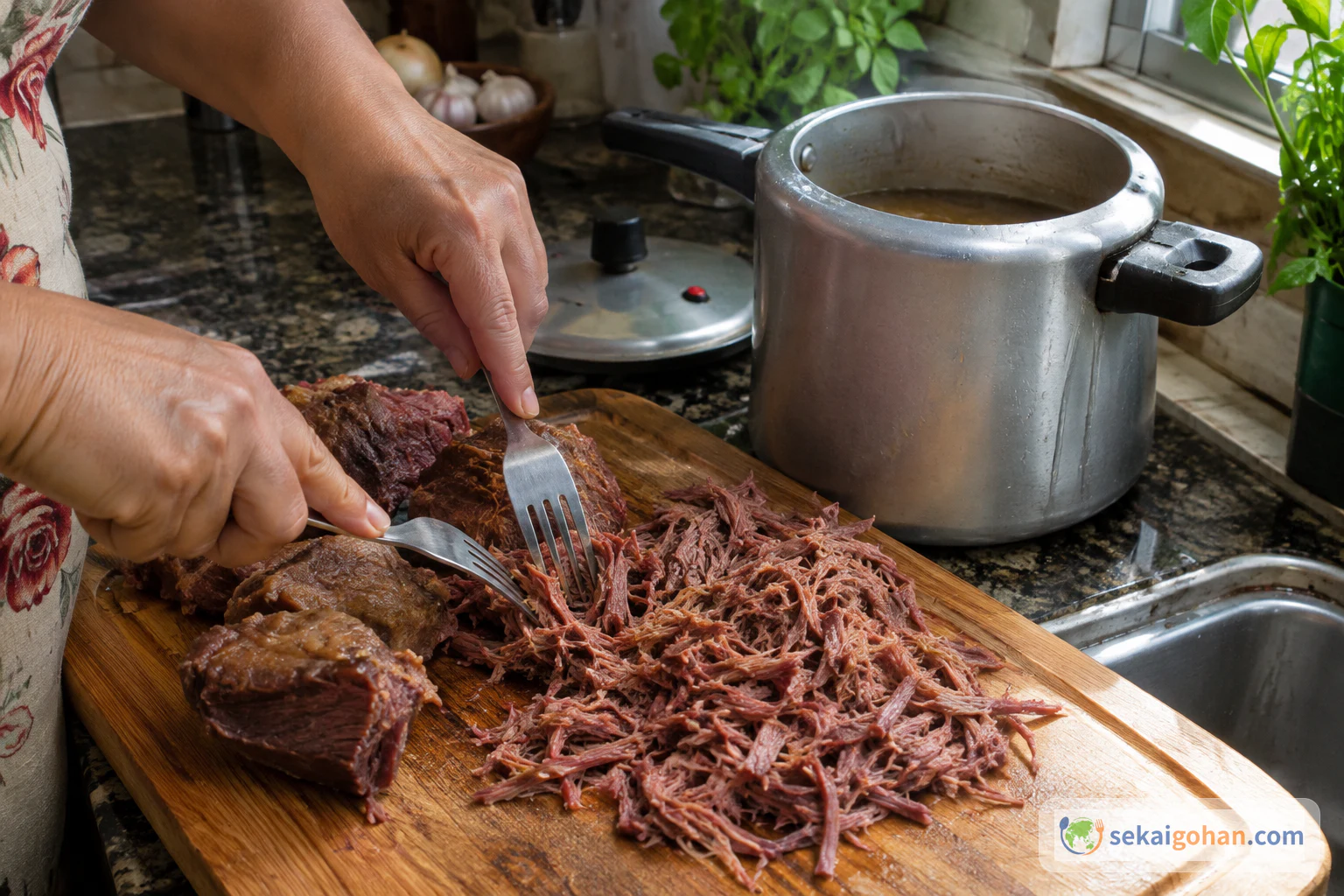
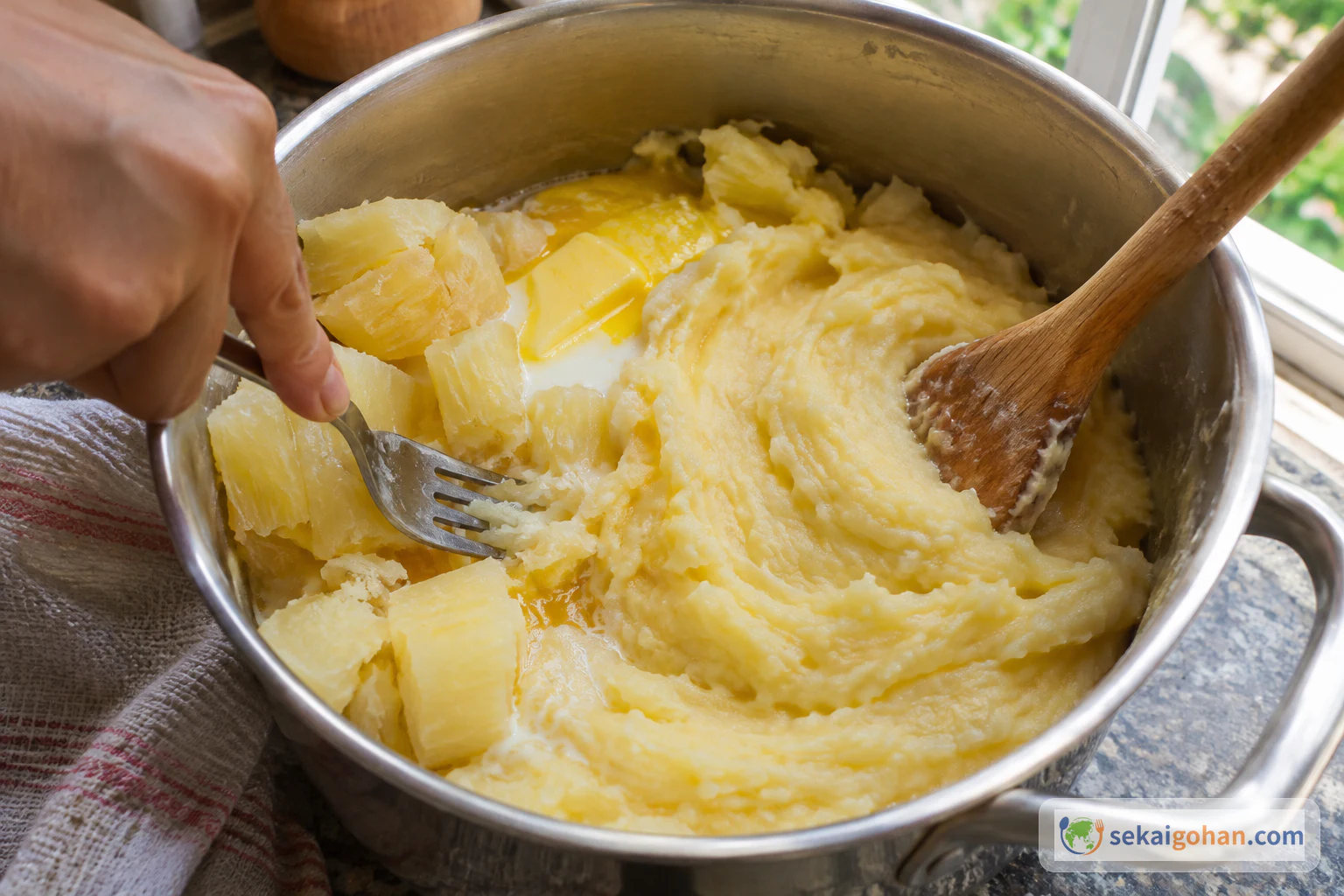
The version here uses carne seca, Brazil's salted dried beef. Cooked tender and pulled into threads, it gives the dish its salty, savory center. Salted, dried meats like this are a big part of Brazilian cooking: they also go into the black-bean pot of feijoada. Cassava is just as central. It is toasted as flour in farofa and used as starch in the chewy cheese rolls called pão de queijo. In escondidinho the root is boiled, mashed with butter and milk, and spread like a blanket. There are more dishes from the same kitchen on the Brazil page.
From the outside, escondidinho looks like a cottage pie, but cassava makes it a different dish. Potato makes a lighter mash that falls apart. Cassava purée is denser and has a gentle sweetness that offsets the salt in the beef. In Brazil the root has several names: mandioca mansa, aipim and macaxeira all refer to sweet cassava, the eating kind, and that is the kind this dish needs.
Ingredients
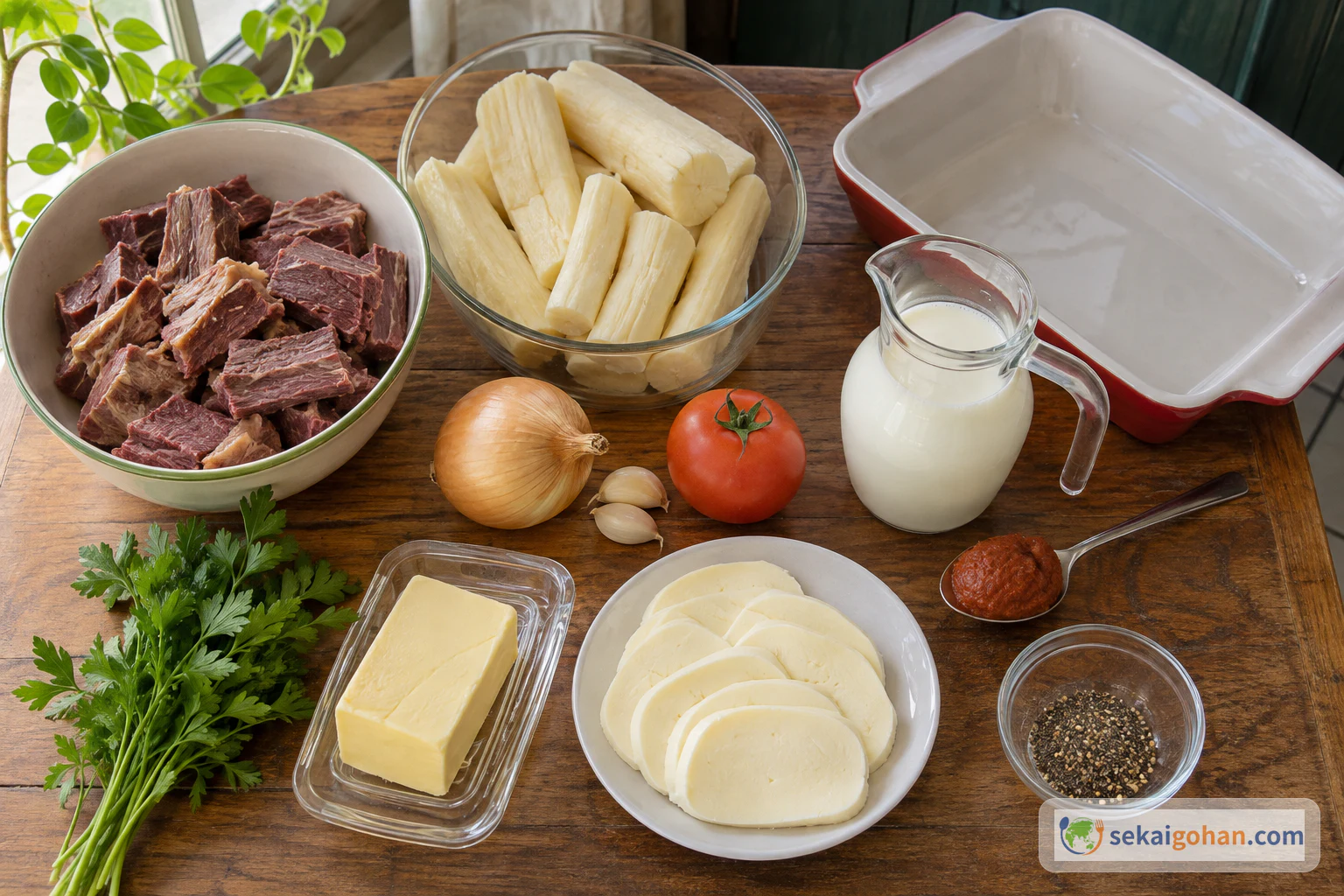
This dish contains milk, in the butter, the milk and the mozzarella.
Equipment
- Pressure cooker, used for both the beef and the cassava
- Cutting board and sharp knife
- Two forks for shredding and mashing
- A pan for the filling
- A pot for the purée
- Wooden spoon
- Baking dish, about 8 × 12 inches (20 × 30 cm)
- Oven
Choosing Carne Seca, Cassava and Cheese
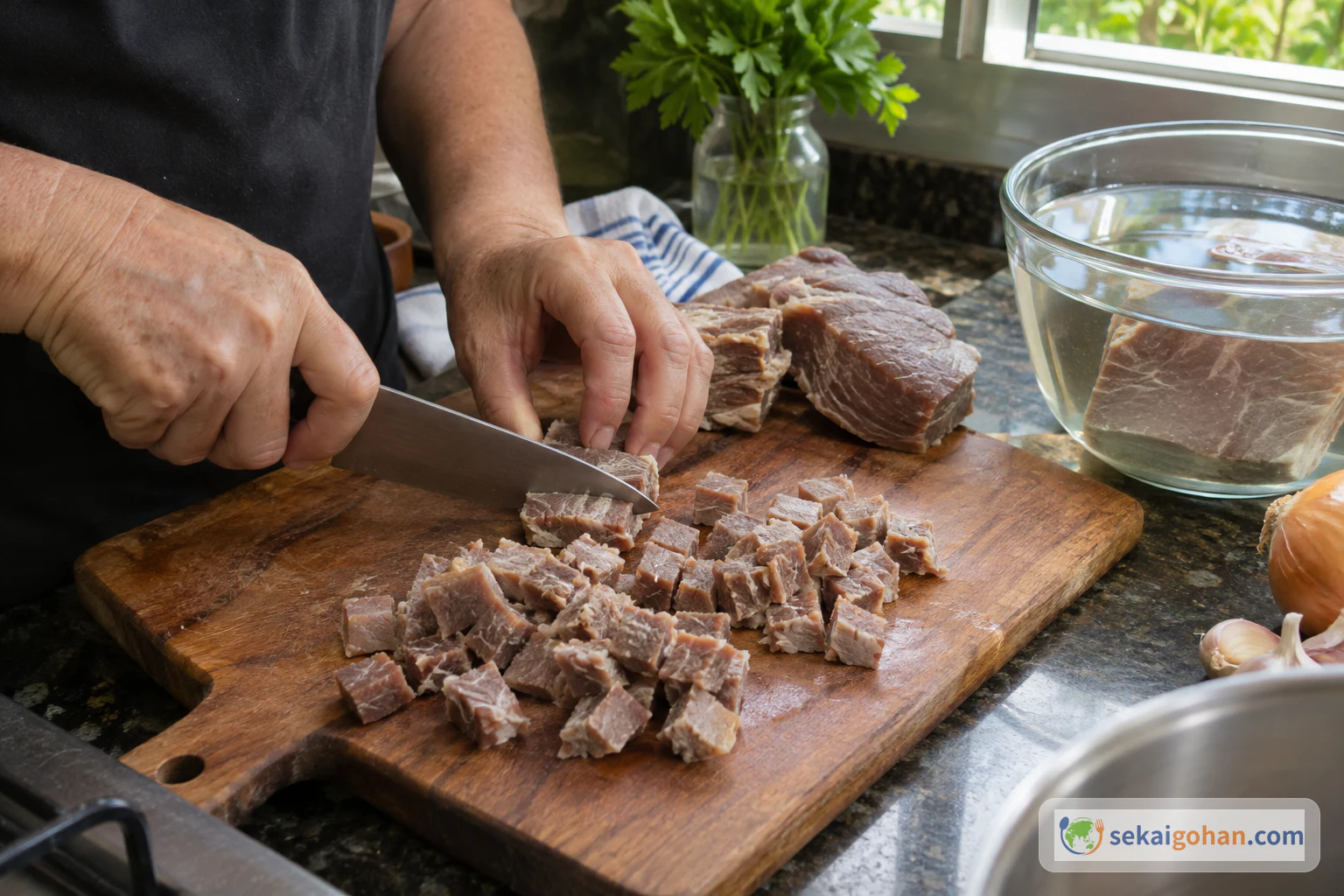
Carne seca comes heavily salted and dried, and you can buy it at Brazilian grocers and import food shops. It has to be desalted before cooking, and step 1 shows how if yours is still salty. Corned beef or fresh beef will fill the dish, but they change both the salt and the texture, so treat that as a different version and season by tasting as you go. Keep the purée, the filling and the cheese the same so the dish keeps its shape.
Outside Brazil, the easiest cassava to find is frozen, peeled and cut. If you buy fresh roots, peel them completely before cooking. Any good melting mozzarella works for the top, and slices cover the purée more evenly than shreds.
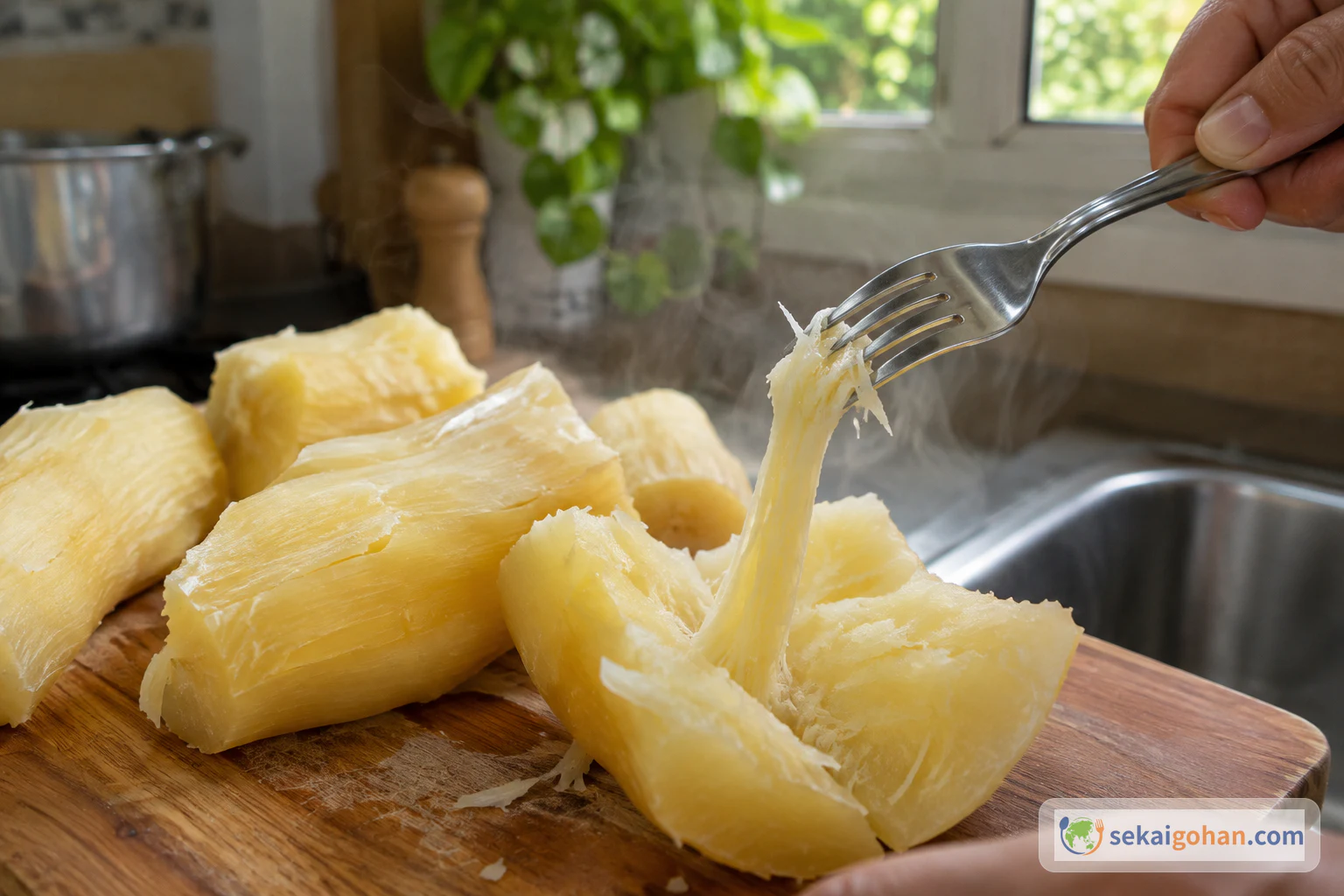
Use sweet cassava (mandioca mansa, also called aipim or macaxeira). It has lower levels of hydrocyanic acid (HCN) than bitter cassava (mandioca brava), generally below 50 mg per kg in the raw flesh, though the amount varies with variety, plant age, harvest time and growing conditions. Peel it, cook it until completely soft, and remove the fibrous core. Never eat cassava raw.
Even after desalting, carne seca carries plenty of salt, and the filling gets no added salt. Season only the cassava water and the purée, and taste the purée next to a bite of the filling before you assemble.
Method
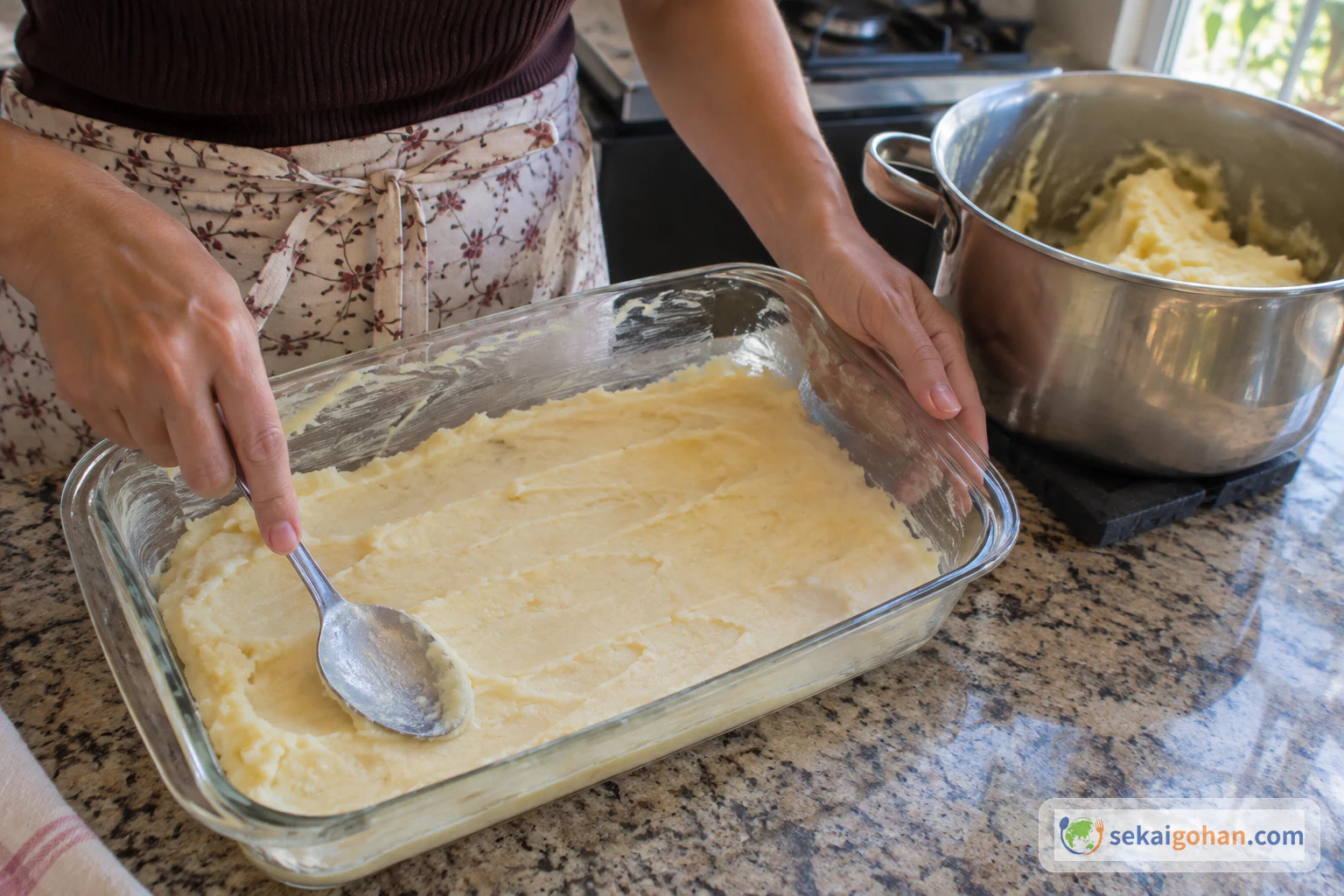
The two pressure-cooker sessions do most of the work, first the beef and then the cassava. While the cassava cooks, the filling is already made and resting. After that you only need to mash the purée, layer the dish and wait for the cheese to brown.
When It Goes Wrong
| What you see | Why | What to do |
|---|---|---|
| The finished dish tastes too salty | The beef was not desalted enough, or salt went into the filling | Desalt longer next time and keep the filling unsalted; serve with plain white rice |
| The purée is stiff and hard to spread | Not enough liquid for that batch of cassava | Beat in a little more milk until it spreads |
| Tough threads in the purée | Bits of core were left in the cassava | Pick them out now; next time split every piece before mashing |
| The beef won't shred | It has not cooked long enough | Return it to the pressure cooker and cook until it pulls apart |
| Slices collapse on the plate | The dish was cut straight from the oven | Let it rest a little before cutting |
| The top stays pale | It came out too early | Keep baking until the cheese turns golden |
Serving and Variations
At the table
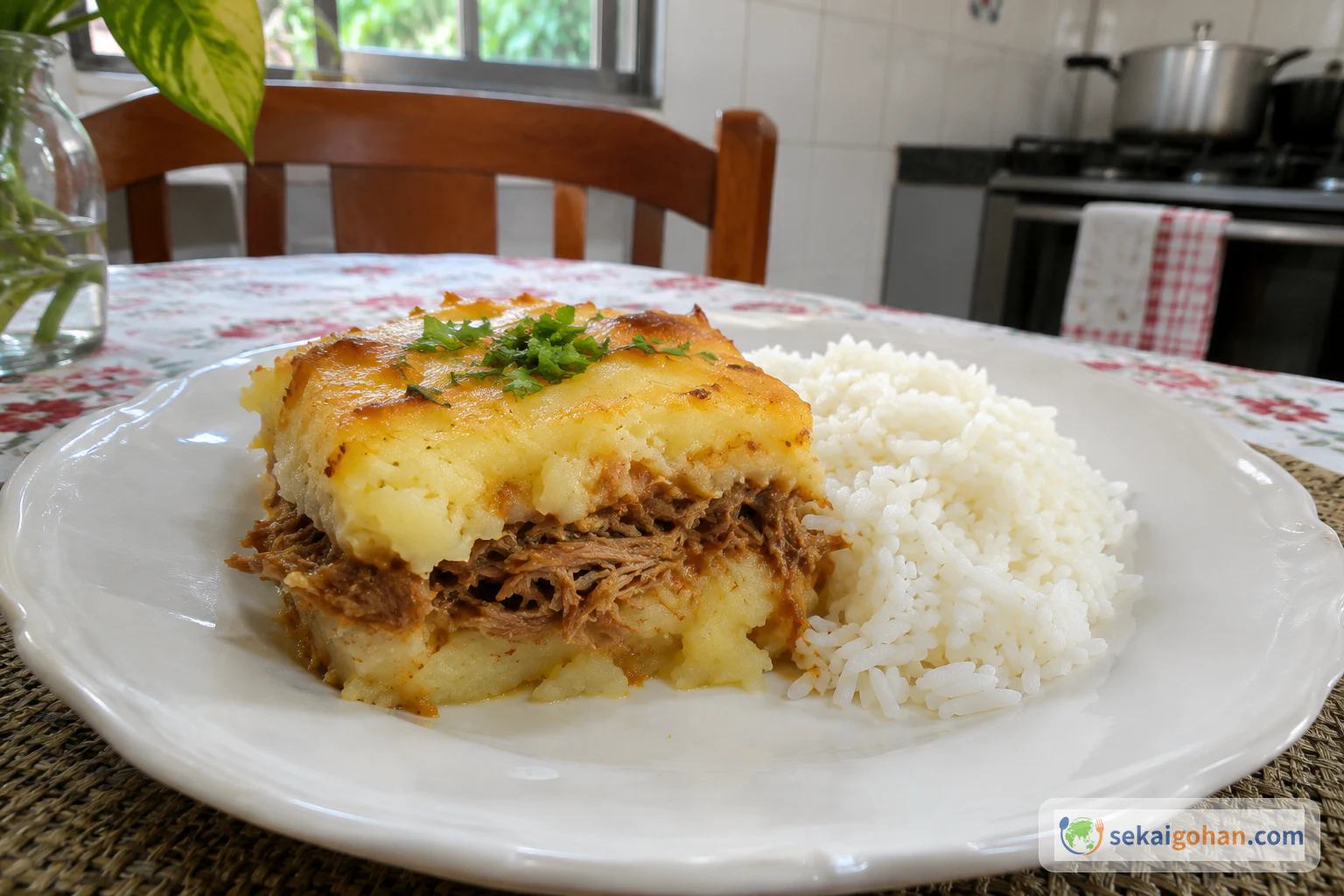
Cut it into squares at the table and serve each one with white rice. The plain rice soaks up the beef's salt and balances the rich purée. A baking dish this size makes a family dinner or something to carry to a gathering. Cool any leftovers, cover them and refrigerate promptly. Reheat until hot all the way through.
Variations
- Requeijão: Dot spoonfuls of requeijão, Brazil's soft, spreadable cream cheese, over the filling before adding the top layer. It melts into creamy pockets inside the dish.
- Parmesan top: Use grated parmesan instead of mozzarella for a thinner, saltier, crisper crust. Go even lighter on salt in the purée.
- Northeastern style: Use carne-de-sol or jabá for the filling and macaxeira for the purée. Finish with manteiga de garrafa and queijo coalho, which browns in firmer patches than mozzarella.
- Chicken: Use shredded cooked chicken instead of beef for a milder filling. It needs more seasoning, since chicken brings no salt of its own.
Frequently Asked Questions
Can I use potatoes instead of cassava?
You can, but you get a different dish, closer to a cottage pie. Potato makes a lighter, looser mash and lacks cassava's gentle sweetness against the salty beef. Use cassava if you want escondidinho.
Can I cook it without a pressure cooker?
Yes. Simmer the beef and the cassava separately in ordinary pots with water to cover. They take longer, so judge by feel: the beef is done when it shreds, and the cassava is done when a fork slides through and the core pulls out.
How long does it bake?
Bake by color, not by the clock. Once the cheese has melted and turned golden, everything underneath has already been cooked and only needs to heat through. Take it out as soon as the top looks right.