
The "green feast" of the land of a thousand hills
Rwanda is a small country in East Africa. Known as the "Land of a Thousand Hills," it is a beautiful farming nation where tea plantations and banana groves spread across rolling hills. In Rwanda, one ingredient found in nearly every home kitchen is cassava (manioc). The roots are fried or ground into flour as a staple, and the leaves become isombe.
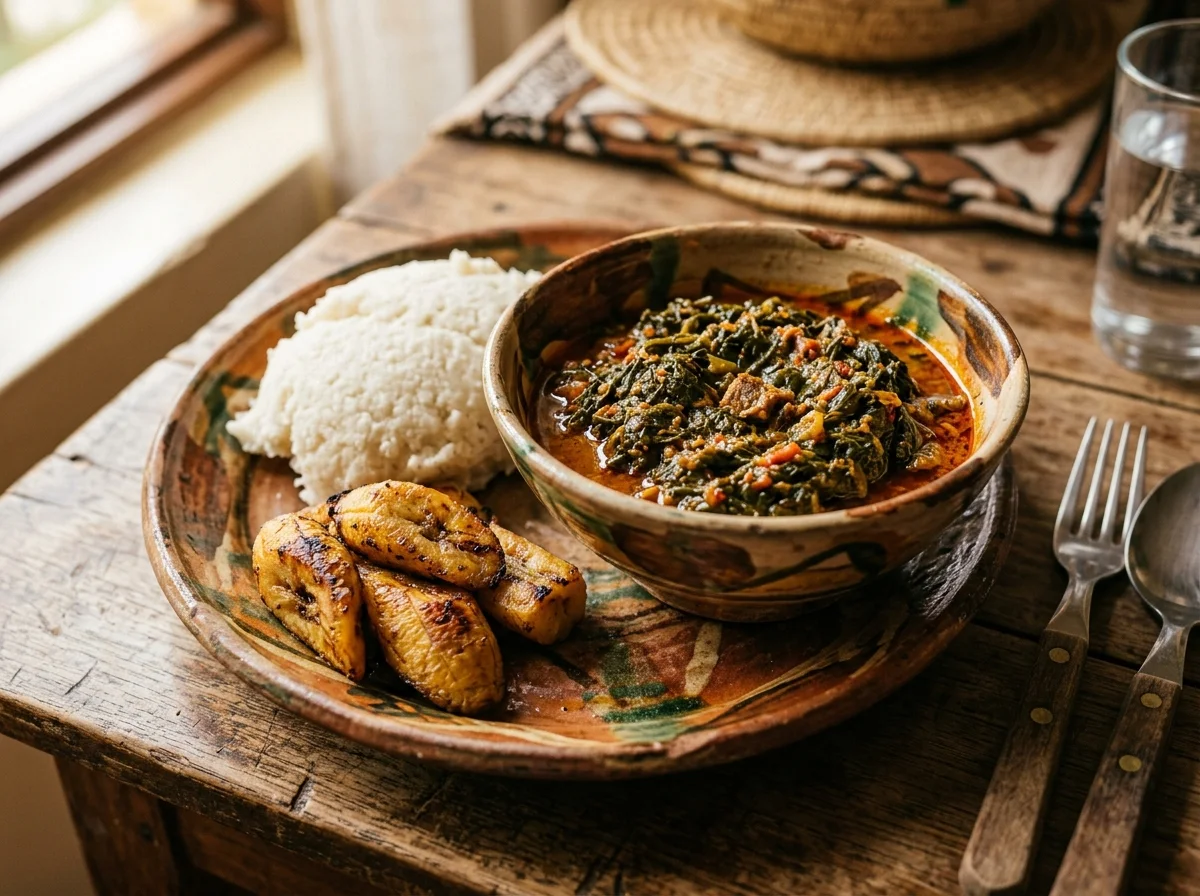
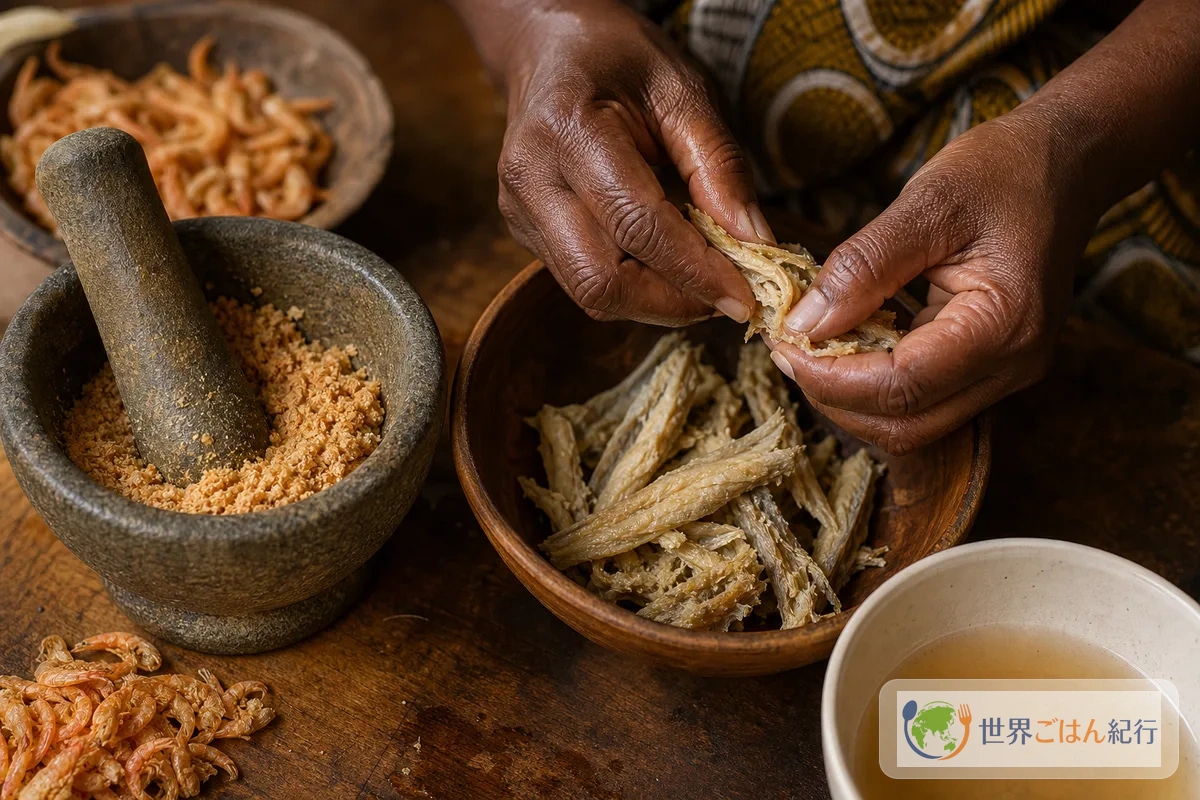
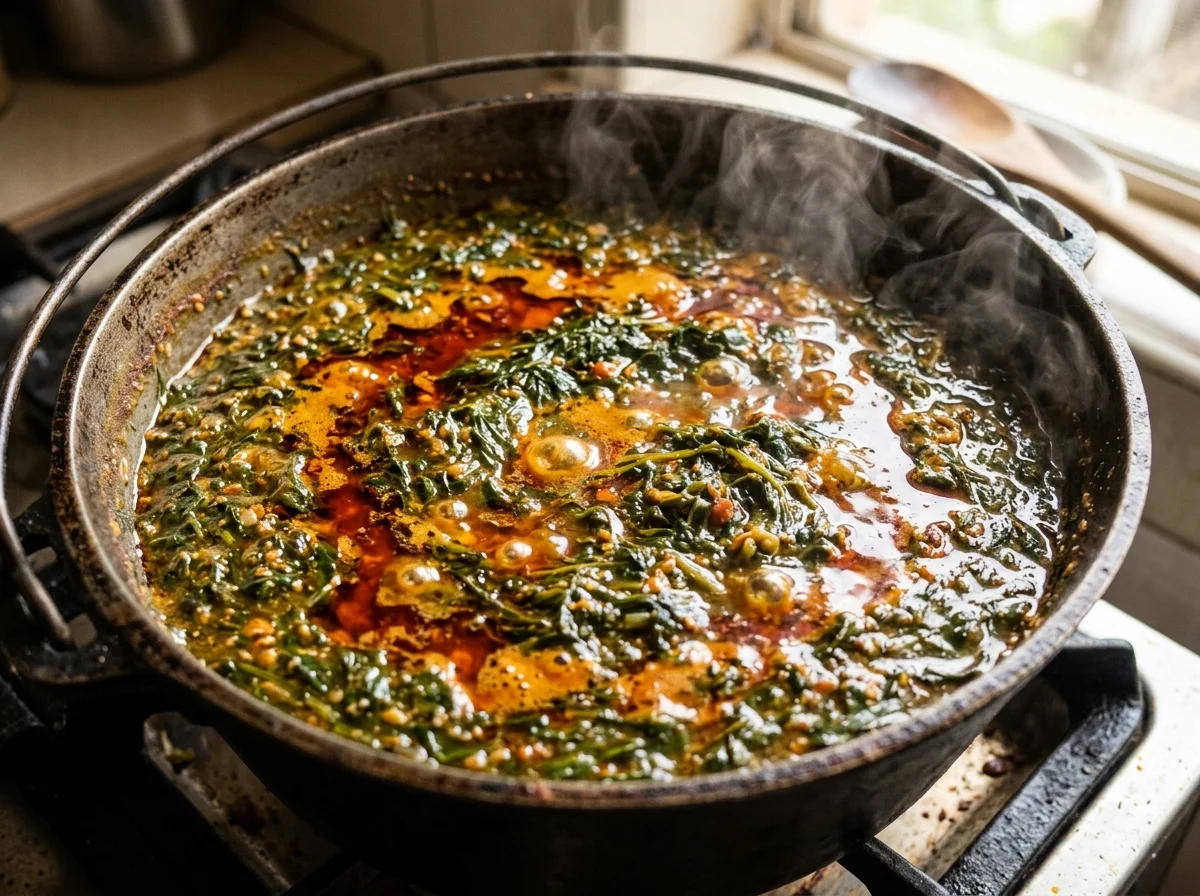
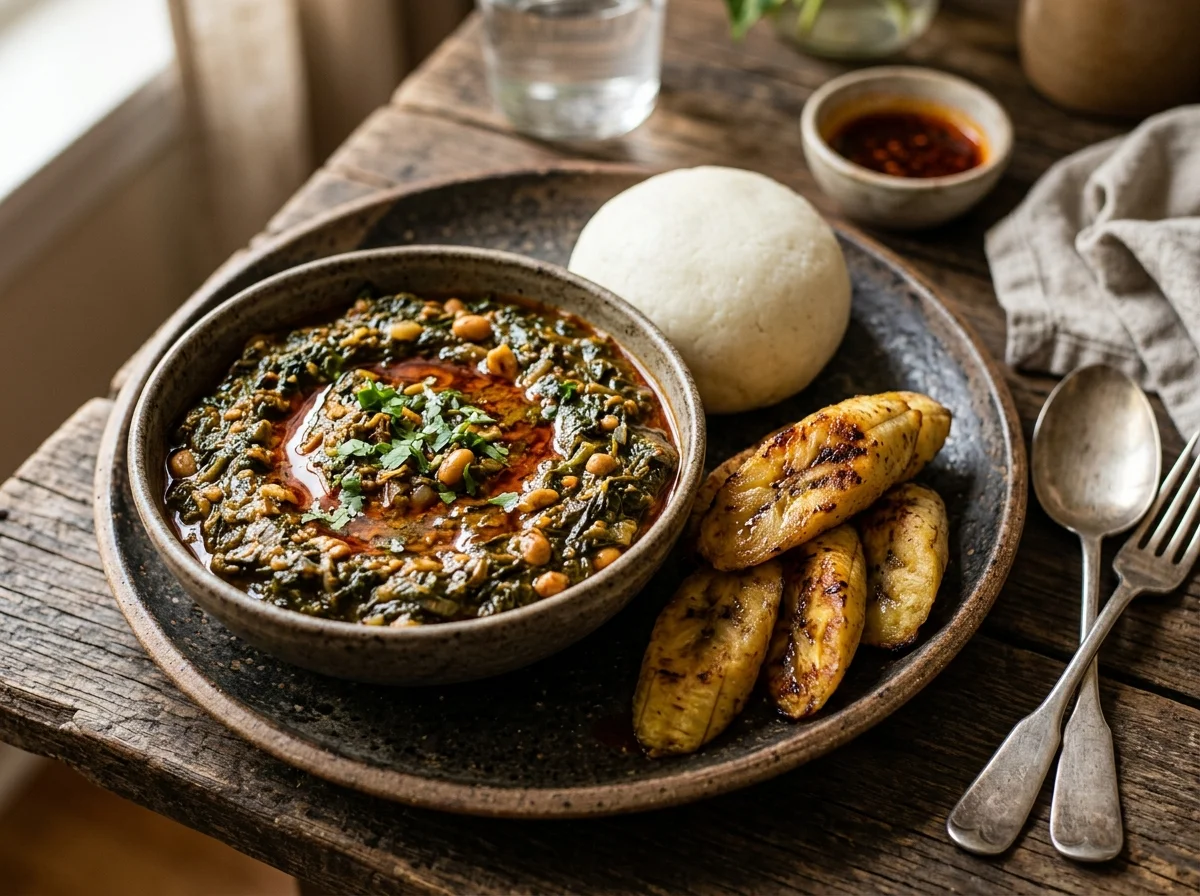
Isombe (isombé) is a dark green, rich dish of young cassava leaves, finely chopped and simmered with peanut paste and palm oil. In the mouth, the green aroma of the leaves comes first, then the sweet richness of peanuts follows, and finally the savoriness of dried shrimp lingers quietly. In Kinyarwanda, "isombe" also refers to the cassava leaves themselves, so the name of the dish and the ingredient are one and the same.
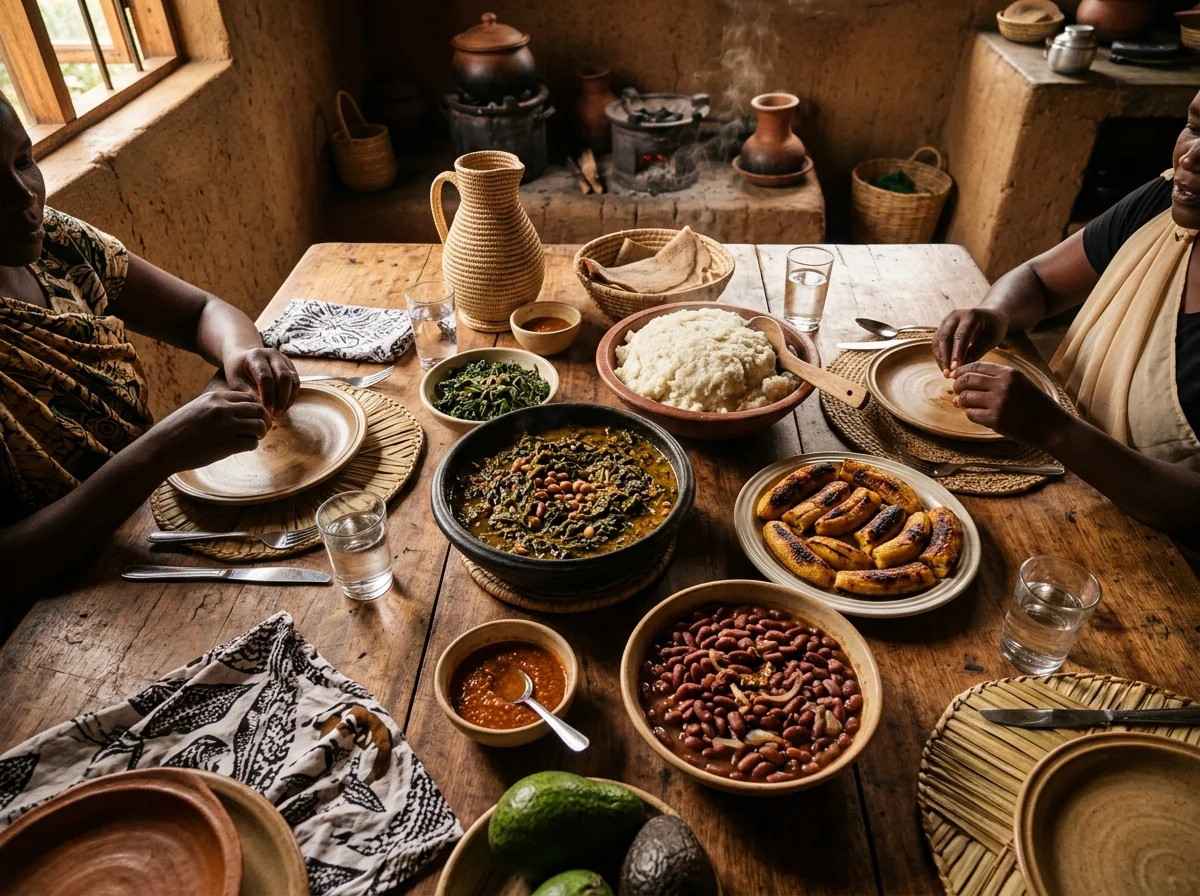
Isombe is often eaten with ugali (a stiff porridge of cornmeal or other flours), rice, stewed beans or bread, and it is a familiar part of Rwandan home cooking.
In Kinyarwanda, the word refers to the leaves of cassava (Manihot esculenta). In Rwanda, they are usually simmered with peanut butter. The dish is also eaten in neighboring Burundi, and the Democratic Republic of the Congo has a cassava leaf stew called pondu. Cassava leaves are eaten as a leafy vegetable in many parts of Africa.
In English, many recipes are published under "isombe" or "Rwandan cassava leaf stew." Leafy greens with peanuts are a classic pairing in African cooking, as in Cameroon's ndolé (in Japanese), and such stews are often eaten with starchy staples like Ghana's fufu. Even so, isombe has a texture and flavor all its own that only cassava leaves give. This article explains carefully how to reproduce the traditional method faithfully in a home kitchen, including with ingredients from an ordinary supermarket.
Ingredients (serves 4)
Cooking tips
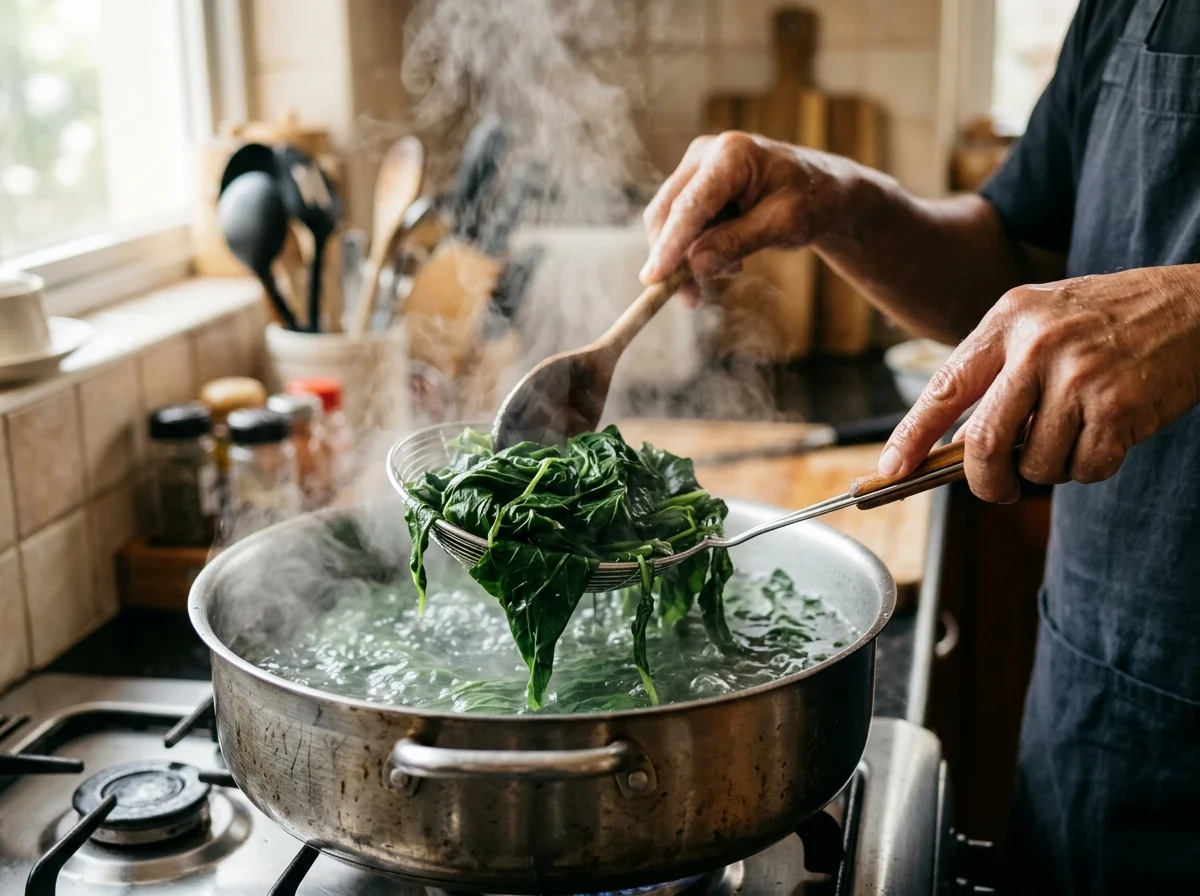
Even frozen cassava leaves should be boiled for at least 20 minutes. Thorough cooking is needed not only to reduce cyanogenic compounds but also to soften the leaf fibers for a smooth texture. The steam rising from the pot while the leaves boil contains hydrogen cyanide, so ventilate the kitchen well.
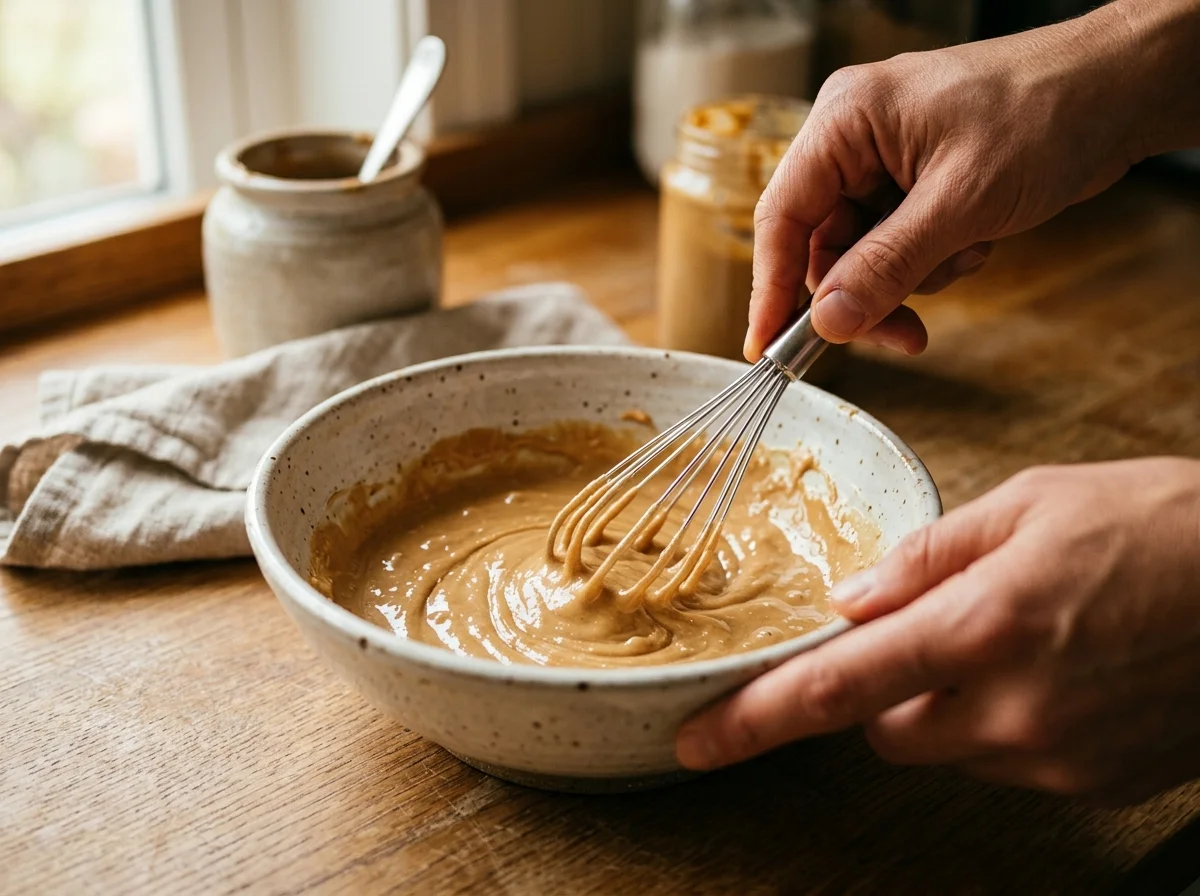
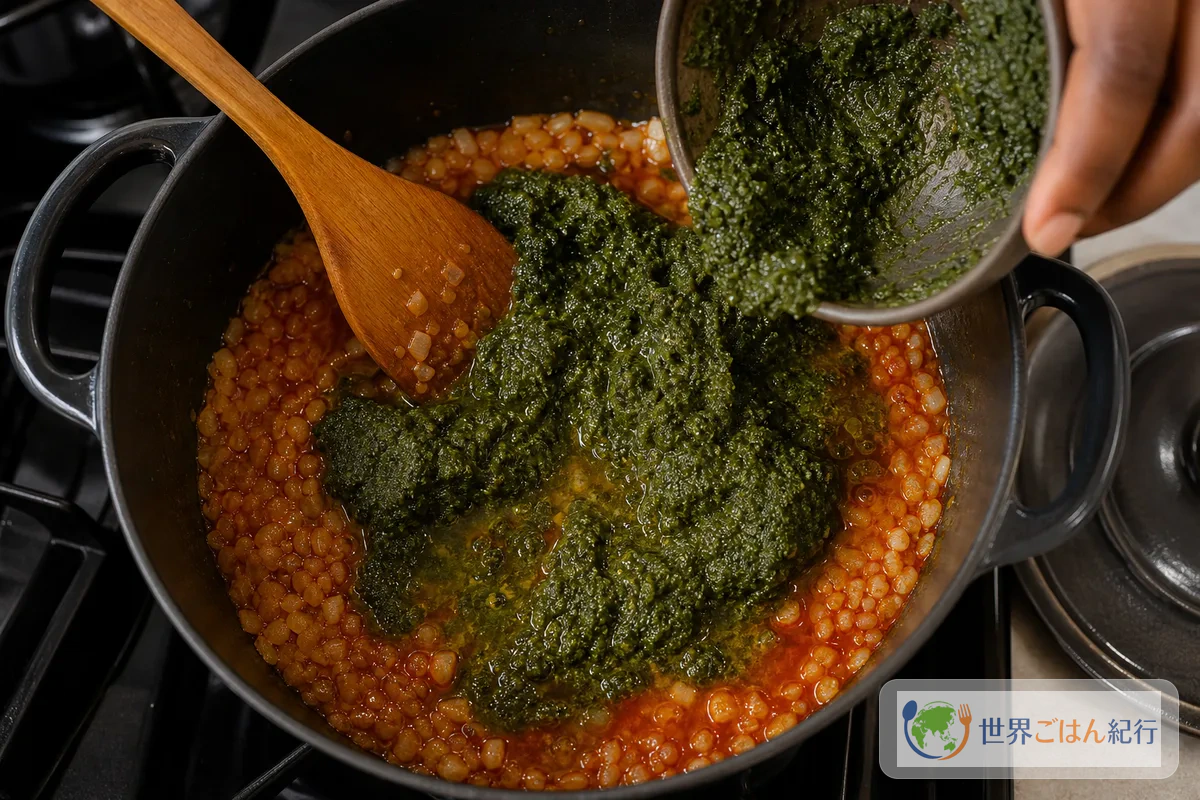
The moment the peanut paste goes in is when the stew is most likely to stick. Use a heavy pot and stir every 3 minutes over medium-low heat. If a film starts to form on the bottom, lower the heat immediately and add 2 tbsp hot water. The bitterness of scorched peanuts can't be undone, so prevention is everything.
Palm oil is central to the flavor of isombe, and many home cooks use it generously. This recipe keeps it moderate at 3 tbsp, but if you feel it lacks richness, don't hesitate to add more. The more palm oil, the more a red layer of oil forms on the surface, and the more vivid it looks.
The ideal ugali is firm enough that a chopstick stands up in it. As explained in the Tanzanian ugali article, if it's too soft it dissolves into the isombe sauce, and if it's too firm it's unpleasant in the mouth. The basic ratio is 2 parts water to 1 part flour, but absorption varies by brand of cornmeal, so add flour gradually as you go.
Variations
Vegan isombe
Leave out the dried shrimp and dried fish and use 4 dried shiitake mushrooms and a 10 cm piece of kombu instead. Soaking them in 400 ml water for 30 minutes and using the soaking liquid as the base gives deep savoriness without any animal products. Use 1 tsp kombu dashi powder instead of the Maggi cube to make it fully vegan.
Coconut milk version
Use 200 ml coconut milk instead of the peanut paste, swapping coconut in for the peanuts. The sweetness of coconut harmonizes beautifully with the green flavor of the cassava leaves for a lighter finish. If you like coconut-based dishes such as Sri Lanka's kottu roti, this is a variation to try.
Isombe with chicken
Cut 200 g chicken thighs into bite-size pieces, add them to the pot after step 5 and simmer for 10 minutes before adding the cassava leaves. Collagen from the chicken melts into the sauce, adding body and savoriness. It's a heartier, protein-rich version of isombe.
Quick komatsuna version
Use 500 g komatsuna (Japanese mustard spinach) instead of cassava leaves. A 3-minute blanch is enough. Simply combining it with peanut butter lets you enjoy the essence of isombe, leafy greens with nut paste, with little effort. Its flavor recalls the peanut stew of Congo's poulet moambé (in Japanese), and it works even for a busy weeknight dinner.
Spicy version
Use 1 habanero (seeded and chopped) instead of pili pili. The heat makes you sweat, and the sweetness of the peanuts stands out all the more.
The story behind the dish
Home cooking in the land of hills and cassava leaves
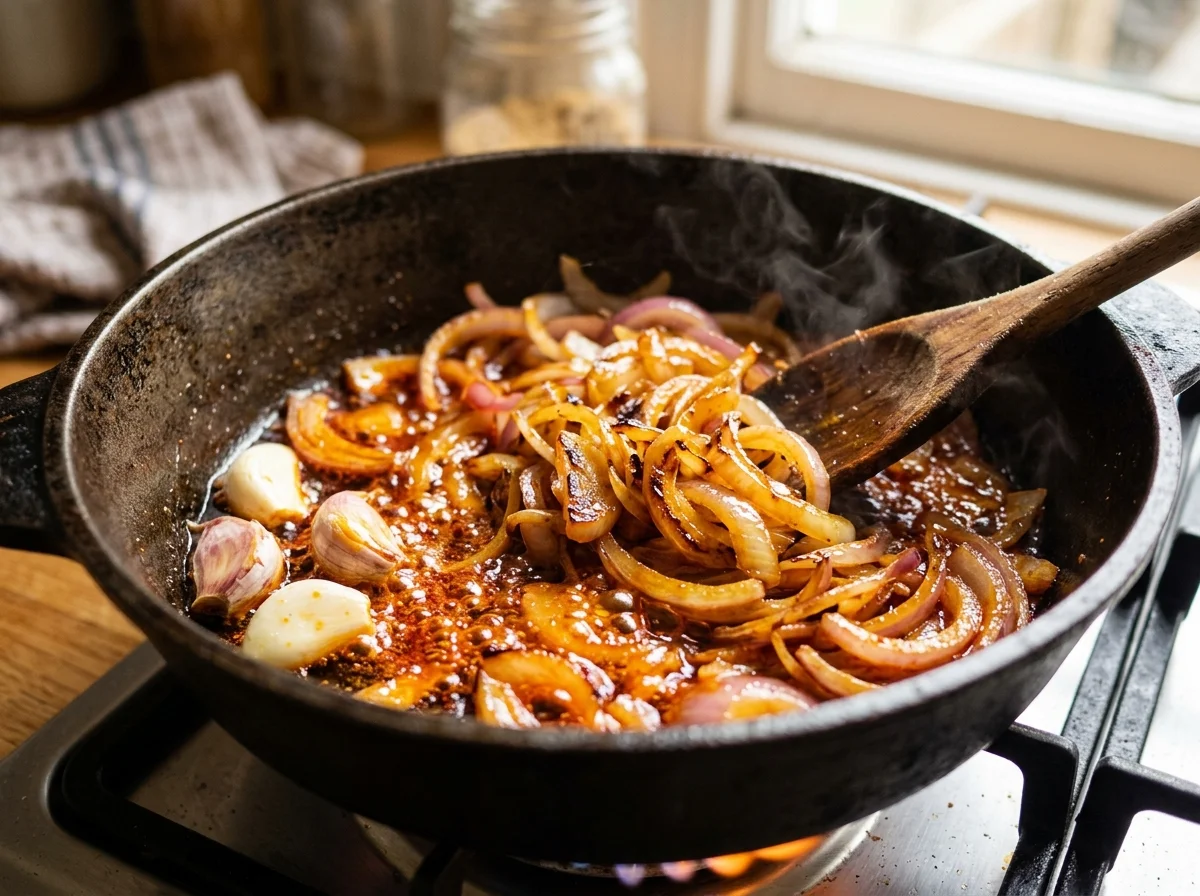
Much of Rwanda is highland above 1,000 m, and bananas, beans, cassava and sweet potatoes are grown on the hillsides. Cassava is a crop whose roots serve as a staple and whose leaves go into isombe. The basic home version simmers the chopped leaves with onion, tomato and garlic and adds peanut butter at the end, and it is eaten with ugali, rice and beans, bread and the like. [1][3]
Origins and neighboring countries
One theory holds that isombe came from the Democratic Republic of the Congo, and it is also eaten in neighboring Burundi. The DRC has pondu, a stew of cassava leaves, and the amount of oil and the way fish is used differ by country and by household. [1] Cassava itself is native to South America and reached Africa through Portuguese trade from the 16th century onward, spreading across the continent. Exactly when it reached Rwanda is not clear. [2]
Preparation for safe eating
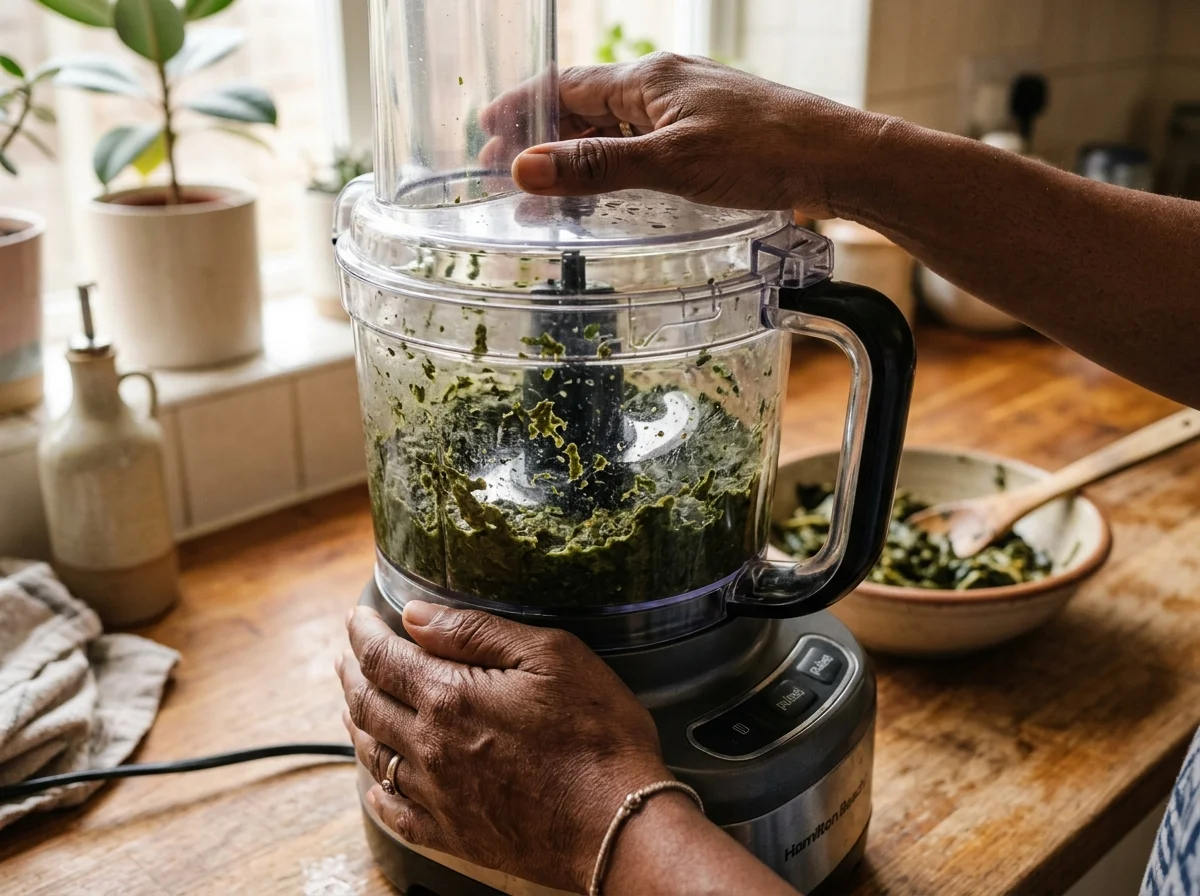
Because cassava leaves contain substances that release cyanide, in Rwanda it is common to pound the leaves fine and boil them for a long time before seasoning. The processing methods, nutrition and safety of Rwandan isombe have also been studied in research submitted to Sokoine University of Agriculture in Tanzania (Umuhozariho, 2014). [4]
Community work days and the table
On the morning of the last Saturday of every month, Rwanda holds a nationwide community service day called umuganda. [5] Isombe, which can be made in a big pot and keeps well, also suits days when families and neighbors gather around the table.
Making it in a home kitchen
Fresh cassava leaves are hard to find in many places, so the practical options are frozen leaves or spinach and molokhia to approximate the texture. Choose unsweetened peanut butter, and the balance between the green aroma of the leaves and the richness of the peanuts comes closer to the traditional taste.
Nutrition (per serving, of 4)
In isombe, the protein from cassava leaves combines with the protein from peanuts, so the two plant foods complement each other. It is also rich in dietary fiber.
| Nutrient | Amount |
|---|---|
| Calories | 480 kcal |
| Protein | 18 g |
| Fat | 28 g |
| Carbohydrates | 42 g |
| Dietary fiber | 9 g |
| Sodium | 520 mg |
The fat comes mainly from the plant fats of palm oil and peanuts. Red palm oil contains beta-carotene, and eating leafy greens with oil also helps the body absorb their beta-carotene. Values are estimates based on the amounts in the ingredient table.
More dishes to cook alongside
- An introduction to African cuisine: ingredients and aromas from the same region you can reuse.
- An introduction to Ethiopian cuisine: ingredients and aromas from the same region you can reuse.
- An introduction to Moroccan cuisine (in Japanese): ingredients and aromas from the same region you can reuse.
- How to make taguella (in Japanese): ingredients and aromas from the same region you can reuse.
Frequently asked questions
Here are the questions people most often ask when making isombe for the first time, from finding ingredients to storage and safety.
Q1. Are cassava leaves safe to eat?
Raw cassava leaves contain a substance that releases cyanide (linamarin). Chopping or pounding them, then boiling them thoroughly and discarding the cooking water reduces it greatly, but some can remain if the cooking time is too short. Cook frozen leaves thoroughly according to the package directions and never eat them raw. Ventilate the kitchen well while cooking.
Q2. Can I make isombe ahead?
Yes. Isombe tastes better from the next day on, as the flavors meld. Rwandan households commonly make a big batch and eat it again the next day; like South Africa's bobotie (in Japanese) and Mali's mafé (in Japanese), it is well suited to cooking ahead. Eat it within 2–3 days in the refrigerator. Reheat over low heat, stirring. If it has dried out, add a little water. It also freezes, keeping for about 1 month. Frozen in portions, it's a handy side dish for busy days. Thawing overnight in the refrigerator is best, but the microwave is fine too.
Q3. What if I have a peanut allergy?
Use 120 g tahini (white sesame paste) instead. It becomes a sesame-based variation with a nutty richness, akin to Ethiopia's doro wat (in Japanese). If you are allergic to nuts in general, use 200 ml coconut milk for a lighter finish in the style of coastal East Africa.
Q4. Can I make it without palm oil?
Yes, but the flavor and look will change. Using 3 tbsp vegetable oil + 1 tsp paprika brings the color closer, but it can't reproduce palm oil's distinctive earthy flavor. 2 tbsp coconut oil + paprika is another option and gives more richness.
Q5. What drinks go well with isombe?
In Rwanda, it is traditionally paired with banana beer (urwagwa) or sorghum beer. Urwagwa is a traditional brew made by fermenting ripe bananas, and its sweetness and acidity refresh the palate against the richness of isombe. Rwandan beers such as Mutzig and Primus are sometimes available as imports. For something nonalcoholic, ginger ale or iced rooibos tea are excellent matches. For wine, a dry white such as Sauvignon Blanc goes well with isombe's earthy flavor and peanut richness.
Related African dishes
If isombe has caught your interest, try other African dishes too. We cover a wide range of recipes from East to West Africa.
- Ndolé (in Japanese): Cameroon's national dish, a stew of bitterleaf and peanuts, from the same leafy-greens-and-nuts family as isombe
- Ugali: East Africa's cornmeal staple and isombe's best partner
- Poulet moambé (in Japanese): Congo's peanut stew, a rich chicken dish from Rwanda's neighbor
- Fufu: Ghana's pounded staple, a way to experience Africa's culture of eating with your hands
Sources
- [1] Wikipedia, "Isombe" https://en.wikipedia.org/wiki/Isombe (accessed 22 October 2026). Overview of the dish, the origin theory, how it is eaten in Burundi
- [2] Wikipedia, "Cassava" https://en.wikipedia.org/wiki/Cassava (accessed 22 October 2026). Native range and introduction to Africa
- [3] The New Times, "Finally, A Fantastic Isombe Recipe!" (2020) https://www.newtimes.co.rw/article/174040/Lifestyle/finally-a-fantastic-isombe-recipe (accessed 22 October 2026). How to make isombe, from Rwanda's English-language newspaper
- [4] Umuhozariho, M. G. (2014). Assessment of processing methods, sensory attributes, nutritional quality and safety of cassava leaves product (Isombe) in Rwanda. Sokoine University of Agriculture. http://www.suaire.sua.ac.tz/handle/123456789/5268 (accessed 22 October 2026)
- [5] Wikipedia, "Umuganda" https://en.wikipedia.org/wiki/Umuganda (accessed 22 October 2026). The community service day on the last Saturday of each month
- World Vision, "In the kitchen: Isombe recipe" (2018) https://www.worldvision.org/economic-empowerment-news-stories/isombe-recipe (accessed 22 October 2026)



