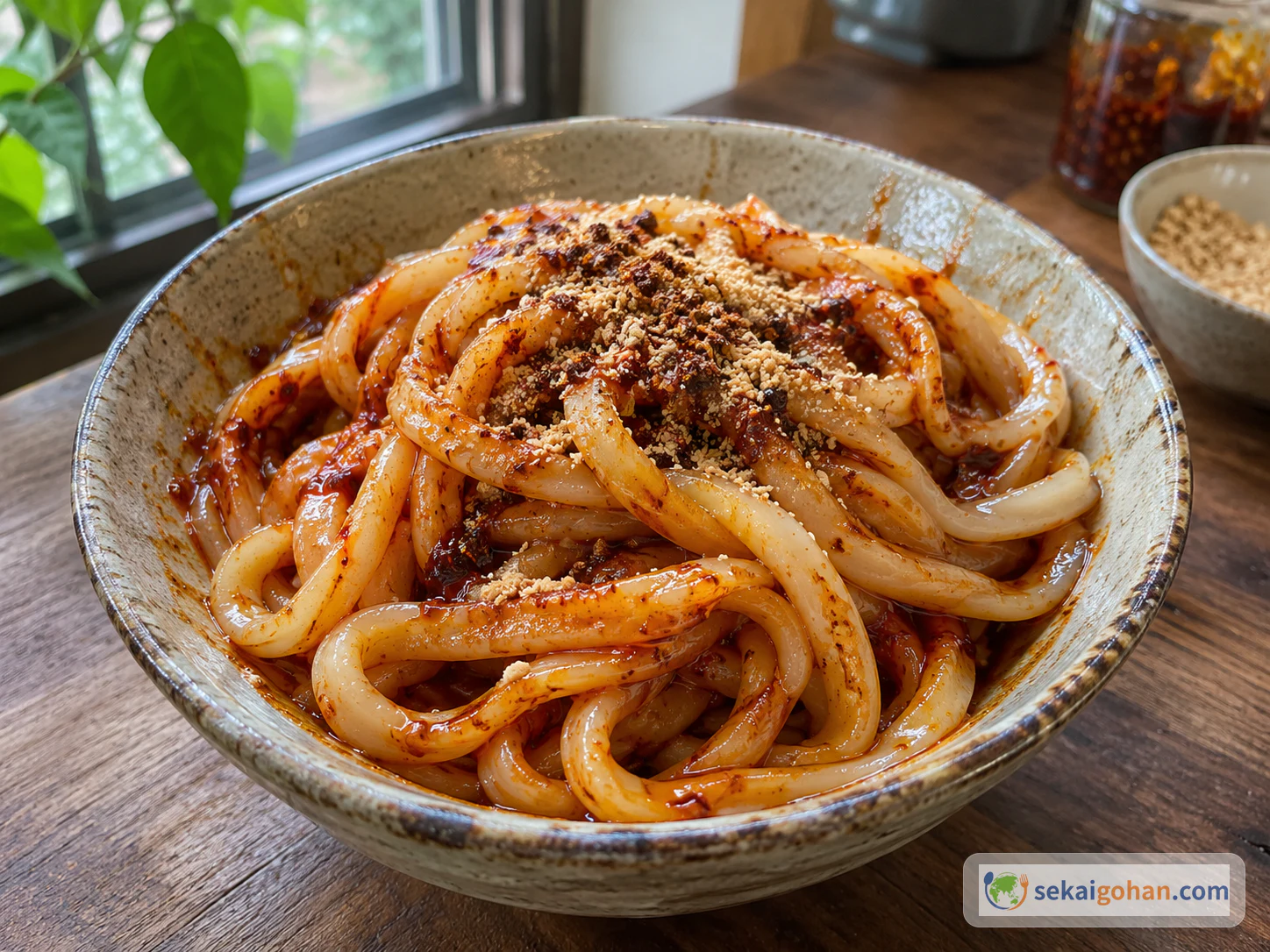
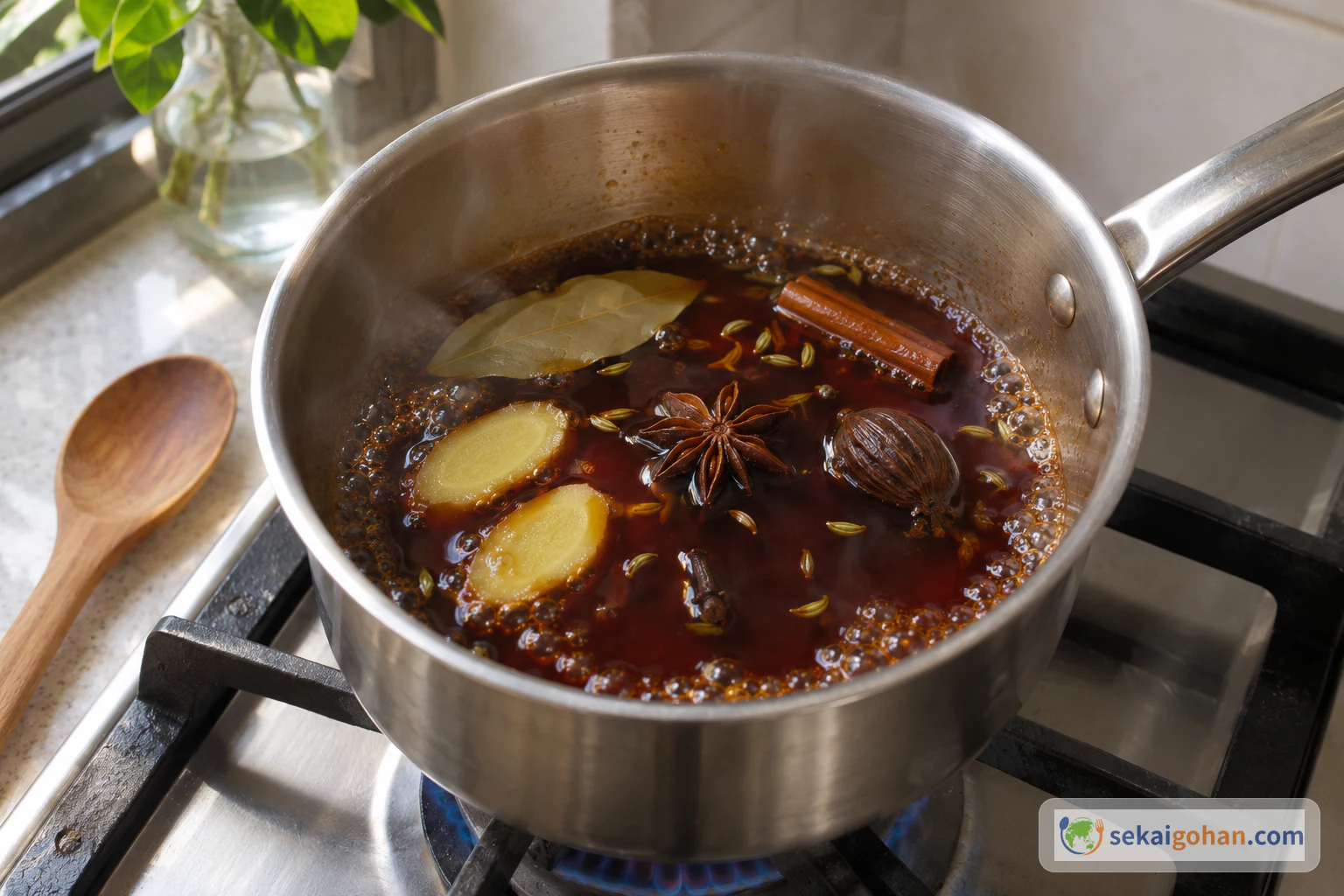
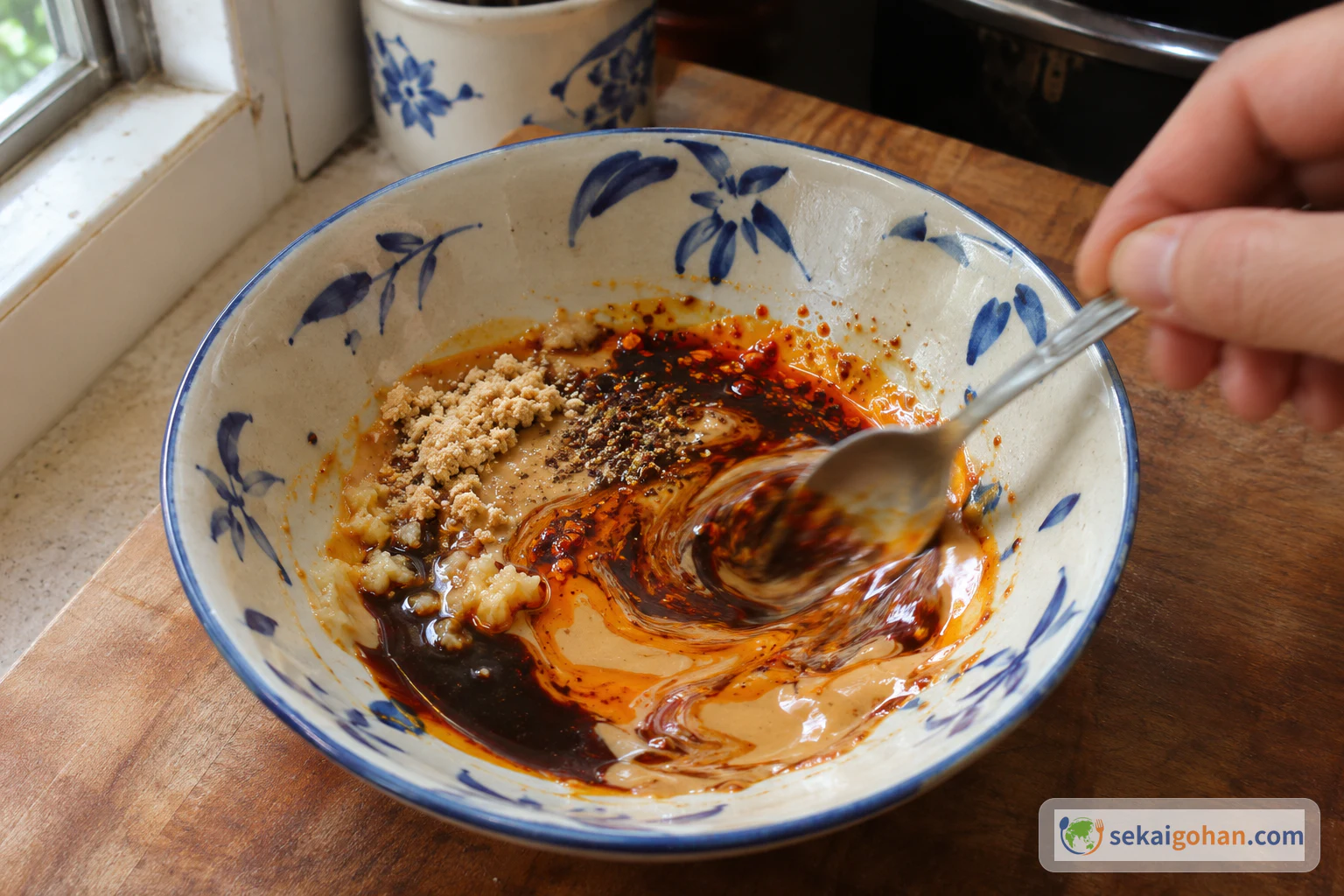
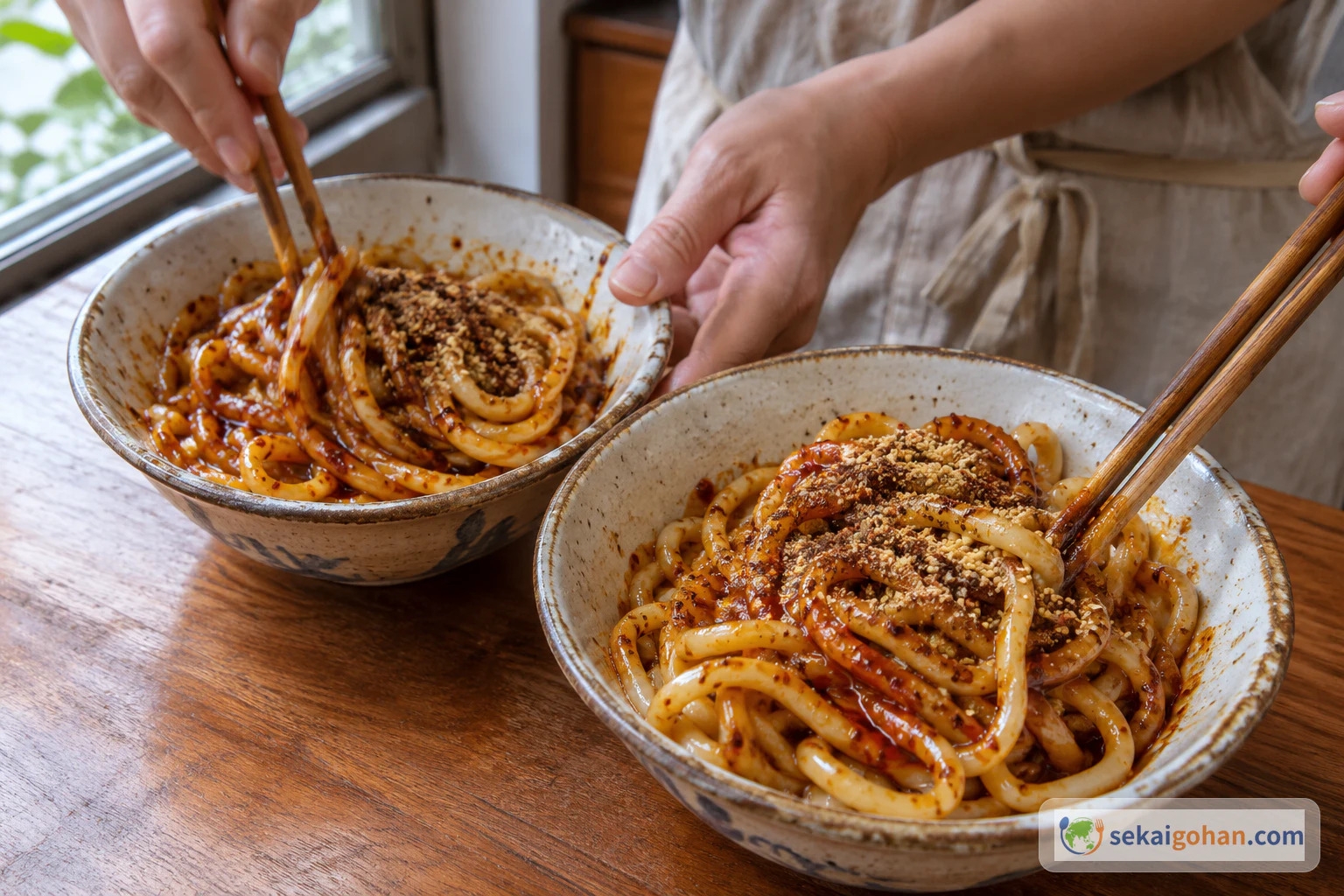
Chopsticks go into a small bowl and lift out a few noodles as thick as pencils, each one glossy with a dark red-brown sauce and streaked with chili oil. The first bite is sweet, from soy sauce simmered with brown sugar and whole spices. Then the chili oil arrives, and last comes the tingle of Sichuan pepper over a layer of sesame paste. This is tianshui mian, a dry noodle snack from Chengdu in Sichuan: no broth, no toppings, just a dense, springy wheat noodle and a sauce that moves from sweet to hot to numbing in one mouthful.
Sweet First, Then the Heat: Chengdu's Dry Noodle Snack
A name that means sweet, a bowl with almost no water
The name reads as "sweet water noodles," and the bowl holds almost no water at all. The "sweet" is the whole point: it comes from the spiced sweet soy sauce at the heart of the dressing, and the noodles themselves eat close to dry. The standard dressing has six parts: chili oil, garlic paste, sesame paste, soy sauce, ground Sichuan pepper and that sweet red soy. Tianshui noodles are served cold or warm in Chengdu, and the shops that make them usually sell liang fen (cold starch jelly) and liang mian (cold noodles) alongside.
Chengdu is a city of snacks, and this is one of its everyday ones. It turns up at breakfast and as something to eat in the late afternoon, in small bowls eaten quickly, often standing. One of the best-known places for it is Zhang Lao Er, at 39 Wenshuyuan Street near Wenshu Monastery, open since 1944. It is a classic Sichuan "fly restaurant," the kind of plain, busy shop that wins on flavor rather than looks. The sign still says Zhang Lao Er Liang Fen, for the cold jelly it first sold, but the sweet water noodles have long since become what people come for. At the shop, the sauce also carries MSG, and a bowl holds only four or five thick strands.
This dish is the Chengdu snack, 甜水面 (tián shuǐ miàn), where 甜 means sweet. It shares its romanized spelling with Tianshui, a city in Gansu province, but the two have nothing to do with each other.
The noodle is the other half
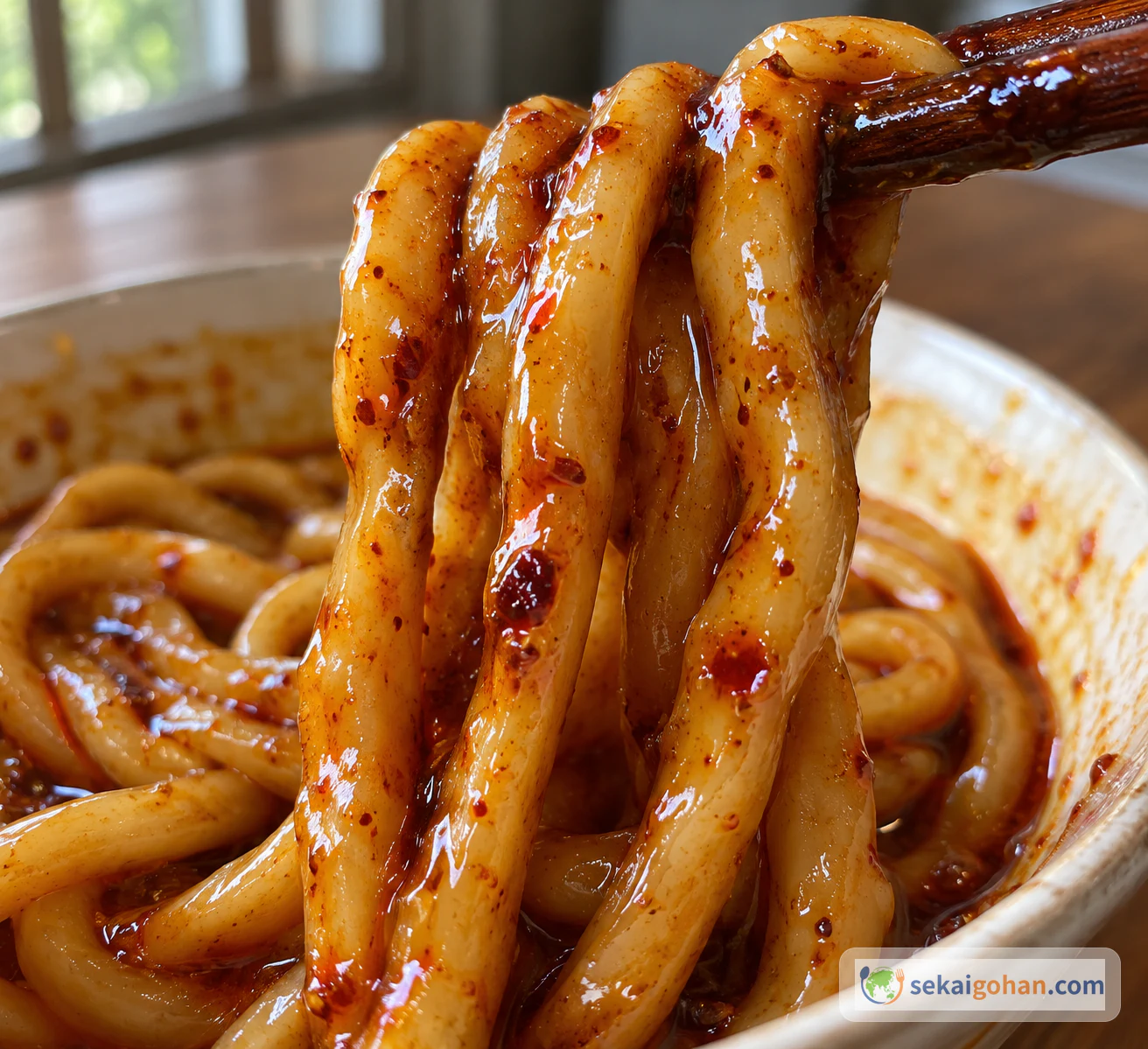
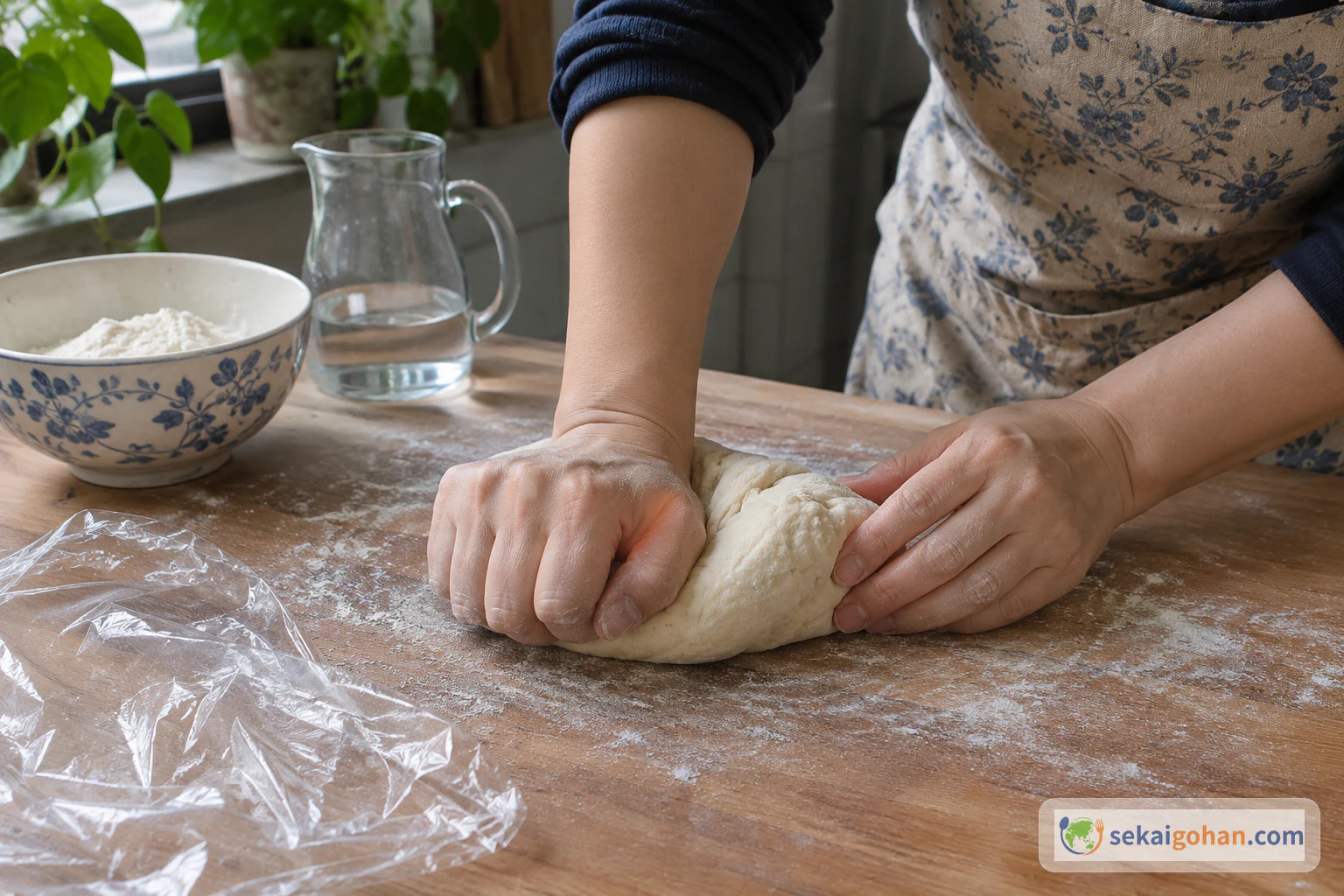
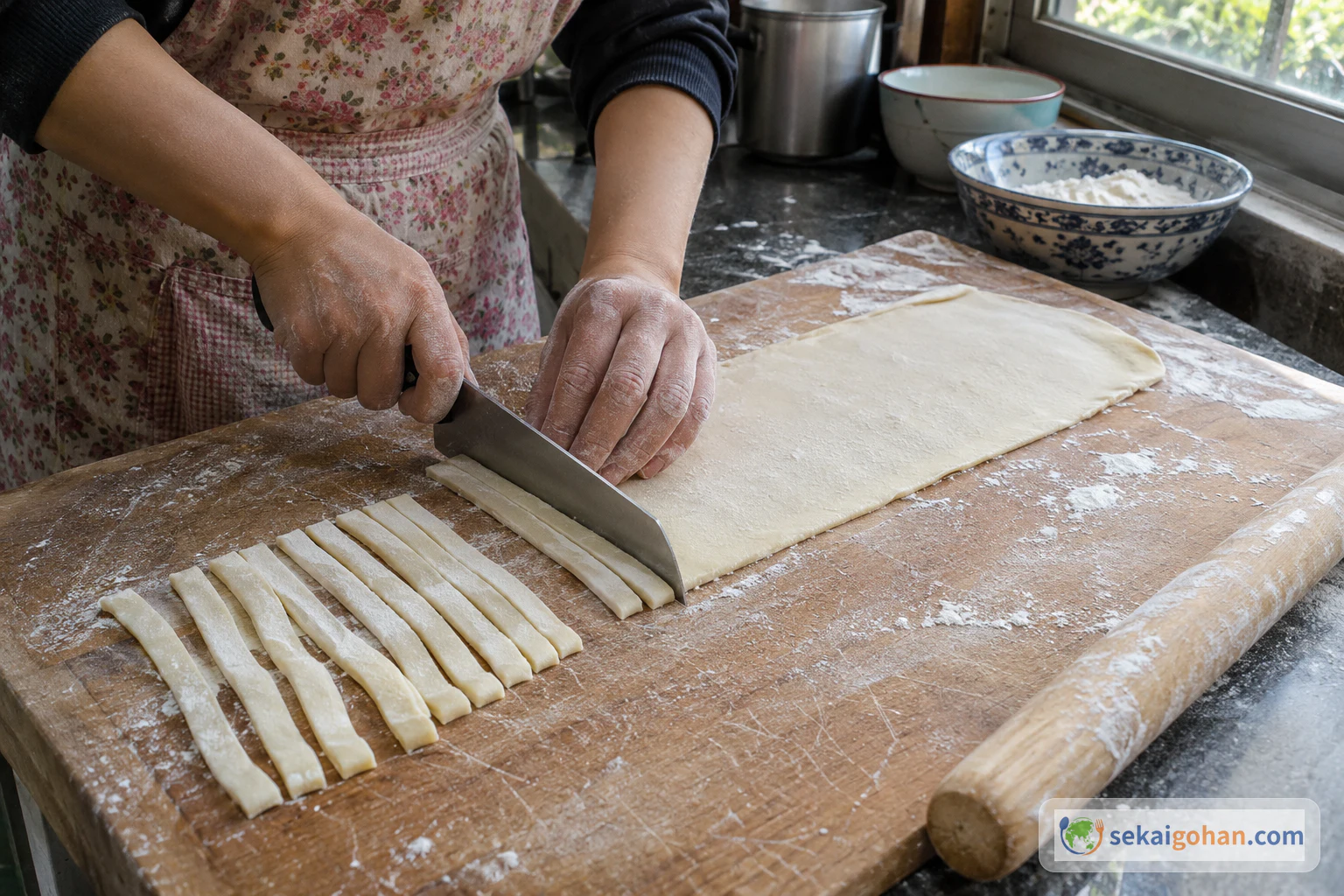
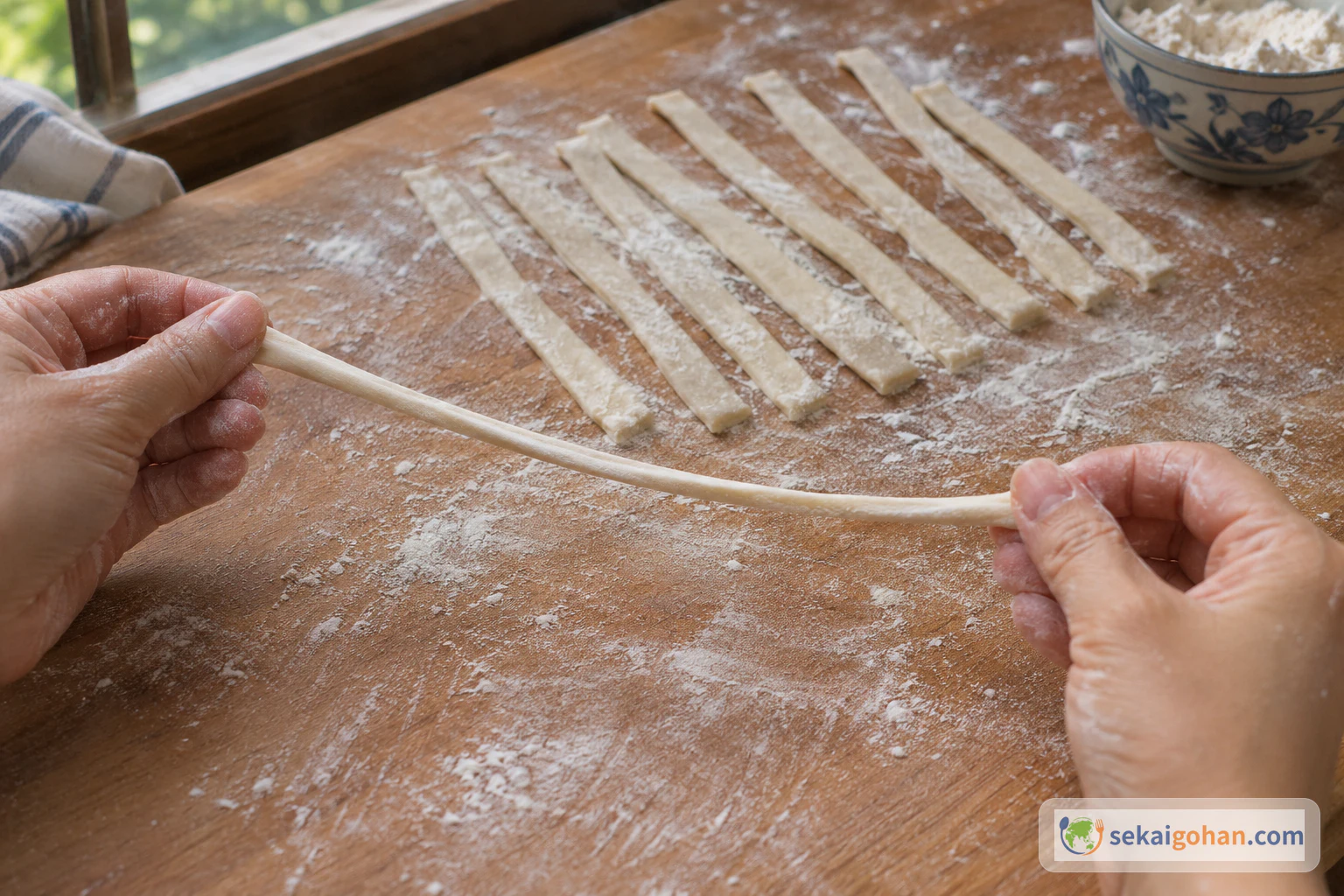
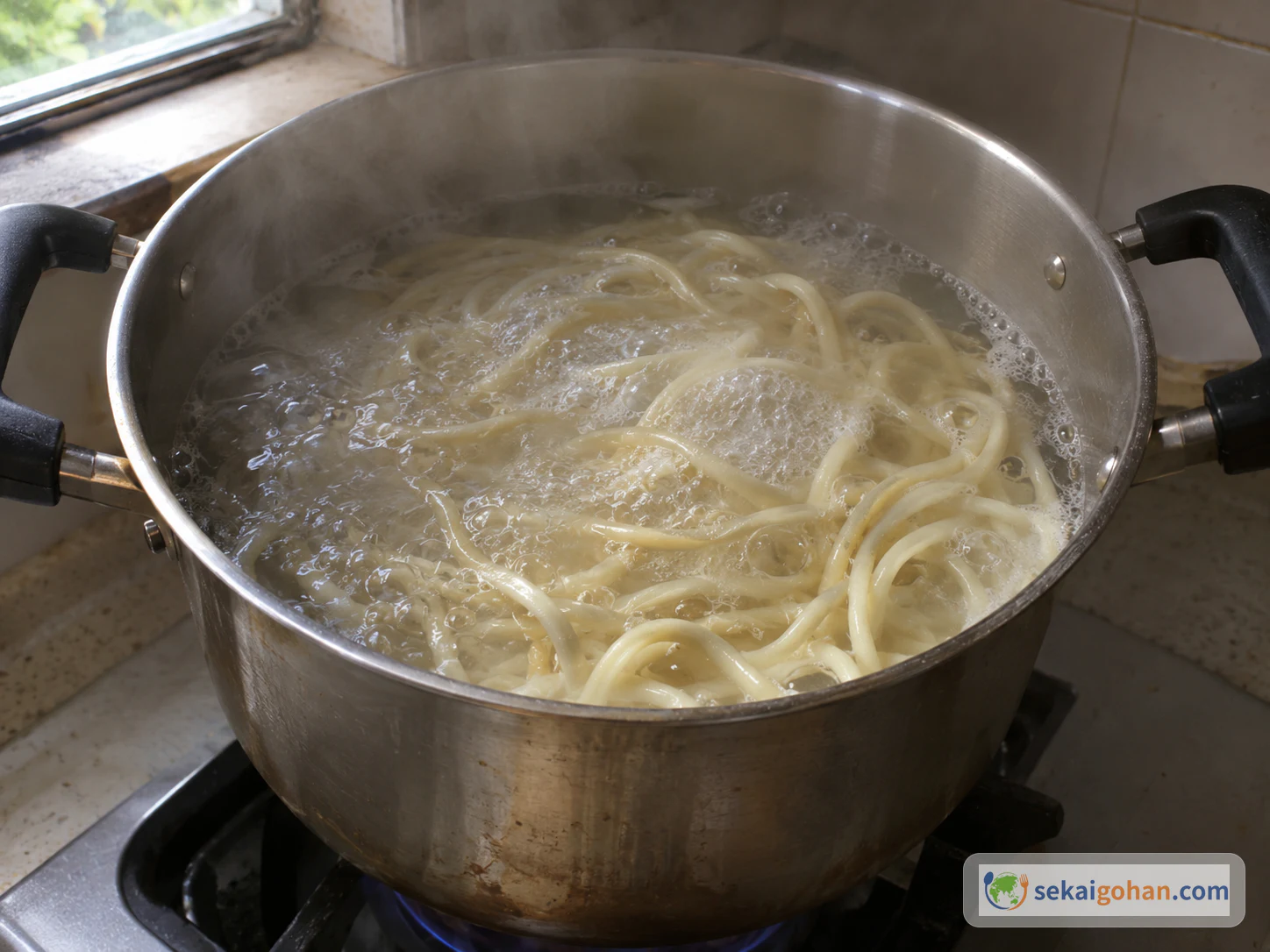
The noodles are about as thick as chopsticks, few to a bowl, bouncy and on the firm side. They come from a low-water, stiff dough, and their cross-section is squarish. At Zhang Lao Er the dough is cut into strips about ⅜ inch (1 cm) wide and then stretched, boiled for about 3 minutes, and the resting dough is brushed with rapeseed oil so it does not form a skin. At home the strips are slightly wider and boil a little longer, but the logic is the same: cut first, then stretch.
If you know dan dan noodles, the contrast is clear. Dan dan mian carries minced meat, preserved ya cai and black vinegar, and its heat leads. Tianshui noodles have no meat, sweetness leads, and the noodle is far thicker. For another hand-stretched thick noodle from a different corner of China, Shaanxi's wide biangbiang noodles make a good comparison. More dishes from the same kitchen are collected under China.
Ingredients (serves 2)
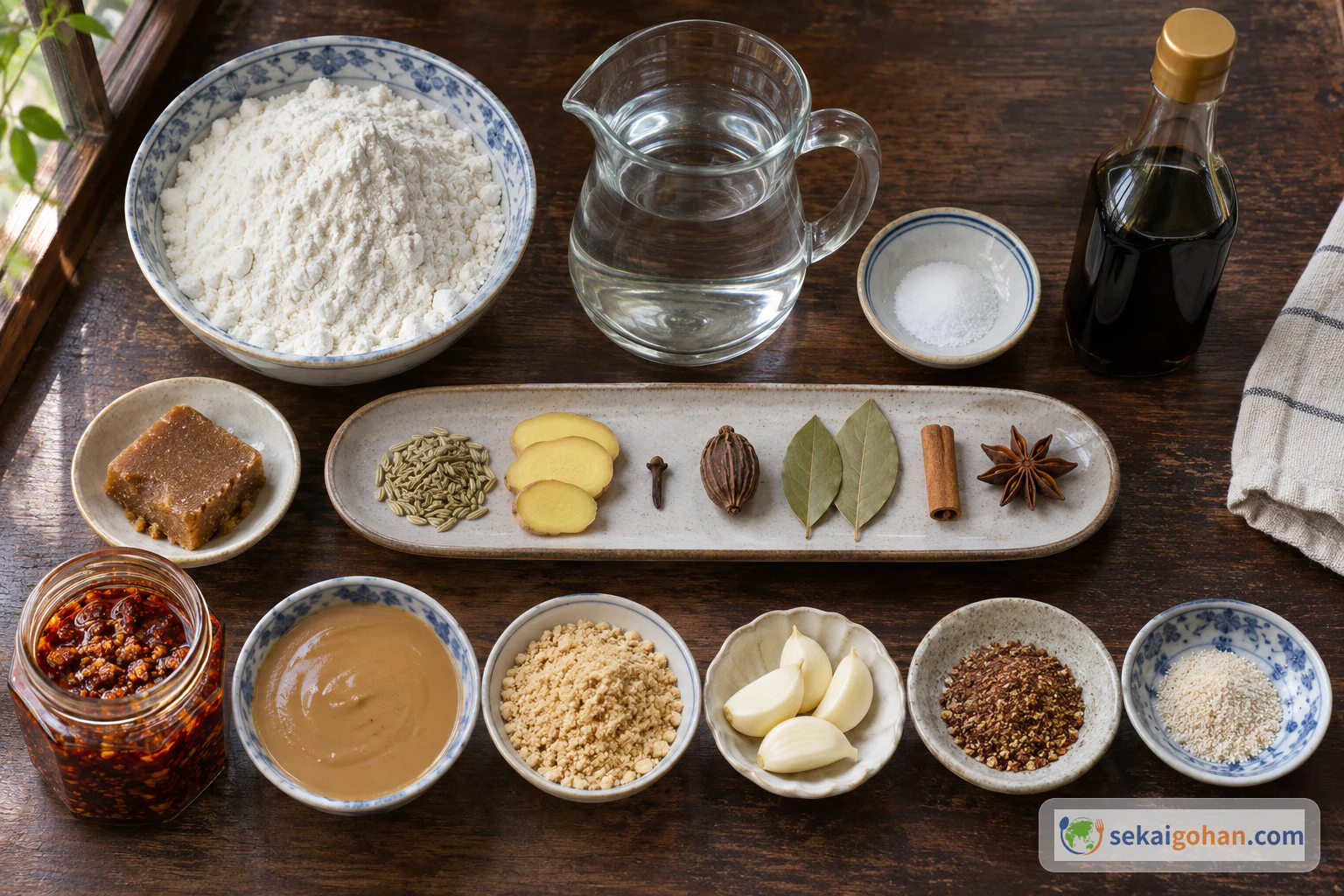
The sweet spiced soy is made in a bigger batch than two bowls need. The rest keeps in the fridge and goes into braises or dipping sauces, so the extra is a bonus.
With so little water, the dough feels hard and dry at first. That firmness is correct. It is what lets the noodles stretch to pencil thickness and still bite back after boiling, so knead it smooth instead of adding water.
This dish contains wheat (gluten), sesame and soy (soy sauce, roasted soybean powder). If you use peanut butter in place of sesame paste, it also contains peanuts. Check the labels of chili oil and mushroom seasoning for other allergens.
Equipment
- Rolling pin and a large board for dusting with flour
- Kitchen knife
- Small saucepan for the sweet soy
- Fine-mesh strainer for straining out the spices
- Large pot with plenty of water for boiling the noodles
- Colander
- Grater for the garlic
- Two small bowls
Choosing and Substituting
The sweet soy is entirely within reach of an ordinary kitchen, since every part of it is soy sauce, sugar and common spices. Chinese light soy sauce (sheng chou) is the base; it is a different product from Chinese dark soy sauce (lao chou), so do not use dark soy in its place. A regular Japanese-style soy sauce works as a substitute. Brown sugar or Okinawan black sugar both stand in for Chinese hong tang. Black cardamom is optional: leave it out, or add a little more star anise. If you have no clove, skip it. Chinese cassia gives the warmest note, and regular cinnamon works, with a slightly different aroma.
For the per-bowl dressing, a Chinese grocery covers everything. Buy a ready-made Sichuan chili oil. Choose sesame paste made only from sesame, the Chinese kind, and thin it with warm water. Roasted tahini thinned with a little sesame oil is a good stand-in; avoid sweetened sesame spreads, which pull the aroma in another direction. Peanut butter also works, and it brings peanut flavor and the peanut allergen.
Roasted soybean powder is sold at Chinese grocers. Japanese kinako is also roasted soybean, but its aroma differs; if you have neither, leave it out. Ground Sichuan pepper is best freshly ground from whole peppercorns, and a good ready-ground powder is fine. Granulated dashi or Chinese stock granules can replace mushroom seasoning, or you can skip it. For the flour, a standard all-purpose flour is right; bread flour gives a springier, more elastic noodle.
| Keep for a Chengdu taste | Fine to adjust abroad |
|---|---|
| The simmered sweet soy, because the sweetness has to lead | Black cardamom and clove |
| Chili oil and Sichuan pepper, both present | Mushroom seasoning |
| A stiff, thick, hand-stretched noodle | Kinako or no soybean powder at all |
Method
Start with the sweet soy, because it has to cool to room temperature before it goes into a bowl. While it cools, make the dough and let it rest for 30 minutes; that rest is the only hands-off stretch. After that the work runs straight through: roll, cut, stretch, boil, rinse, and dress the bowls while the noodles drain.
When It Goes Wrong
| What you see | Why | What to do |
|---|---|---|
| The dough is sticky and slack | Too much water for that flour | Knead in flour 1 tbsp at a time until it firms up; stiff is normal |
| A strip tears while stretching | Undusted, stuck, or pulled too hard | Set that strip aside and stretch the next one, dusting each strip on its own |
| The center of a noodle is pale and raw | Boiled too briefly for its thickness | Return it to the boiling water and test again; the core must be cooked through |
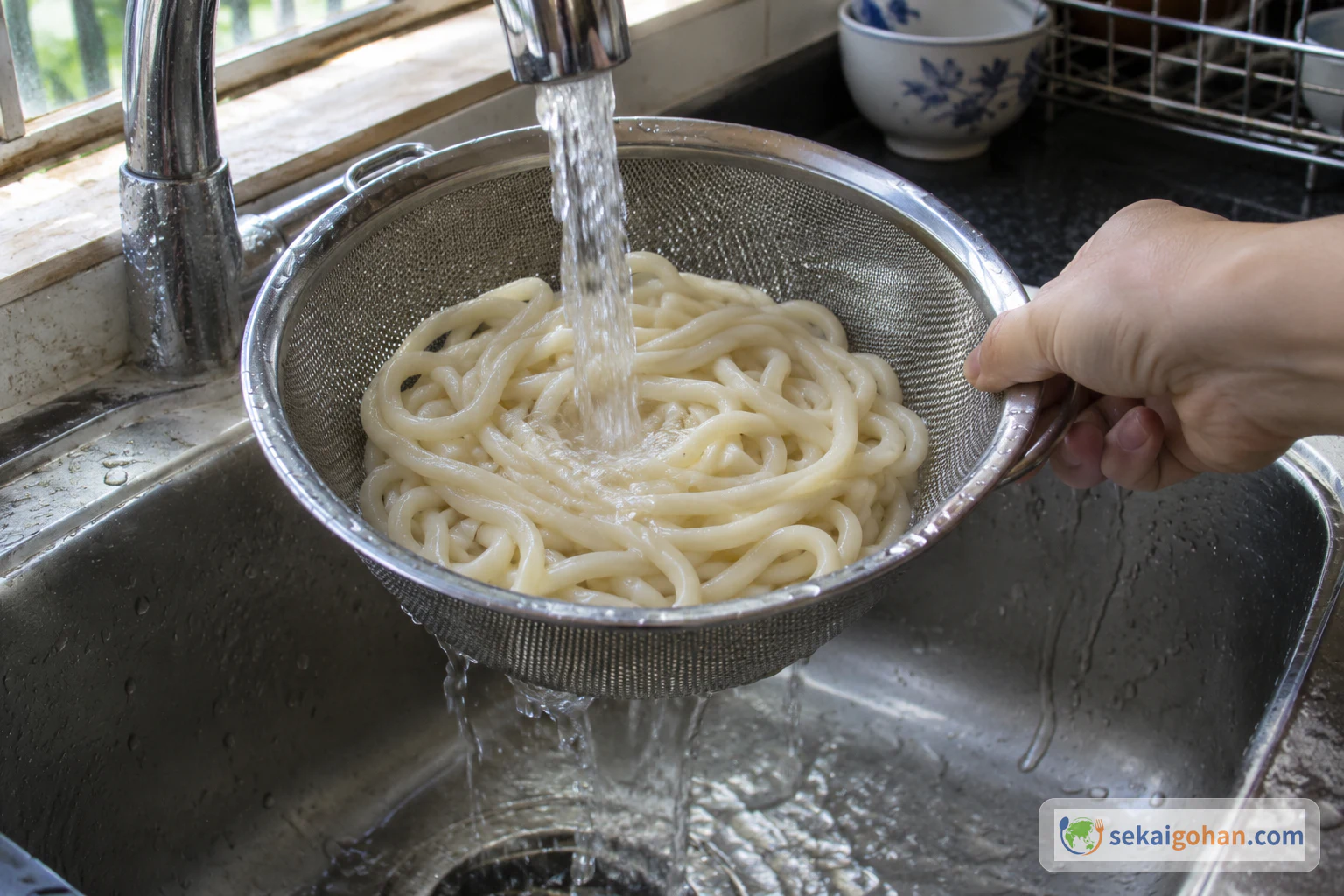
| The noodles feel soft and lose their bounce | Skipped or rushed the cold rinse | Rinse in cold water straight after boiling and drain well |
| The sauce tastes flat and salty | The sweet soy was boiled hard or the sugar did not dissolve | Simmer the next batch on the lowest heat until the sugar is fully melted and the soy is glossy |
| The sauce slides off and pools | Noodles went in wet | Drain until no water drips, then toss |
Serving, Variations and Storage
At the table
Tianshui noodles are a snack in their own right, eaten in a small bowl at breakfast or as something to tide you over in the late afternoon. They carry no side dishes in the bowl. In Chengdu they share the counter with cold starch jelly and cold noodles, and at home they sit well beside other Sichuan dishes such as mapo tofu, whose Sichuan pepper speaks the same language.
Variations
- Shop-style thickened sauce. Simmer brown sugar, water and spices, then add a cornstarch slurry a little at a time until the sauce thickens. This gives a heavier, clingier glaze.
- Frozen udon shortcut. Skip the dough entirely: boil frozen udon, rinse it in cold water and dress it the same way. The flavor is all there; the chew is softer and less dense than the hand-stretched noodle.
- Shop-style savory edge. A pinch of MSG, or a little more mushroom seasoning or granulated dashi, pushes the sauce toward the deeper savory taste of a Chengdu shop.
- Without the five pungent roots. Leave out the garlic. The sweet soy and the chili oil still hold the center of the flavor.
- Peanut butter in place of sesame paste. The sauce turns nuttier and slightly sweeter, and the bowl now contains peanuts.
Storage and making ahead
The sweet spiced soy can be made several days ahead. Cool it, then refrigerate it in a covered jar and use it within about 1 week; leftovers work well in braises and as a dipping sauce. The noodles and the dressed bowls are made to be eaten fresh, as soon as they are tossed. Grate garlic only for the bowls you are serving.
Frequently asked questions
How spicy is it?
The heat sits behind the sweetness. Chili oil and Sichuan pepper set the level, so use a little less of either for a gentler bowl, or more for a stronger kick. Keep some of both, because the sweet-then-hot movement is what makes the dish.
Can I eat it warm?
In Chengdu it is served both cold and warm. This method is built for slightly cool noodles straight from the cold rinse, which is when the sweet glaze clings best and the noodle feels firmest.
How many noodles go in a bowl?
Very few. A shop bowl holds four or five thick strands, so a small bowl of tianshui noodles looks sparse next to other noodle dishes and eats far heartier than it looks.
Which chili oil should I buy?
Choose a Sichuan-style chili oil, the kind with sediment of chili flakes in red oil. Spoon up both oil and a little sediment for each bowl so you get color, aroma and heat together.