
Recipes (48)
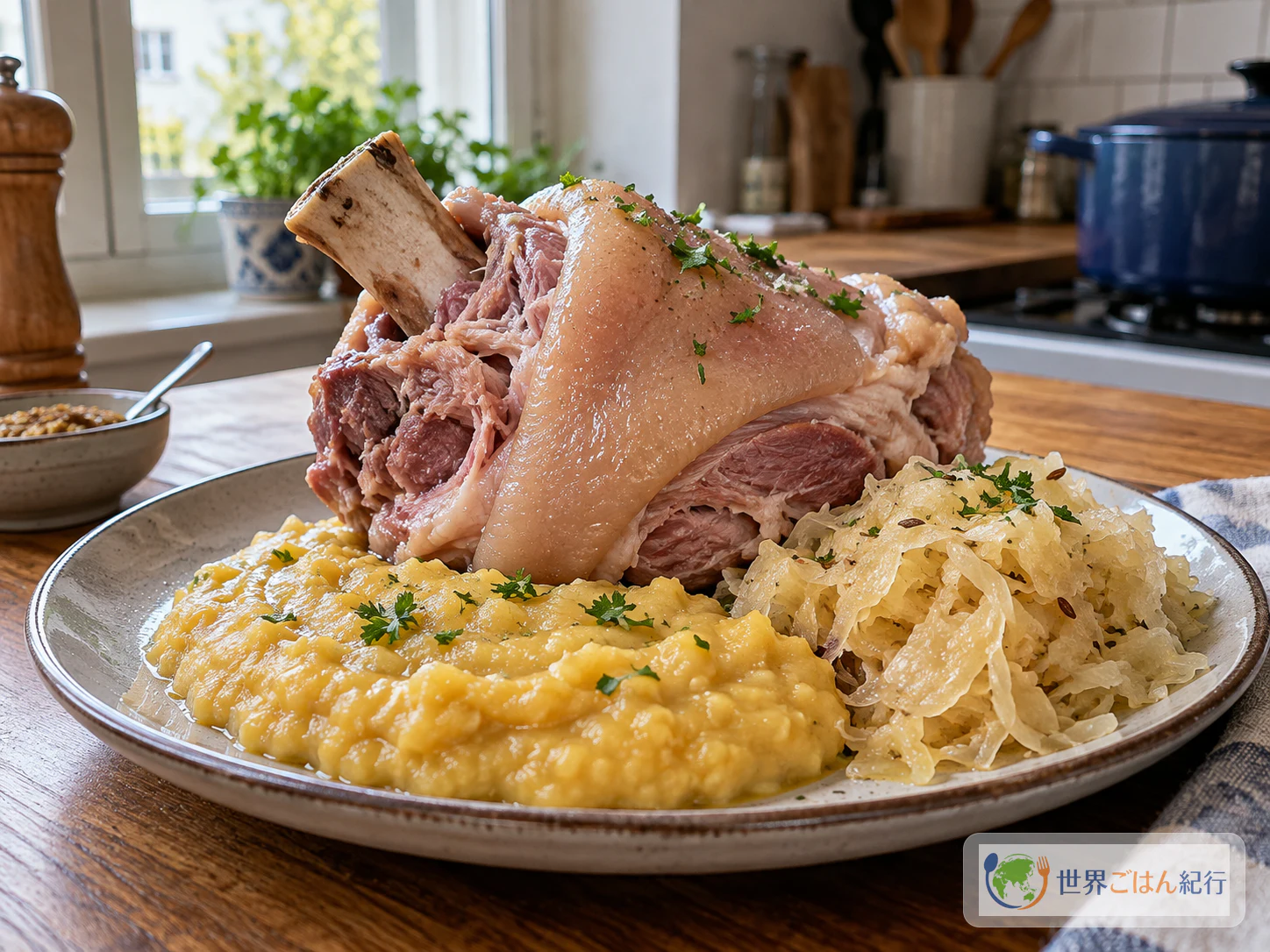
Berliner Eisbein: Simmered Cured Pork Knuckle with Yellow Pea Purée and Sauerkraut
How to make Berliner Eisbein, cured pork knuckle simmered slowly with soup vegetables and spices, served with yellow pea purée and braised sauerkraut. Covers how it differs from roasted Schweinshaxe, choosing cured knuckles, judging salt, checking doneness by the bone and the center temperature, and storing leftovers.
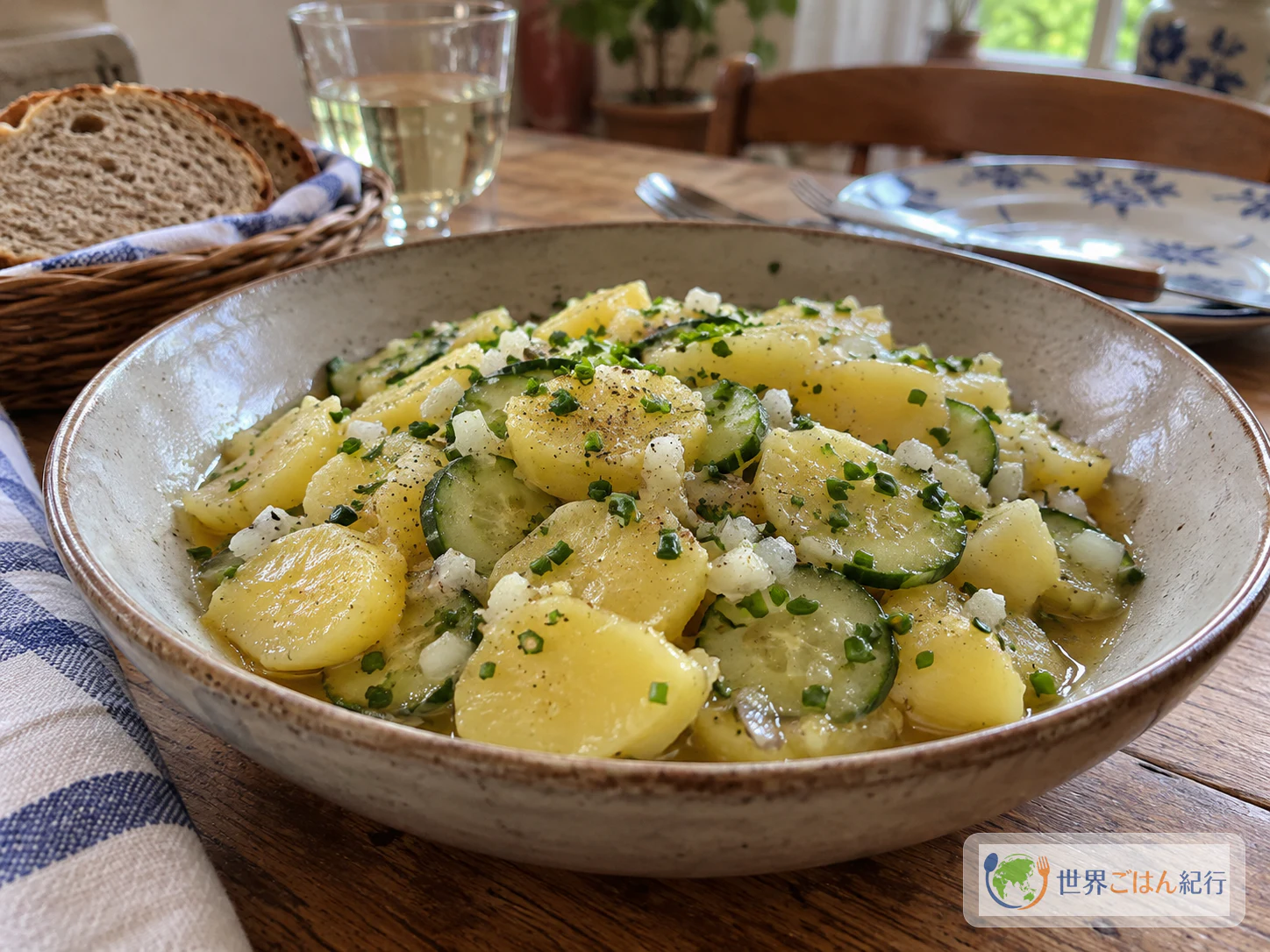
Kartoffelsalat: Southern German Potato Salad Dressed with Warm Broth
How to make a southern German Kartoffelsalat dressed with hot broth, white wine vinegar and oil instead of mayonnaise, following one Bavarian cook's recipe with its original amounts. Covers how it differs from the mayonnaise style, choosing broth, vinegar and potatoes, salting the cucumber, fixing common problems, and regional variations.
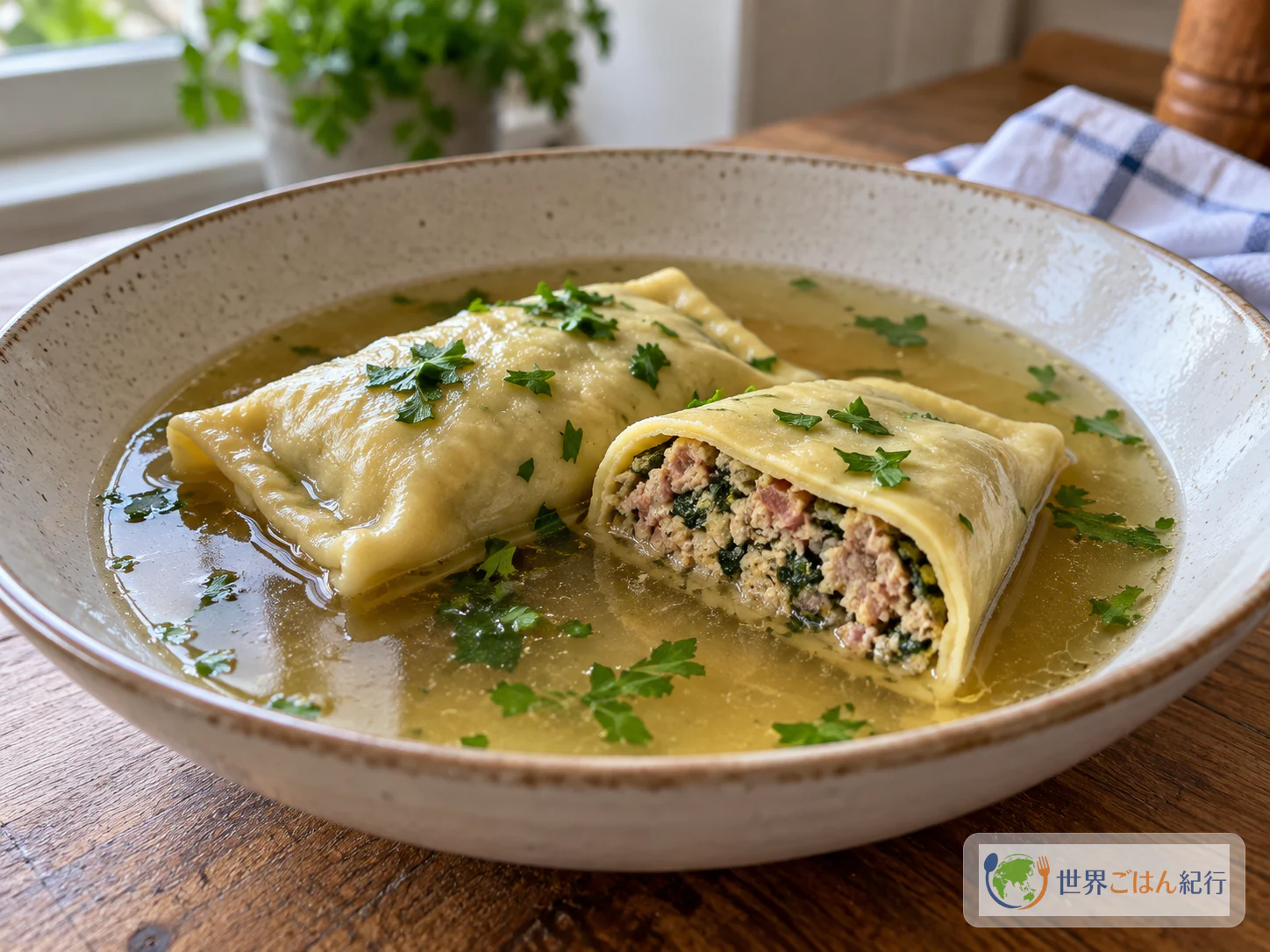
Maultaschen: Swabian Filled Pasta Parcels with Pork, Bacon and Spinach (Schwäbische Maultaschen)
How to make Swabian Maultaschen from a Bavarian state recipe for 4: a firm egg pasta dough cut into roughly 7 cm squares, filled with pork, bacon, spinach and breadcrumbs, folded into rectangles and boiled in salted water for 12 minutes. Covers serving in clear broth, frying with onions, the next-day egg fry, the monastery legend, the EU protected name, troubleshooting and food safety.
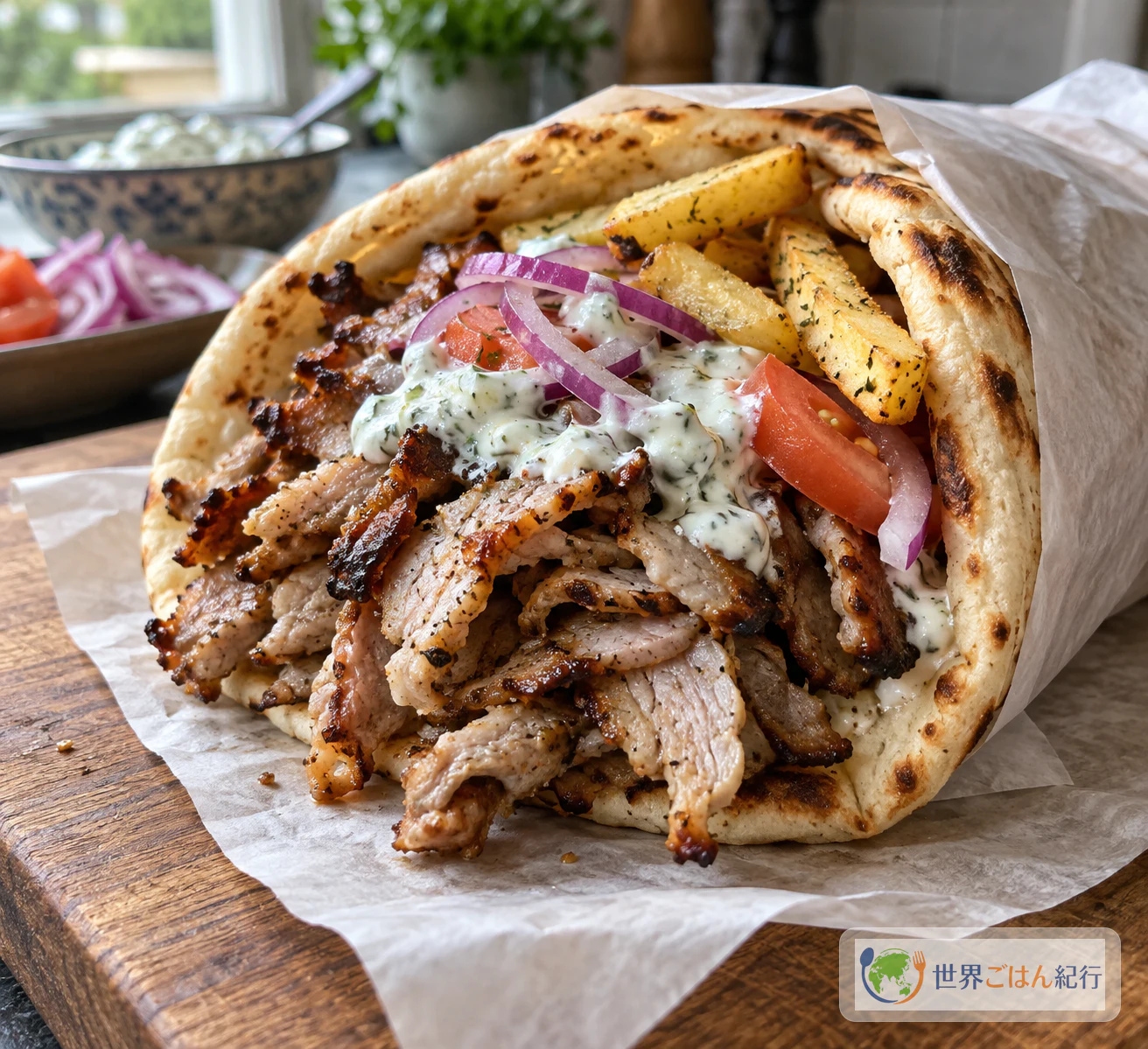
Gyros: Greek Layered Pork, Oven-Roasted at Home and Wrapped in Pita (γύρος)
How to make Greek pork gyros at home: thin slices of pork shoulder and belly marinated in onion juice, vinegar and herbs, packed into a deep tin, roasted at 180°C, then shaved and crisped in a hot dry pan. Covers how gyros differs from souvlaki, how it is eaten on the streets of Athens, safe internal temperatures, and how to wrap it in warm pita with tzatziki, tomato, onion and fries.
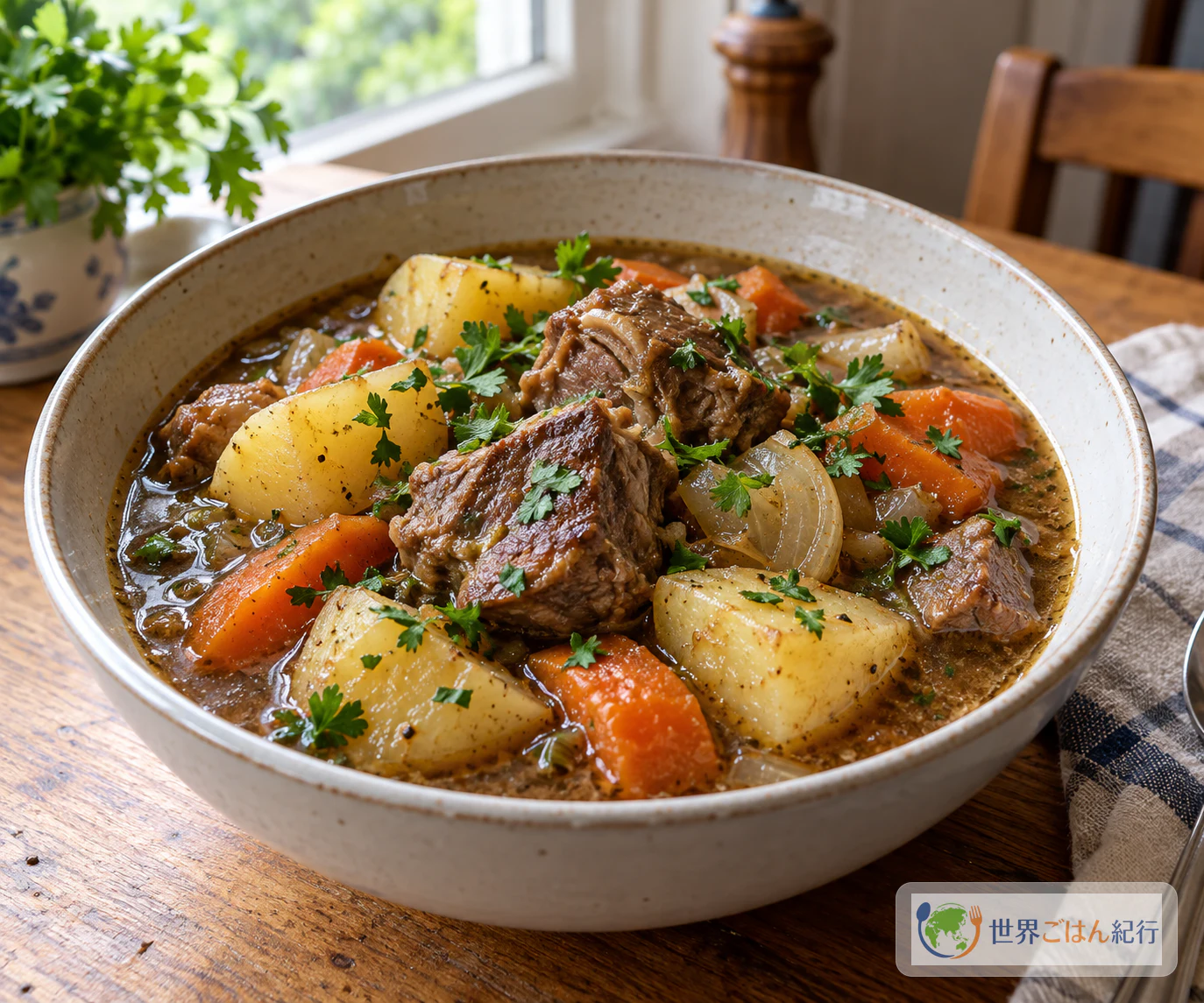
Irish Stew: Oven-Braised Lamb, Potatoes and Carrots (Stobhach)
How to make Irish stew (Stobhach) for 4, based on a County Mayo recipe: boneless lamb browned in two batches, layered with potatoes, onion and carrots, then braised under a lid in a 180°C oven in beef stock. Covers choosing lamb and potatoes, keeping the ingredients covered with liquid, judging doneness by tenderness and core temperature rather than the clock, fixing common problems, and how other Irish stews differ.
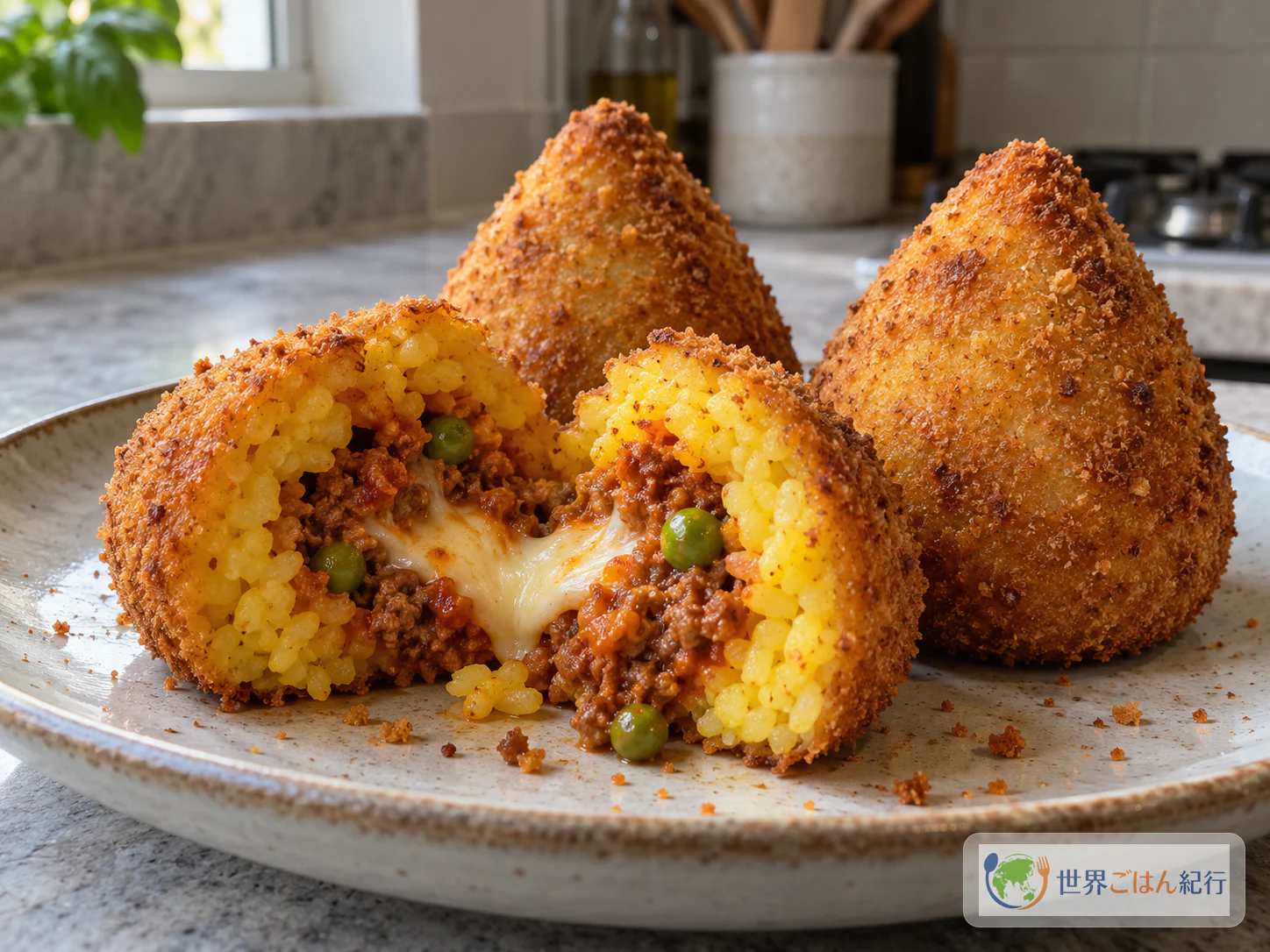
Sicilian Arancini: Saffron Rice Croquettes with Beef Ragù
How to make eastern-Sicilian arancini from scratch: saffron rice cooked by absorption and wrapped around a thick beef ragù with peas and cheese, then coated in flour, egg and breadcrumbs and fried. Covers ingredient substitutions, safe cooling of cooked rice, shaping a cone that holds, frying temperature, fixing bursts, and the round-versus-cone story of Palermo and Catania.
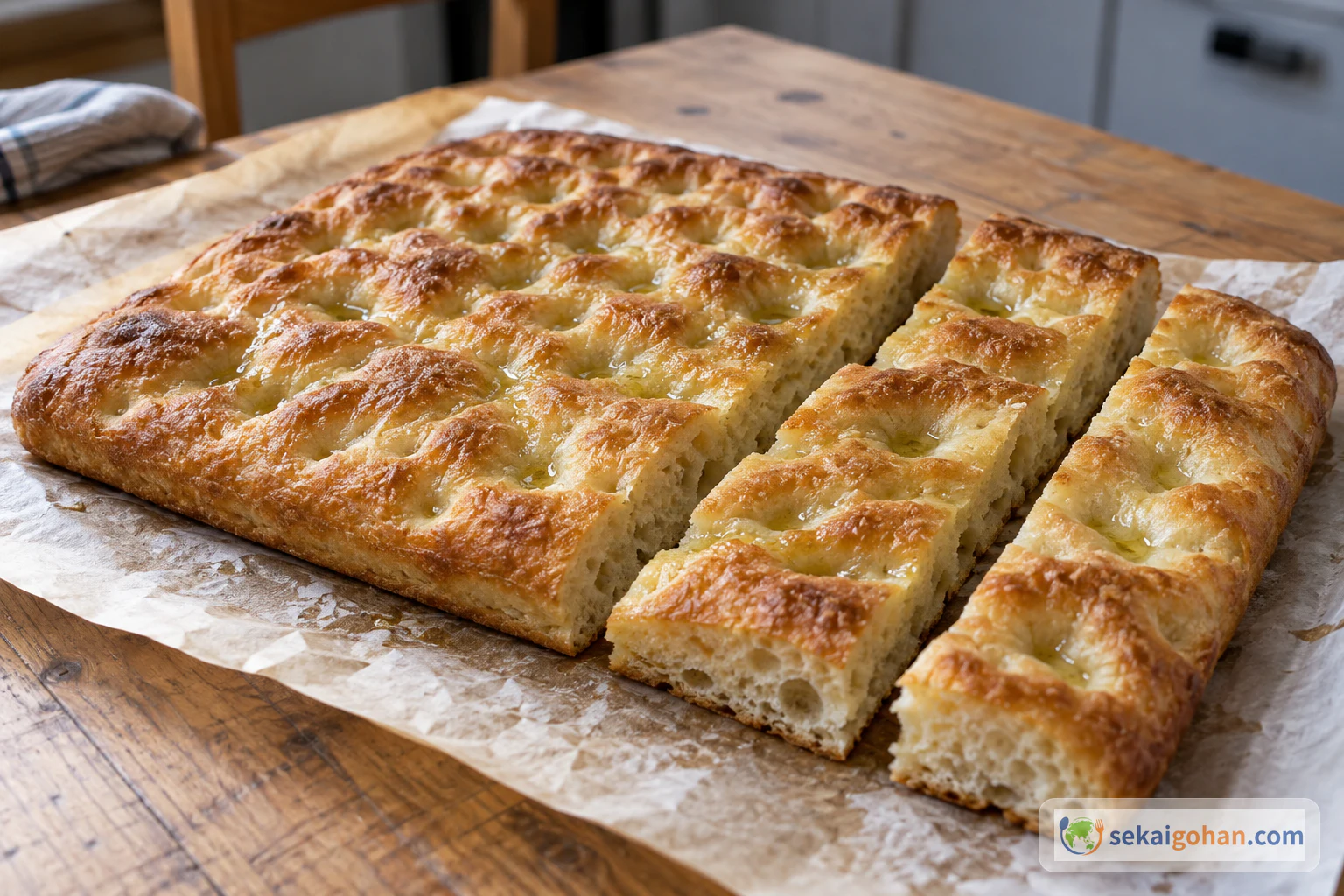
Focaccia Genovese: Genoa-Style Flatbread with Brine and Olive Oil in the Dimples (Fügassa)
How to make Genoa-style focaccia (fügassa) in two 30 × 40 cm trays, following one published Genoese formula with tipo 00 and Manitoba flour, malt and fresh yeast. Covers three-finger dimples, why brine and olive oil go on top, how to read each rise, flour substitutions, troubleshooting, and how the bread is eaten in Genoa.
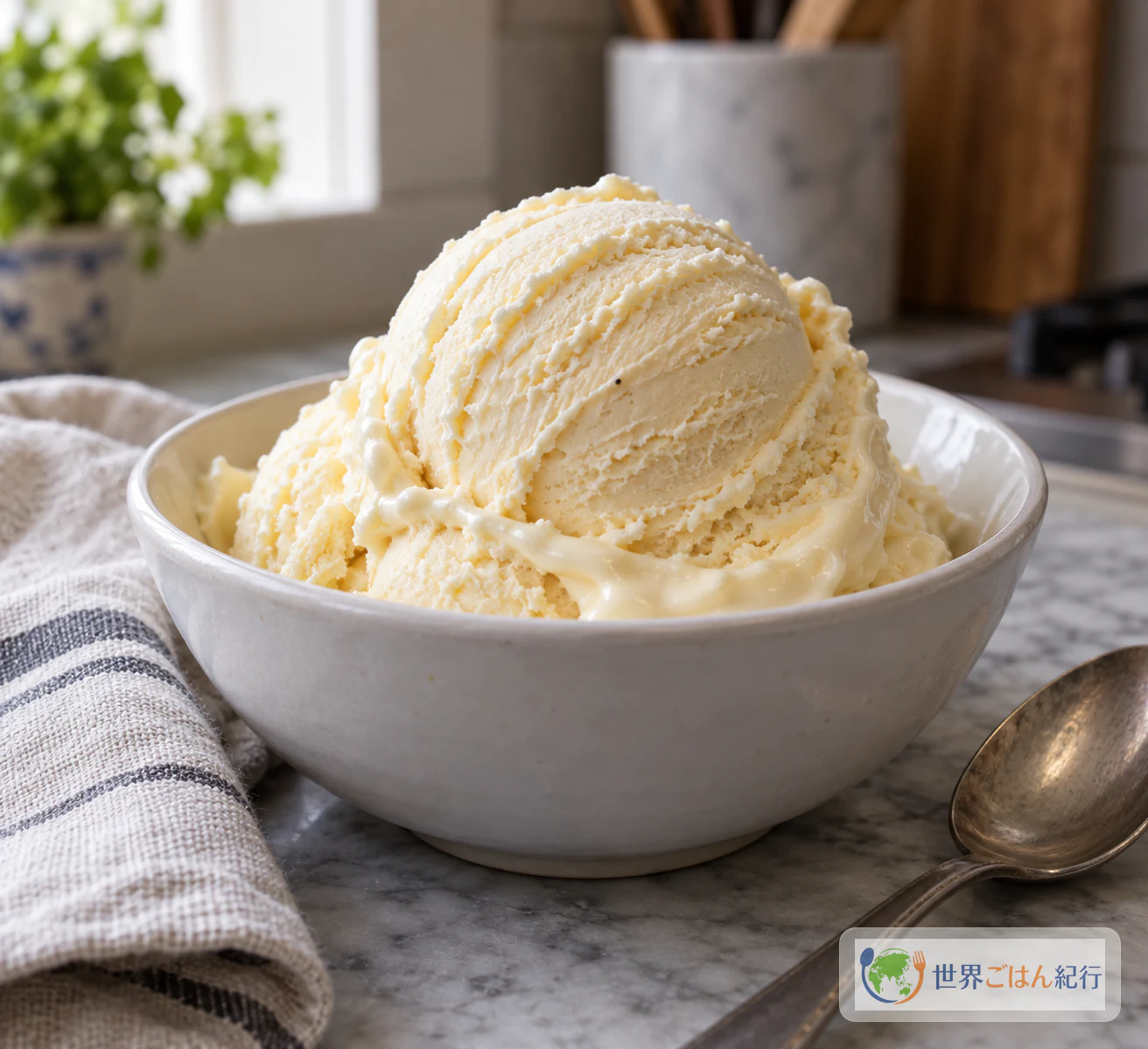
Italian Gelato at Home: A Basic Egg-Yolk Crema Recipe
Make Italian crema gelato at home from a gelateria's published 1 kg recipe: milk, egg yolks, dextrose and skimmed milk powder, heating to 85°C with a thermometer hold check, quick cooling, at least 4 hours of chilling, and churning in an ice cream maker. Also covers the history of iced desserts in Italy, styles of gelato, and substitutions.
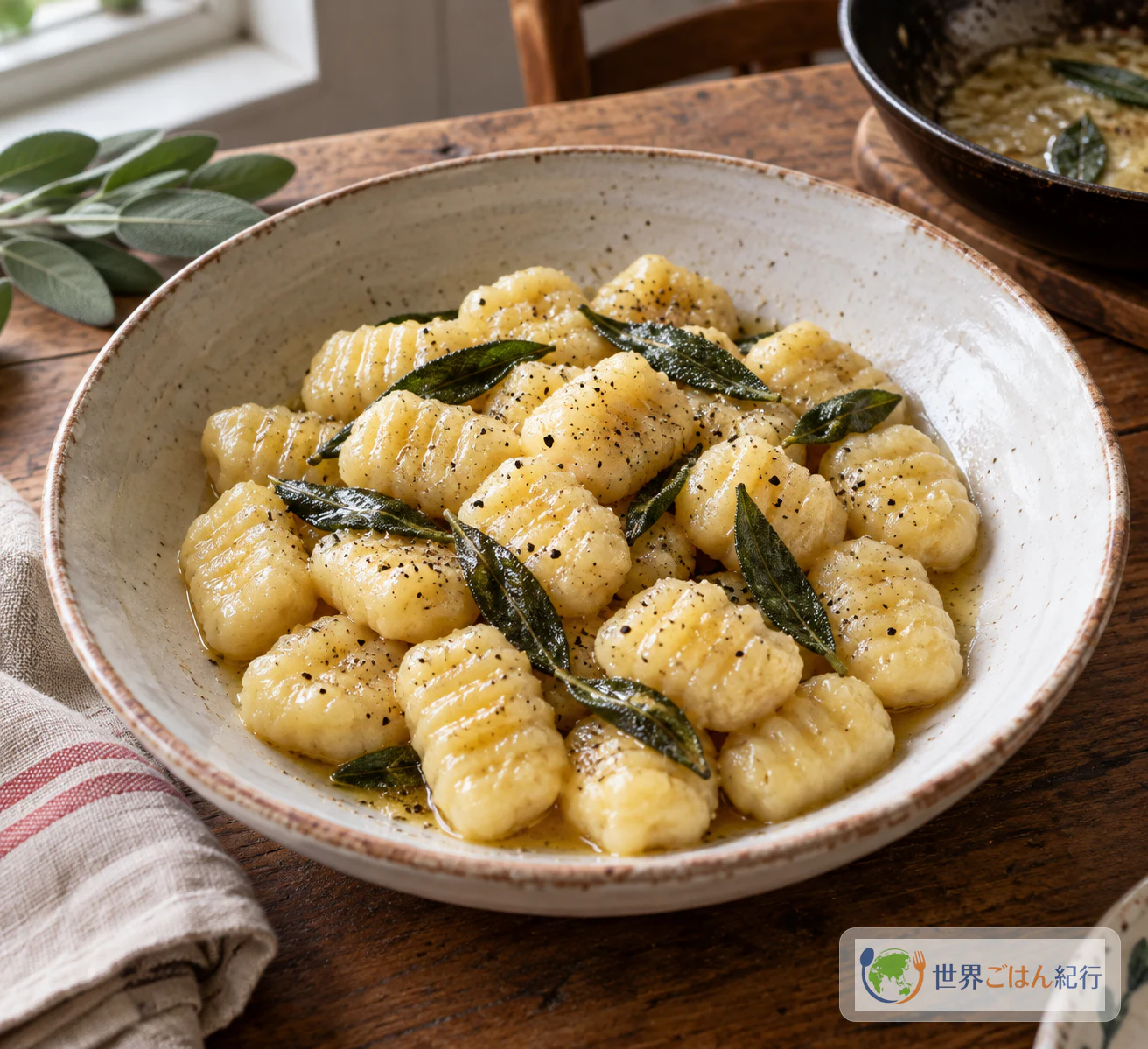
Potato Gnocchi: Italian Gnocchi di Patate with a Light Dough and Fork Ridges
How to make Italian potato gnocchi (gnocchi di patate) at home from a five-ingredient, egg-included formula: boiling potatoes in their skins, ricing them hot onto the flour, mixing briefly so the dough stays tender, shaping ridges with a fork, lifting the gnocchi as they float, and freezing them loose. Also covers fixing hard or crumbling dough, serving ideas such as butter and sage, and how potato gnocchi fit into Italy's wider family of gnocchi.
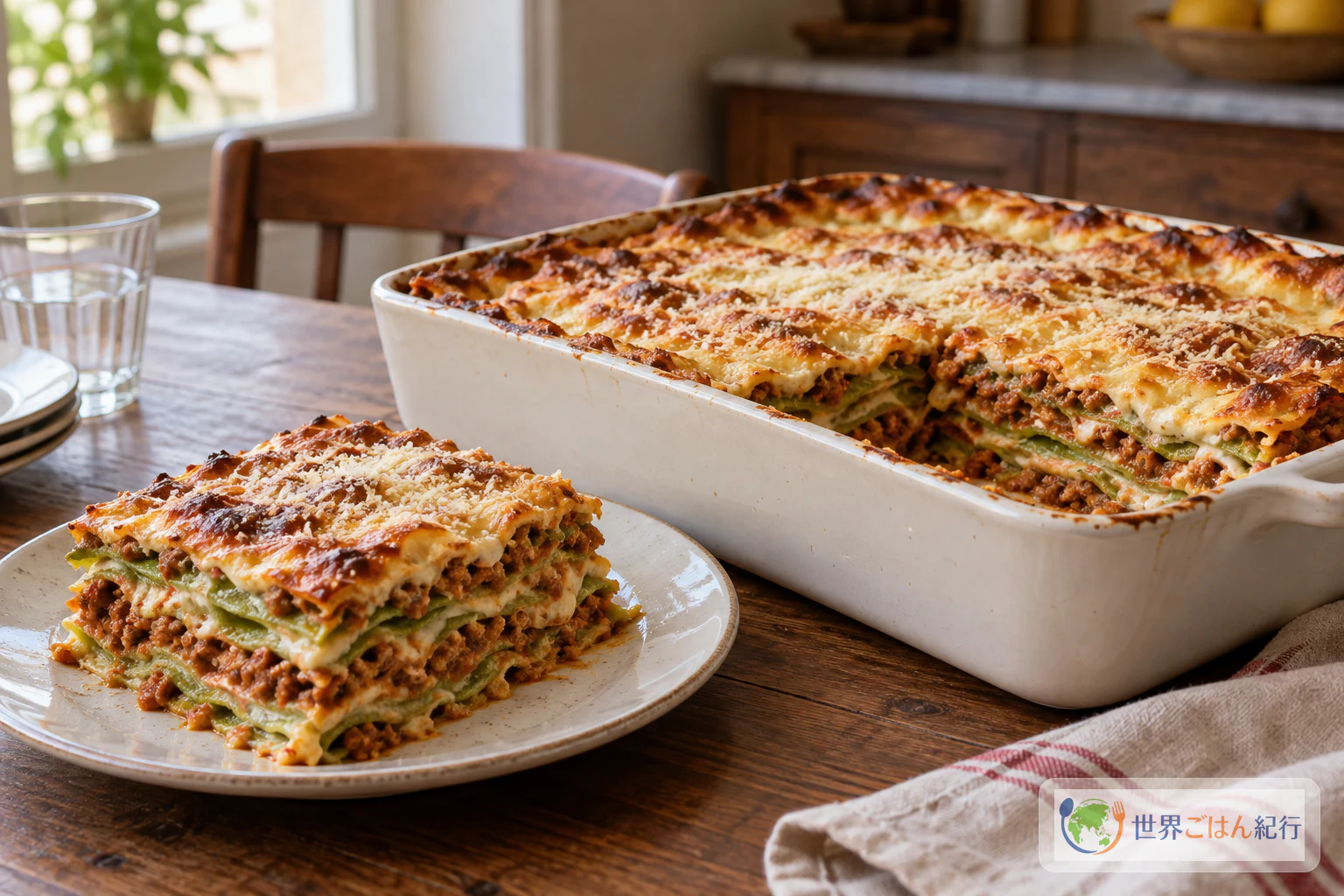
Lasagne Verdi alla Bolognese: Bologna-Style Green Lasagna with Spinach Egg Pasta
How to make lasagne verdi alla bolognese, the Bologna-style green lasagna that layers hand-rolled spinach egg pasta with ragù, béchamel and Parmigiano-Reggiano. Based on the registered recipe published by Bologna's official tourist site, it covers the ingredients for 8 servings, the ragù, the béchamel, boiling and layering the sheets, baking at about 180°C, resting before cutting, and how to judge substitutions outside Italy.
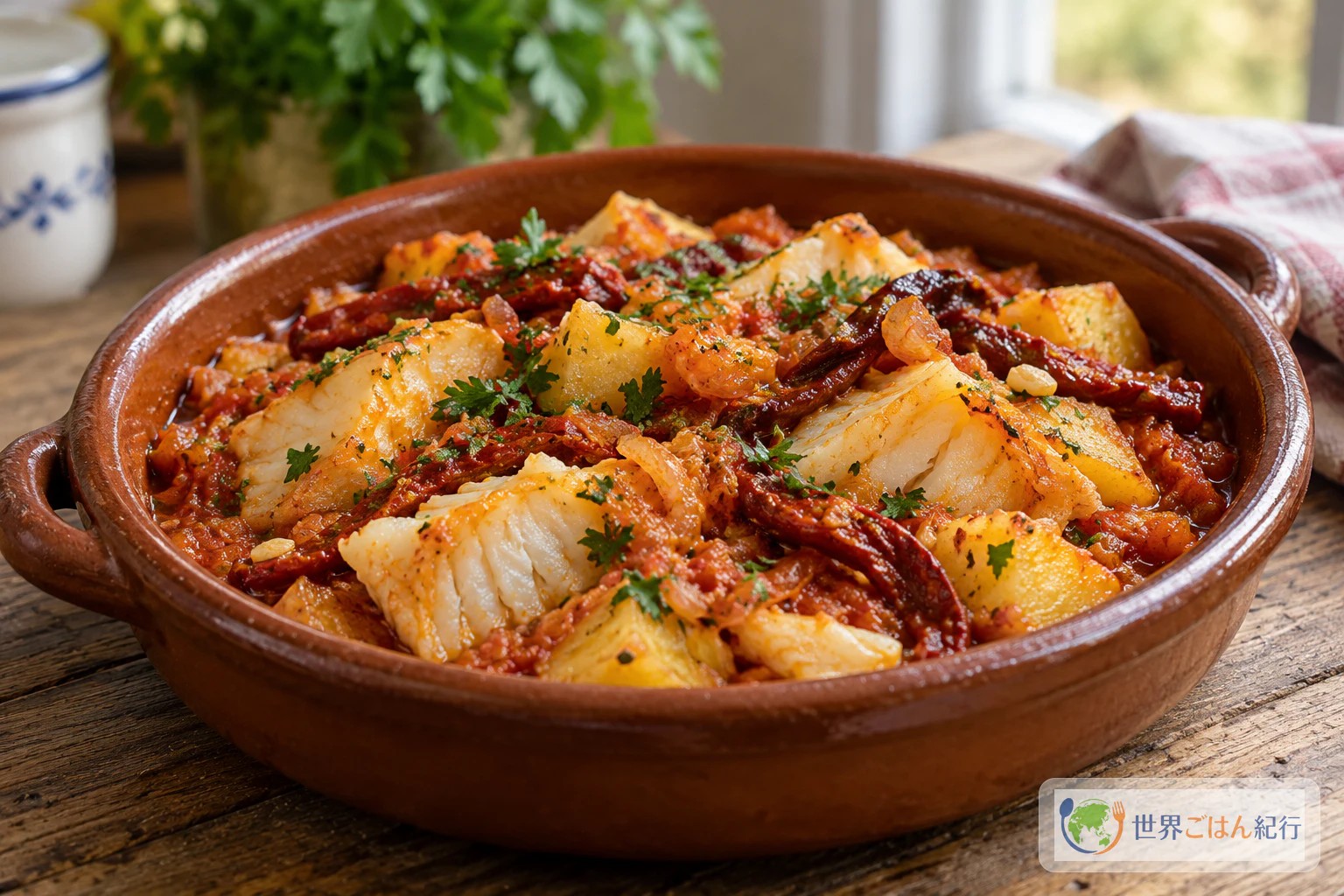
Bacalao al Ajoarriero: Navarra Salt Cod with Tomato and Choricero Peppers
How to make bacalao al ajoarriero the Navarra way, starting from refrigerated desalting of salt cod. A 4-serving recipe that brings together flaked cod, garlic, homemade-style tomato sauce, dried choricero peppers and potato in an earthenware pot, with tips for choosing ingredients outside Spain and how other versions of the dish differ.
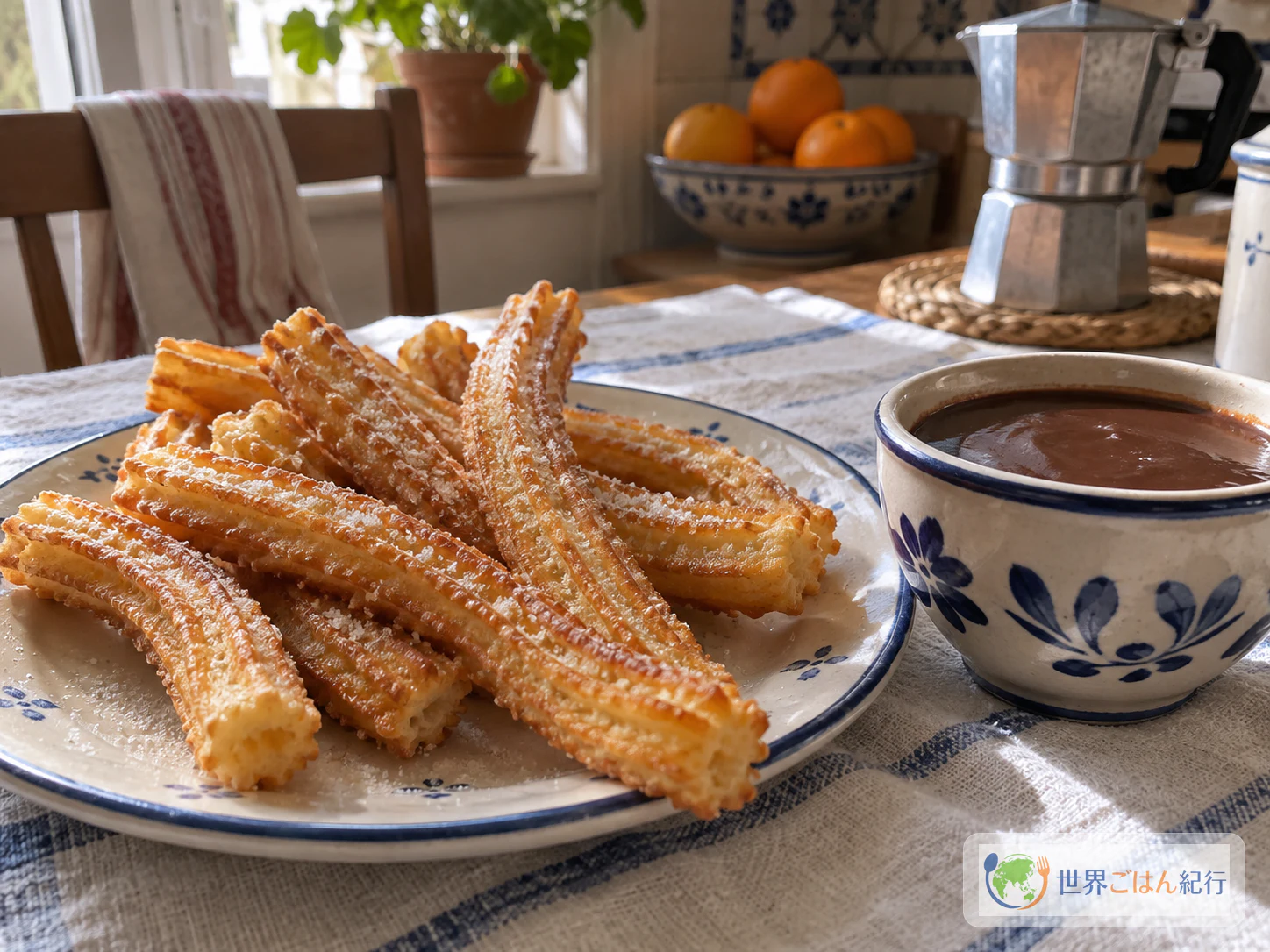
Spanish Churros: Madrid-Style Fried Dough from Flour, Water and Salt
How to make Spanish churros in the Madrid style from a simple dough of flour, water and salt, shaped with a manual churrera away from the oil and fried until evenly golden. Covers the published ingredient amounts, safe handling of the hot dough, judging doneness by color and the center, the difference between churros and porras, and dipping in hot chocolate.
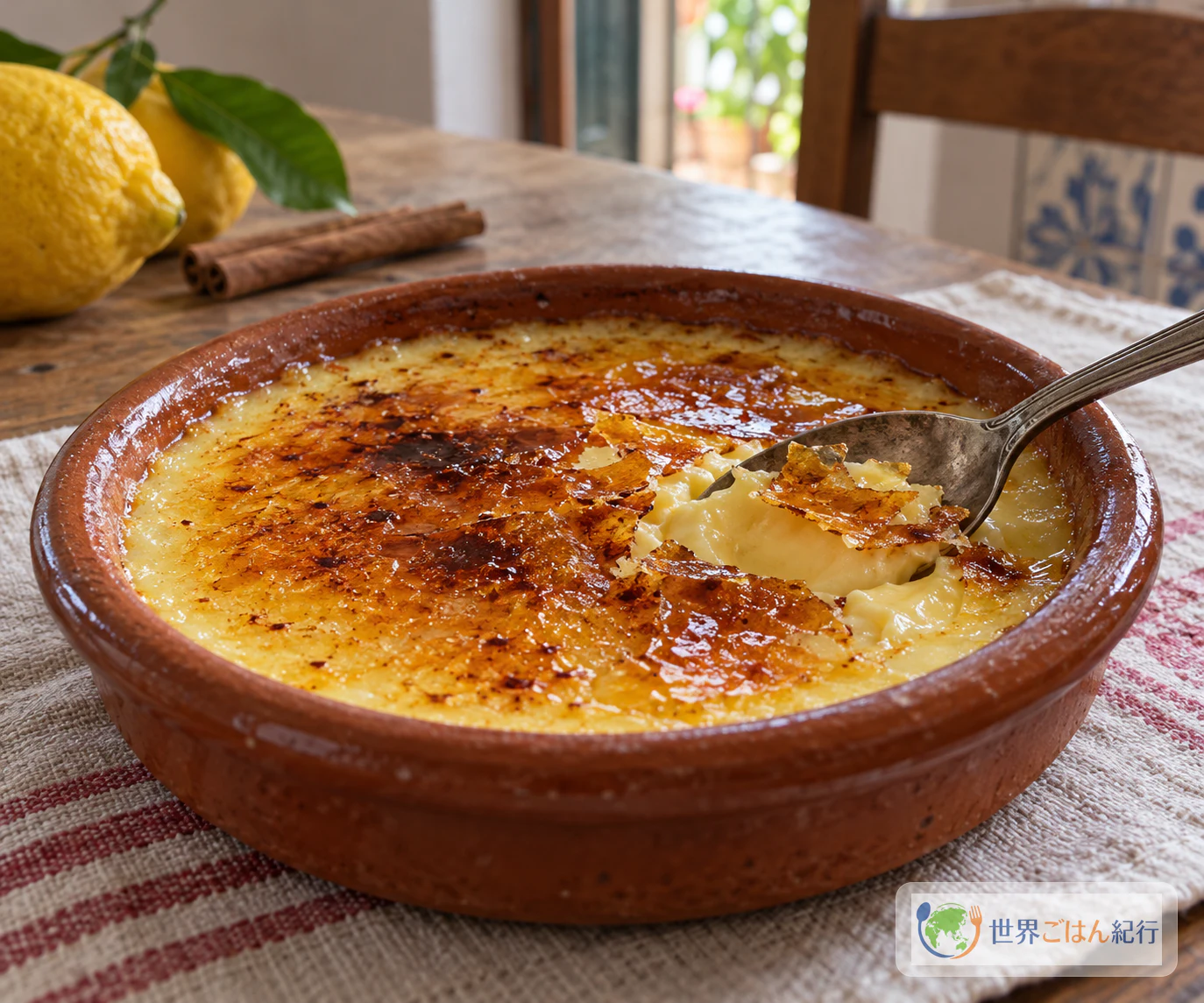
Crema Catalana: Lemon-and-Cinnamon Custard with a Burnt-Sugar Crust
How to make crema catalana, the Catalan custard also called crema cremada and crema de Sant Josep, at home. Milk is infused with lemon peel and cinnamon, thickened on the stove with egg yolks and cornstarch, chilled, and finished with a thin layer of sugar burnt just before serving. Covers ingredient choices, how to judge thickness without a thermometer, fixing grainy or soft custard, and how it relates to the spring feast of Saint Joseph.
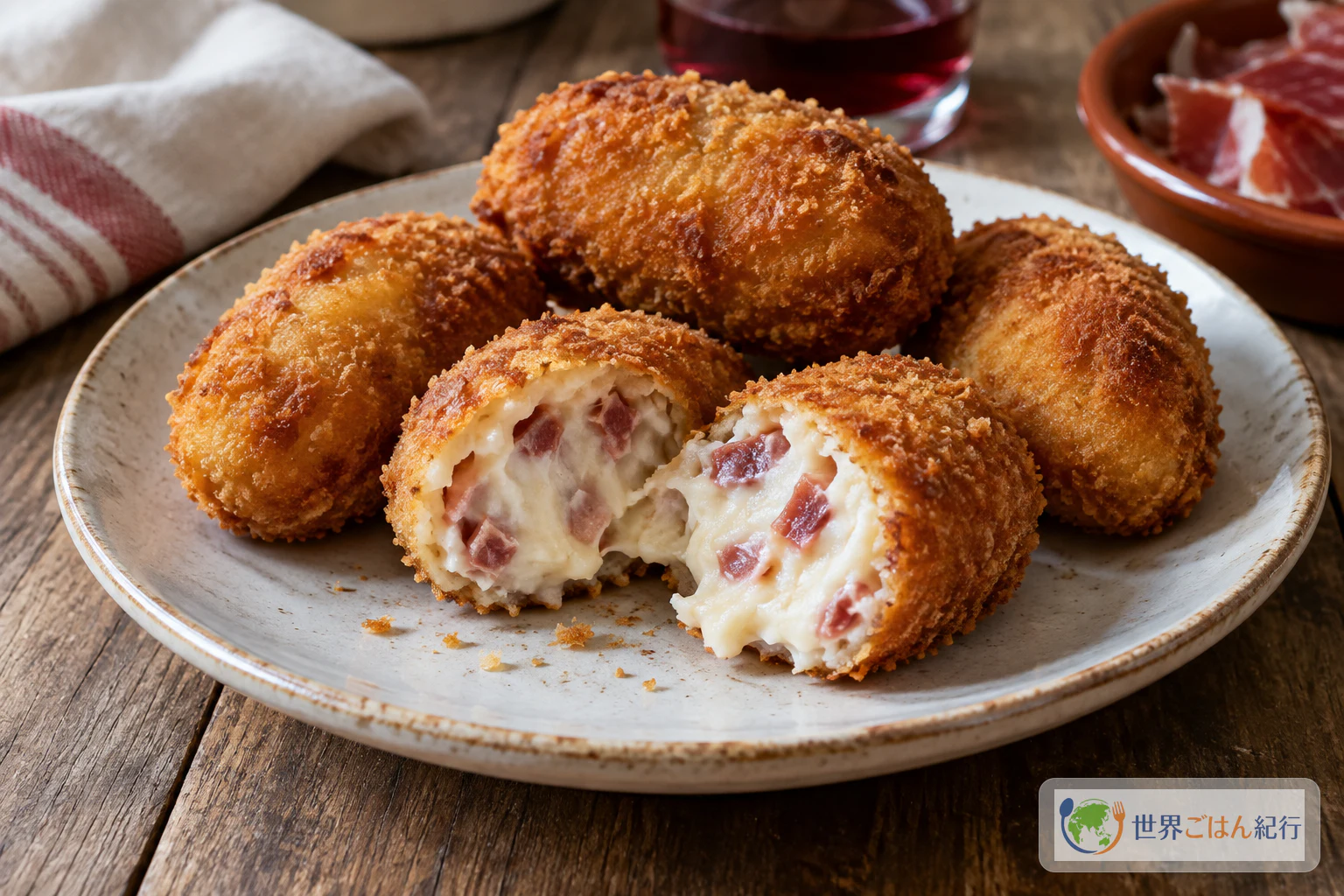
Croquetas de Jamón: Spanish Ham Croquettes with a Creamy Béchamel Center
How to make croquetas de jamón, the Spanish tapa of cured ham folded into a thick béchamel, chilled, breaded and fried. Covers the order of roux, milk and ham stock, and ham, how thick to cook the béchamel, the long refrigerated rest, coating, frying in small batches, salt control, choosing between jamón ibérico de bellota and jamón serrano, fixing croquettes that burst, and their place among Spanish tapas.
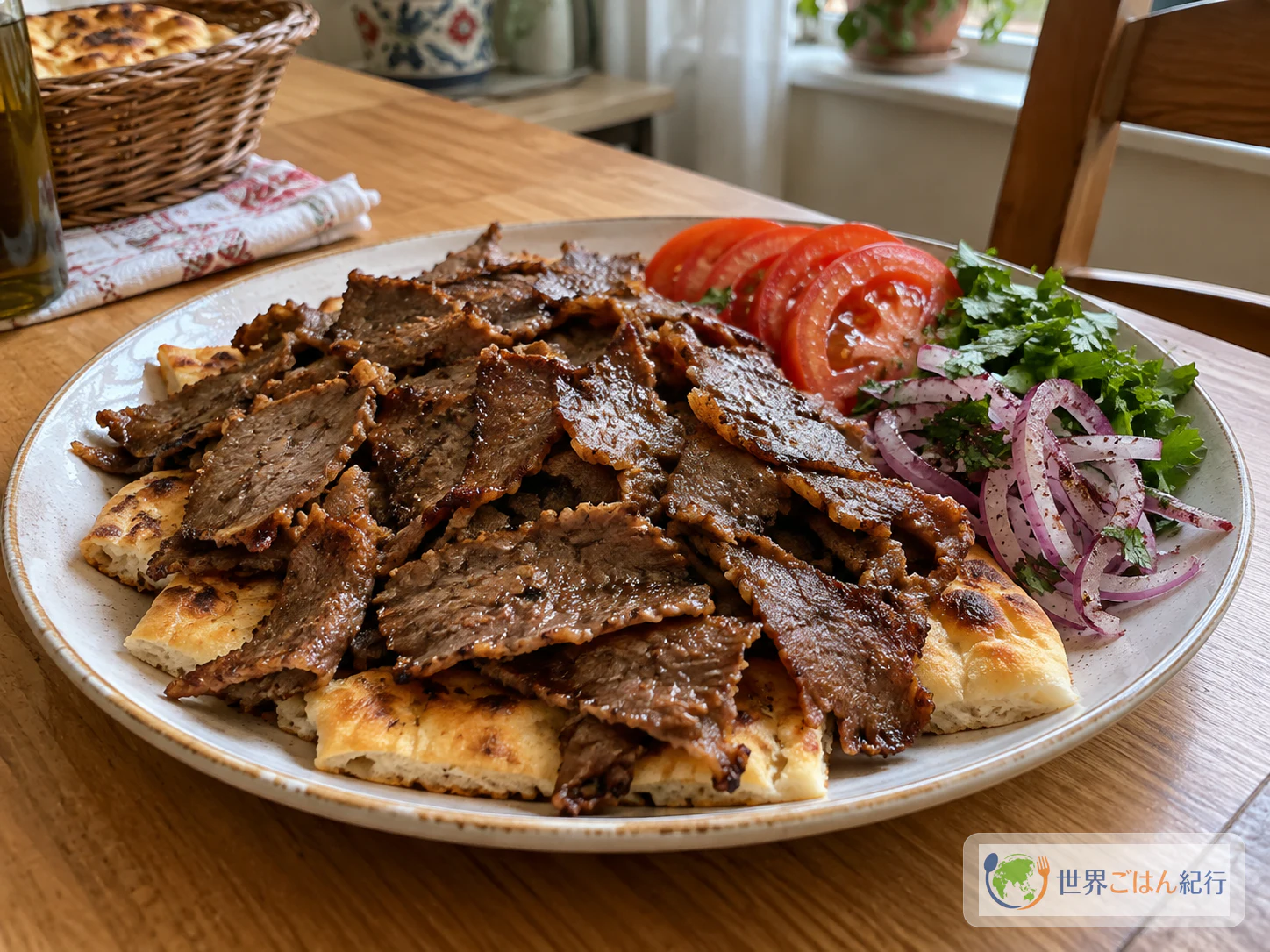
Döner Kebab at Home: Turkish Thin-Sliced Meat, Stacked, Chilled and Pan-Seared
A home method for Turkish döner kebab: beef or lamb marinated with onion and yogurt, stacked into a roll, frozen, thawed in the fridge and sliced thin for the skillet. Covers choosing the meat, cooking to 75°C, serving in pide, the İskender plate, and Ankara's regional style.
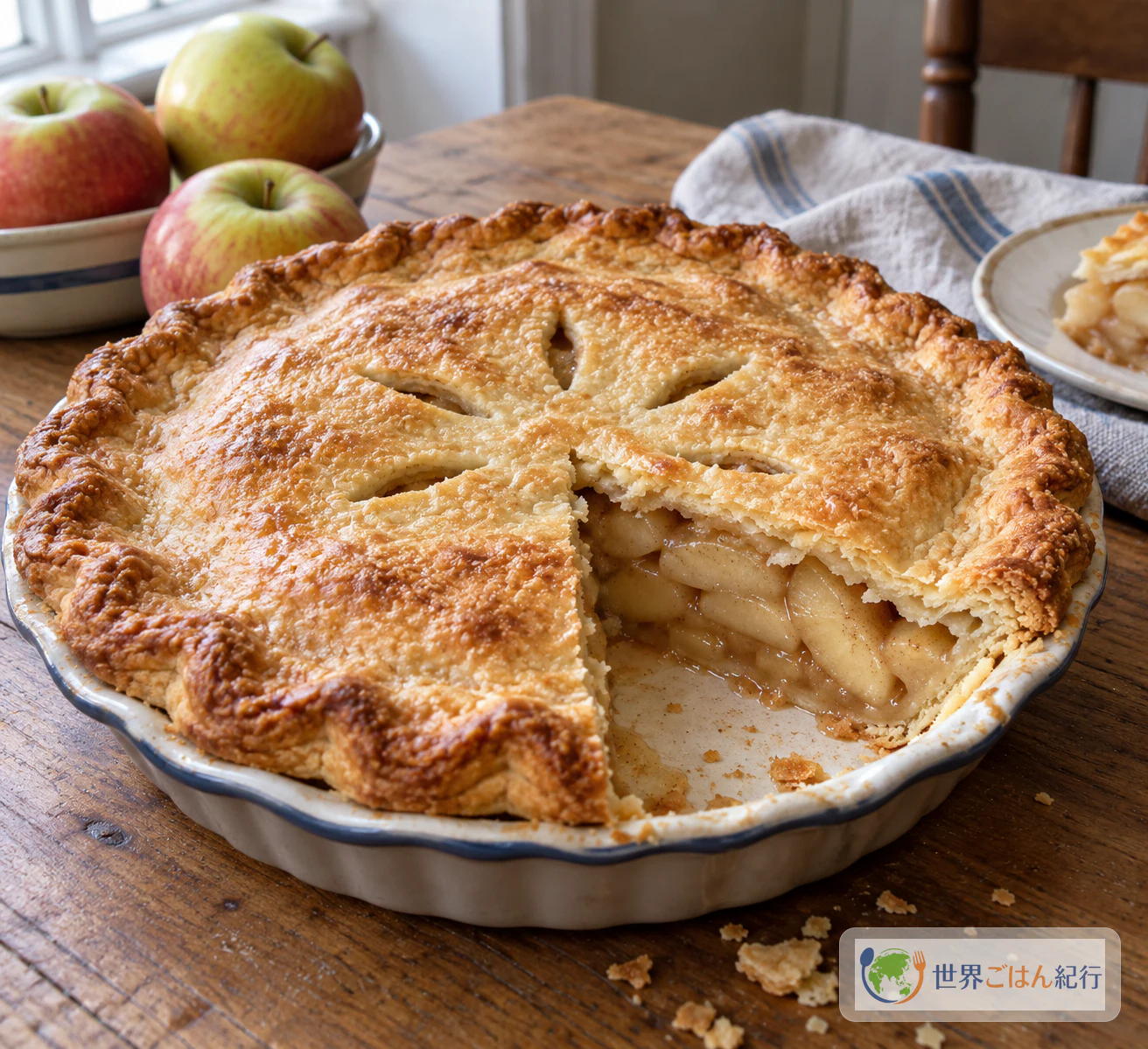
British Apple Pie: Bramley Apples in an Egg Shortcrust
A British double-crust apple pie made with tart Bramley cooking apples and an egg-enriched shortcrust, serving 8. Covers drying the apple slices, chilling and lidding the pastry, baking at 190°C (fan 170°C), apple substitutions, the Bramley's history, the medieval Tartys in Applis, and handling leftovers.
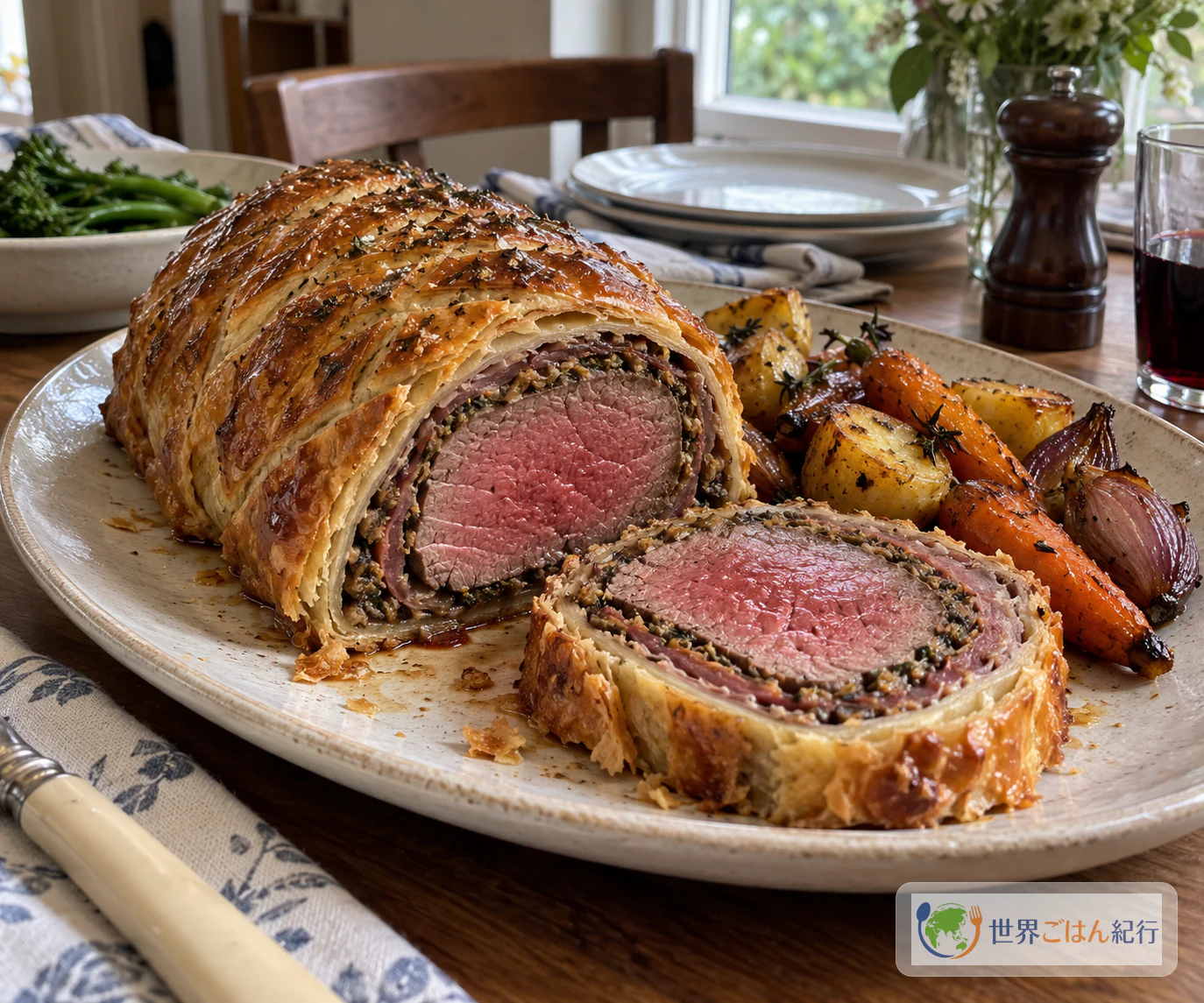
Beef Wellington: Beef Fillet Wrapped in Mushroom Duxelles, Prosciutto and Puff Pastry
How to make Beef Wellington for six: a beef fillet roasted first, cooled, wrapped in dry mushroom duxelles and prosciutto, then baked in puff pastry. Covers choosing the beef and mushrooms, keeping the pastry base from going soggy, reading colour and a thermometer instead of the clock, the difference between a pink finish and official safe temperatures, fixing common problems, and why the Duke of Wellington story stays unproven.
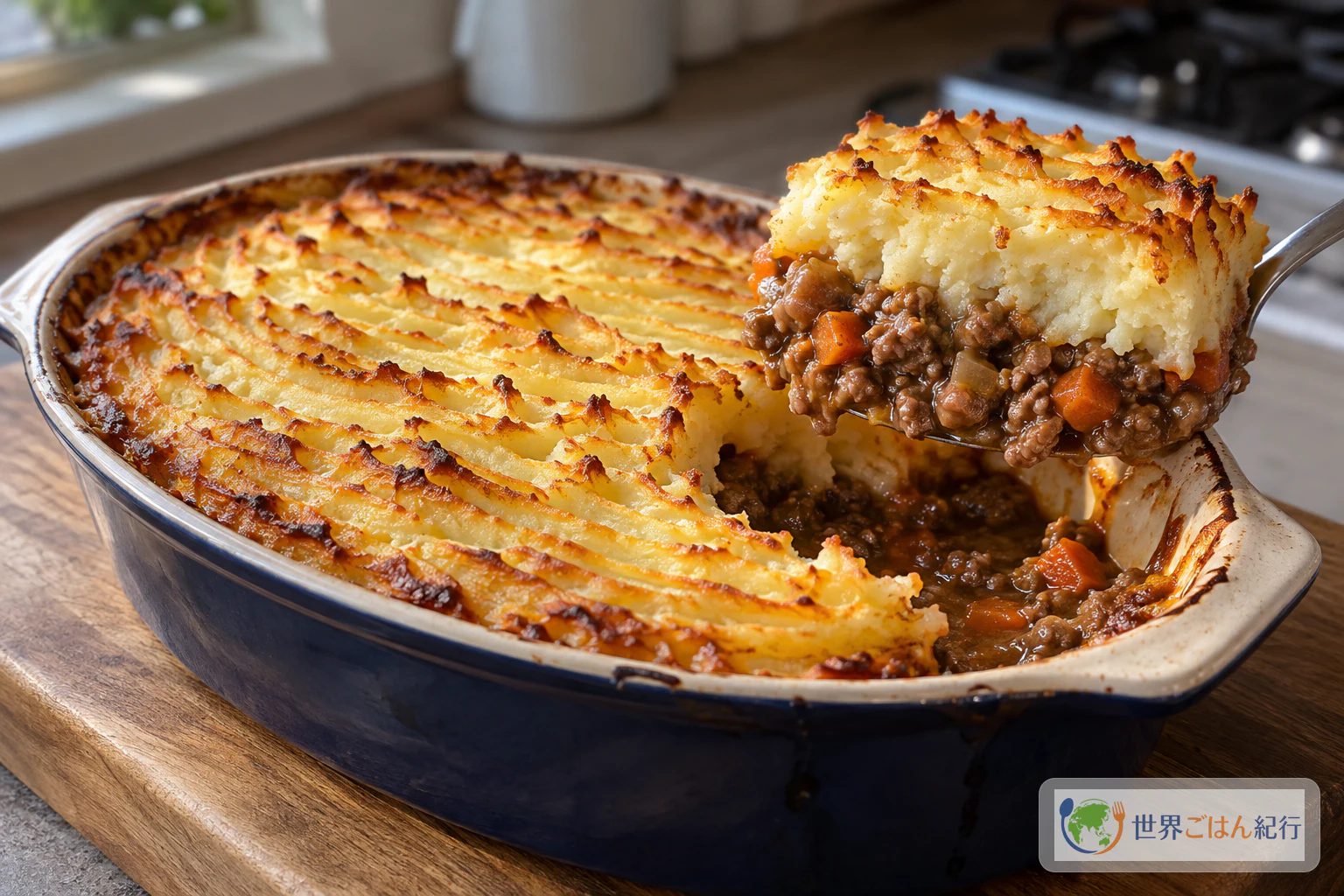
Cottage Pie: British Beef Mince Under Golden Mashed Potato
How to make cottage pie, the British home dish of beef mince topped with mashed potato. Covers how it differs from shepherd's pie, how to reduce the filling so it isn't watery, a mash that holds its ridges, food-safe cooling and reheating, and honest substitutions for ingredients outside the UK.
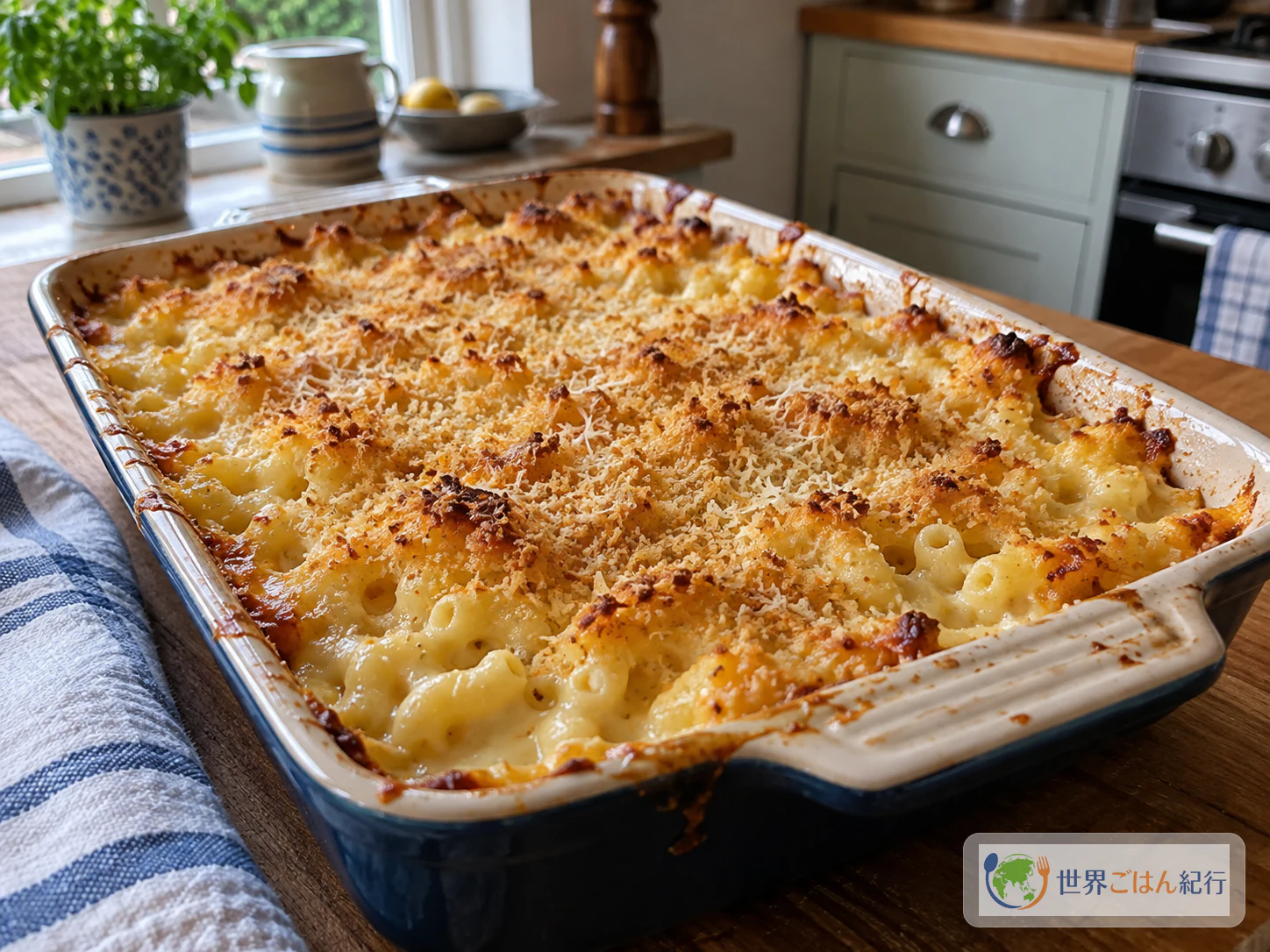
Macaroni Cheese: British Baked Macaroni and Cheese with Infused Milk and a Crisp Crumb Top
How to make a British-style baked macaroni cheese for 4: milk infused with onion, garlic and bay, a cheddar and mustard sauce, and a Parmesan and breadcrumb top baked at 190°C (fan 170°C). Covers choosing ingredients and substitutes, judging the sauce and bake by sight, fixing common mistakes, and where the dish sits among early records of pasta and cheese in Italy and Britain and Scotland's macaroni pie.
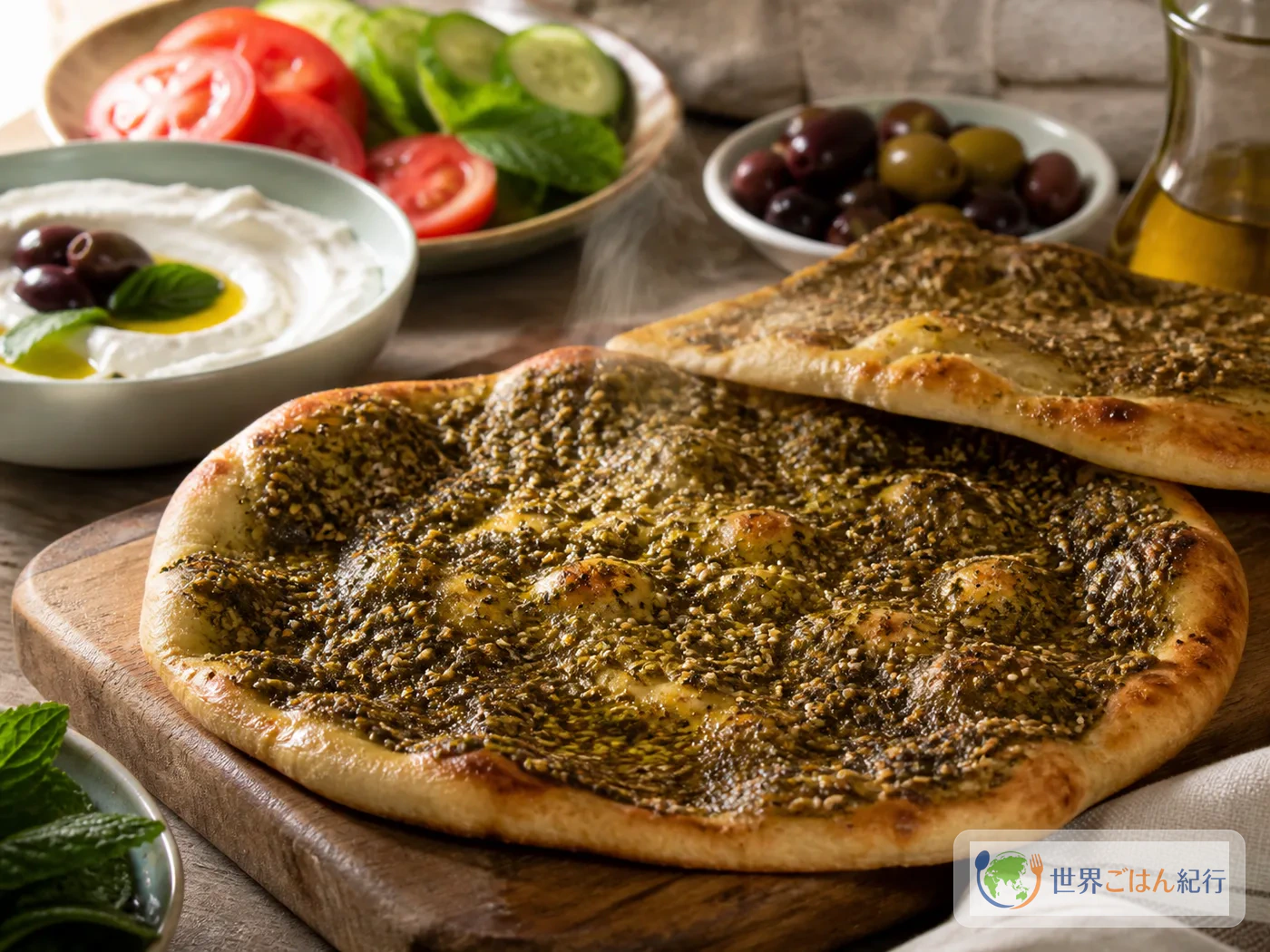
Manakish: Lebanese Za'atar Flatbread for Breakfast
How to make manakish, the thin flatbread eaten for breakfast in Lebanon. Bring out the aroma of za'atar and sumac, bake it thin in a home oven, plus substitutes, storage and regional toppings. Covers the hot baking sheet, a 3–5 mm thickness, and serving with labneh and vegetables.
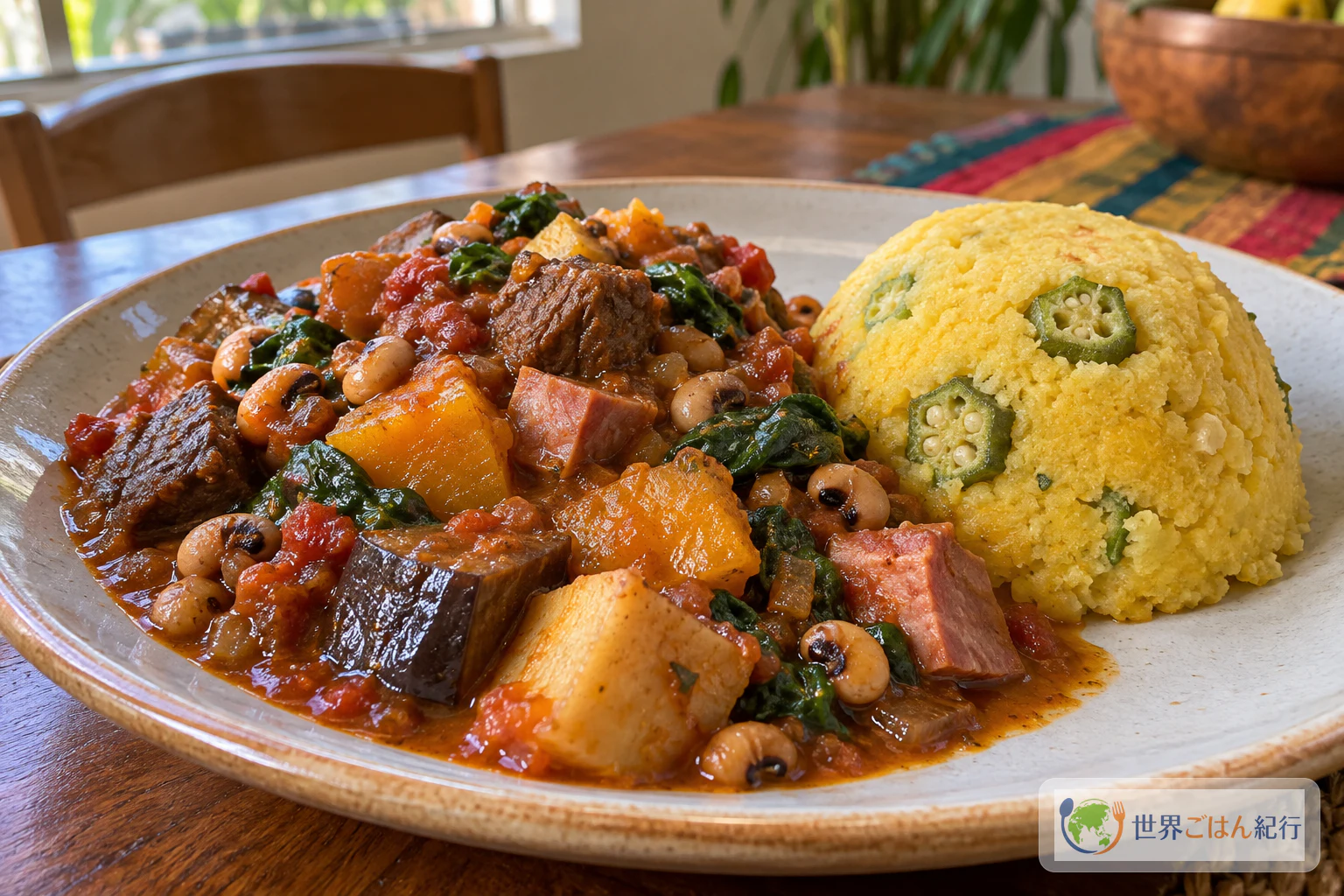
Fungee and Pepperpot: Antigua and Barbuda's Okra Cornmeal and Hearty Stew
How to make fungee and pepperpot, the pairing presented as Antigua and Barbuda's national dish: a thick stew of corned beef brisket, ham, vegetables, black-eyed peas and spinach, served with a firm okra-and-yellow-cornmeal fungee. Covers managing the salt from cured meat, how much okra water to set aside, the pull-away doneness cue for fungee, honest substitutions, how it differs from Guyanese pepperpot, and safe handling of leftovers.
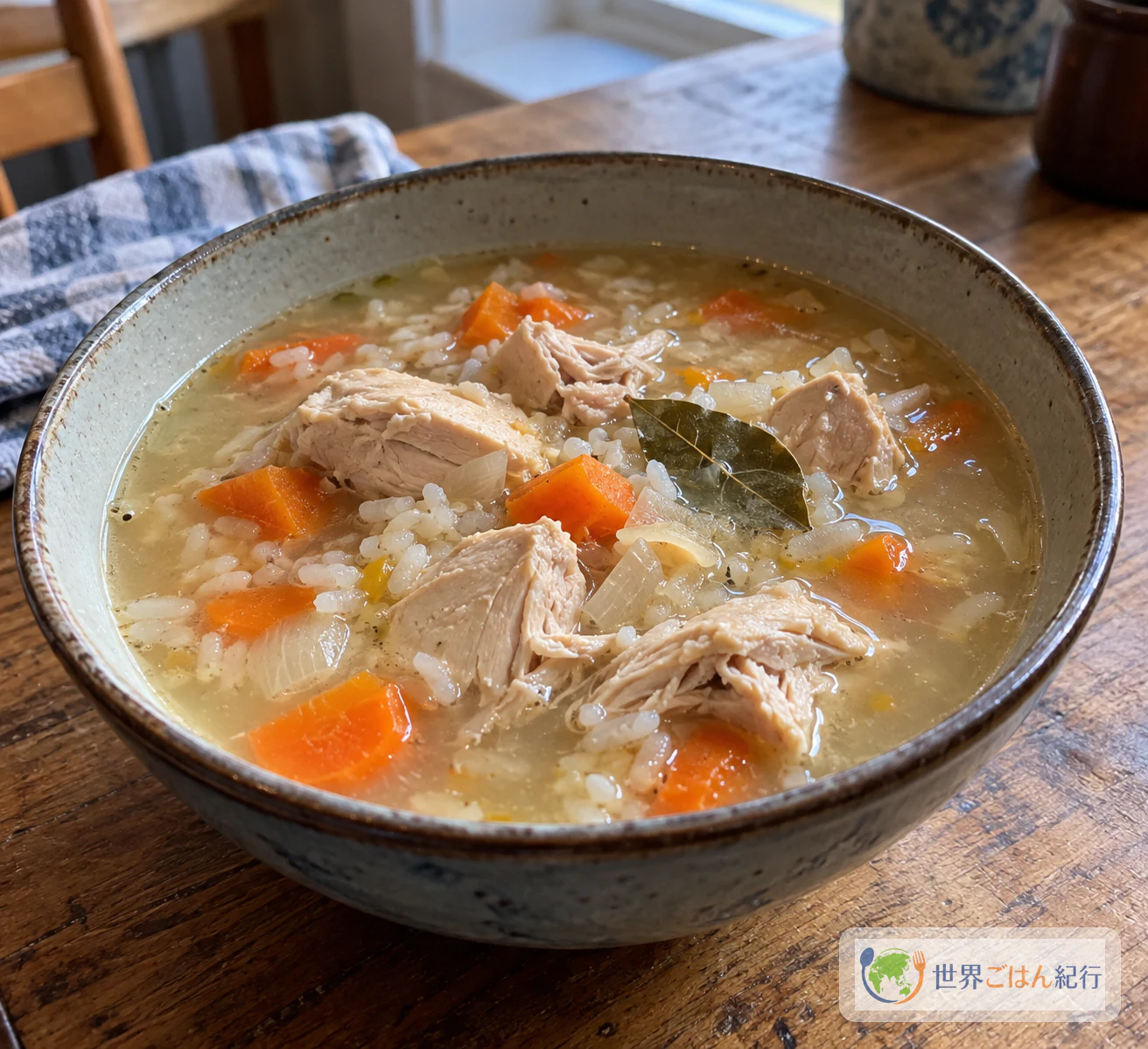
Suaasat: Greenlandic Meat and Rice Soup (Suassat)
How to make suaasat (also spelled suassat), the Greenlandic soup of simmered meat thickened with grain, adapted for home kitchens with chicken, onion, carrot and rice. Covers why seal is the traditional meat, how far chicken can stand in, the rice-or-barley choice, checking doneness by center temperature rather than the clock, and how to serve it with mustard.
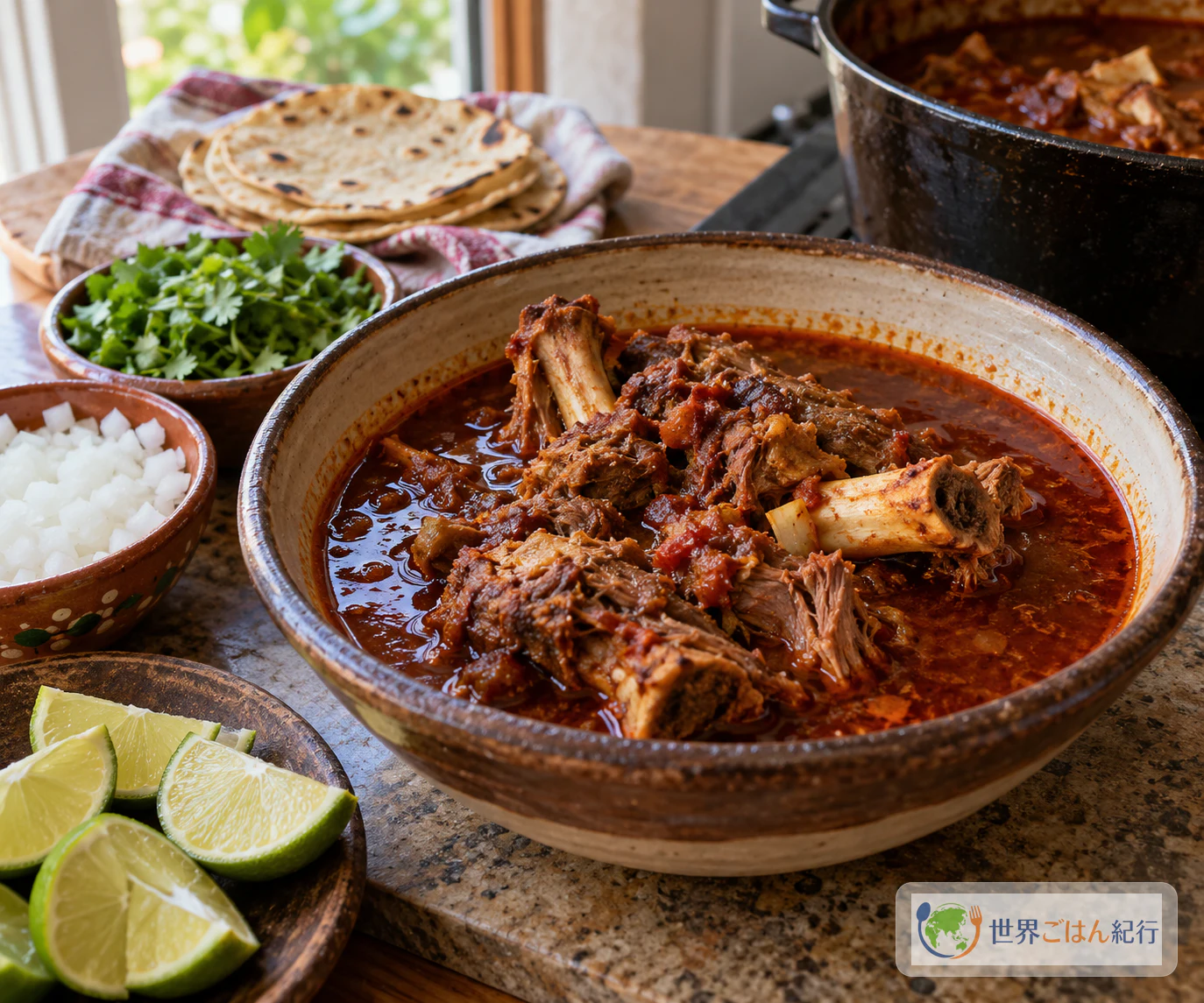
Birria de Chivo: Jalisco-Style Goat Braised in Red Chile Adobo
How to make Jalisco-style birria de chivo with bone-in goat, a dried-chile adobo of ancho, guajillo and cascabel, a day-long refrigerated marinade and a slow covered bake in the oven. Covers choosing goat and chiles, how it differs from beef birria de res, the roasted tomato and broth salsa, serving as a soup or in tacos, and safe cooling of leftovers.
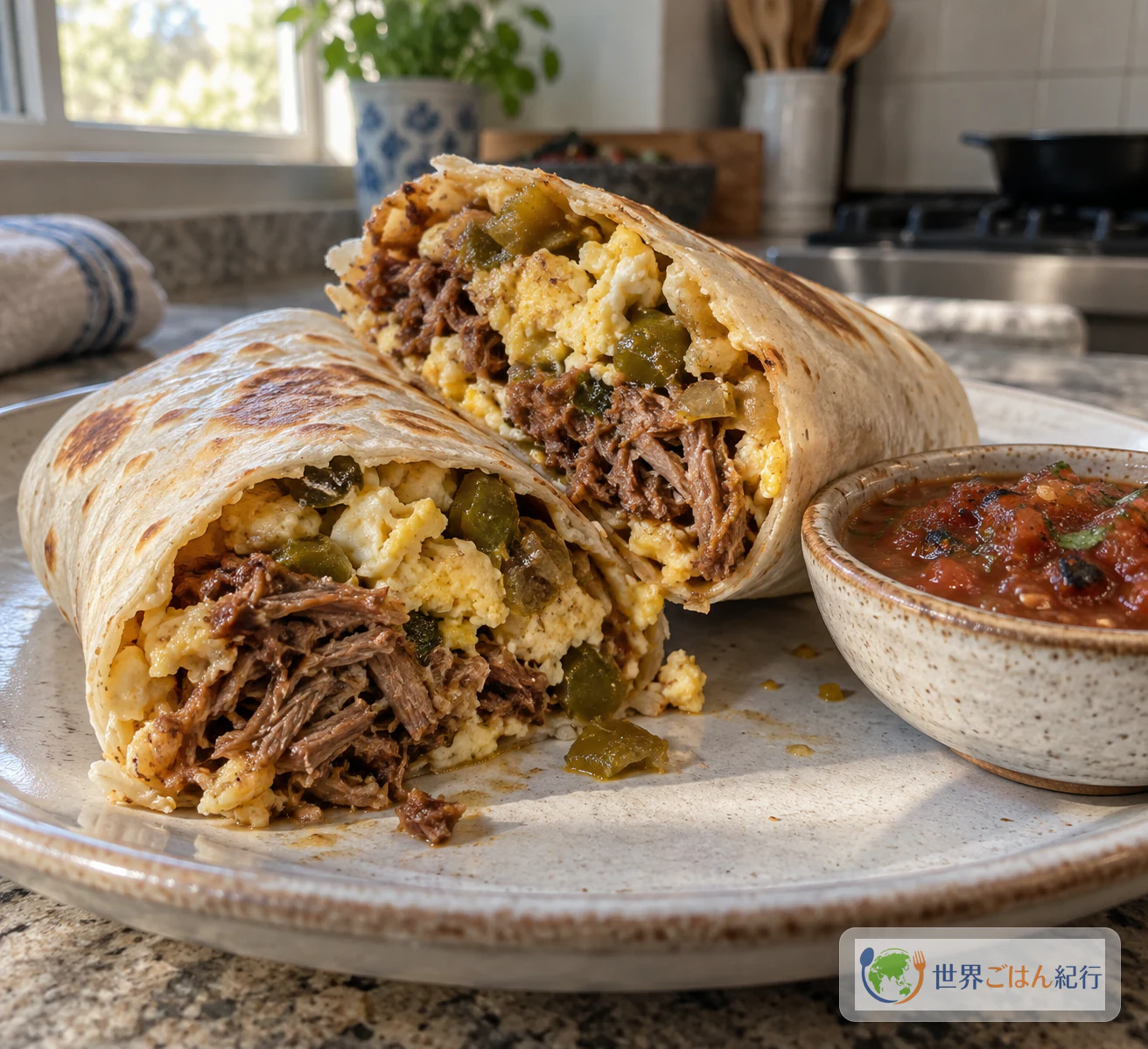
Burrito: Sonoran Machaca and Egg in a Flour Tortilla (Burro de Machaca)
How to make a northern Mexican burrito with a Sonoran-style filling of beef machaca, egg, green chile, onion and tomato, wrapped in a large flour tortilla. Covers checking the machaca's salt on the label, cooking the egg until fully set, warming and rolling the tortilla so it doesn't crack or leak, honest substitutes when machaca is hard to find, and how this simple wrap differs from Ciudad Juárez fillings and the large rice-and-bean style that grew up in the United States.